


Rusty griddle after the outdoor season – how to restore it
Time: about 60 min
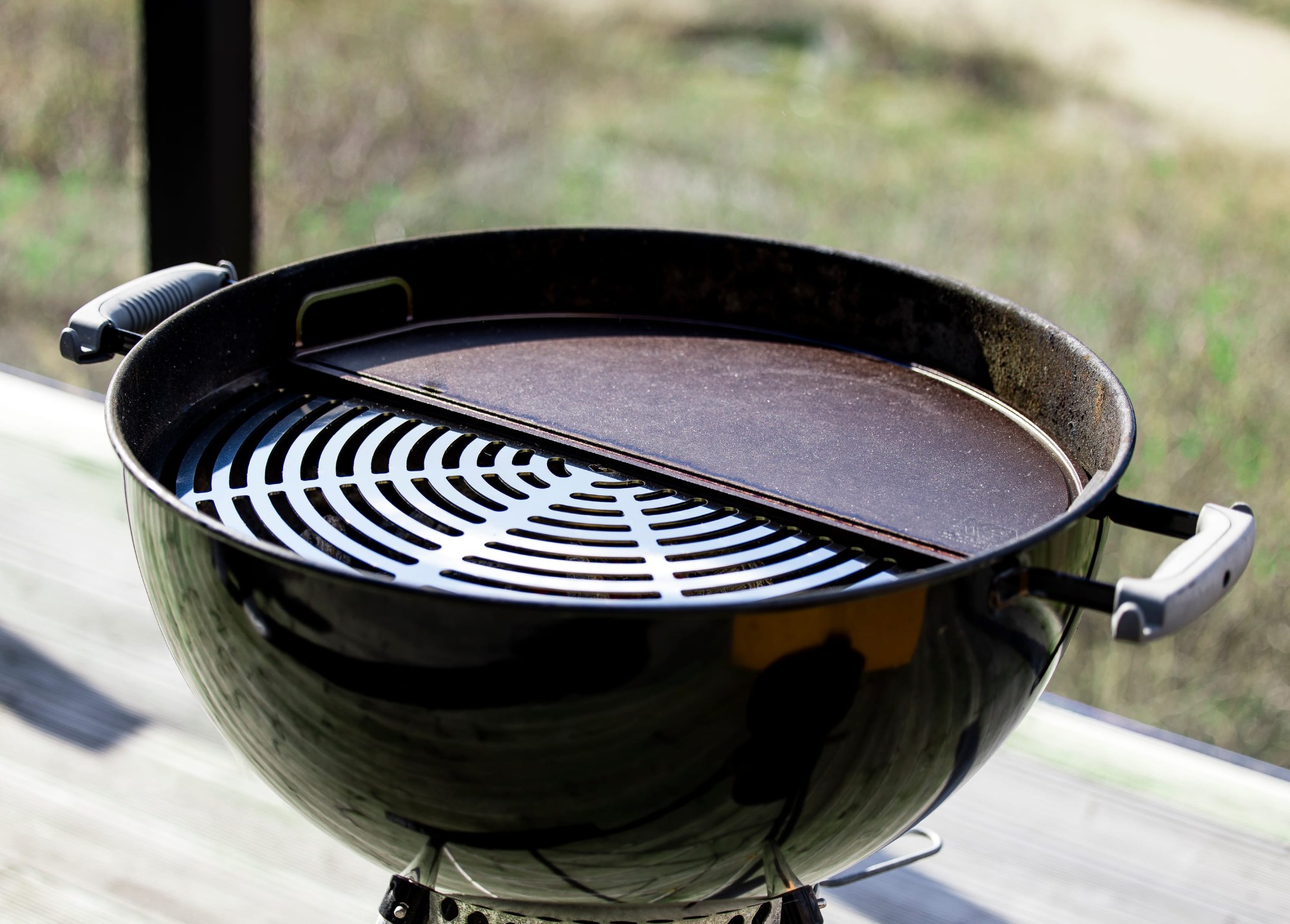
If the griddle has been left out in rain and dew, rust spots are common. A carbon steel griddle can almost always be saved – all it takes is steel wool, oil and a little patience.
Short answer
A rusty carbon steel griddle can almost always be saved. Scrape off burnt-on residue, rub away the rust with steel wool or a coarse scourer and rinse with hot water. Dry the griddle completely, including the underside. Then re-season the surface: heat it slowly until it smokes lightly, wipe on a thin layer of neutral cooking oil and repeat until the surface is dark.
What you need
- Steel wool or a coarse scourer
- Stainless steel scraper
- Neutral cooking oil
- Cloth and stainless steel tongs
- Kitchen paper
- Oven gloves or a barbecue glove
How to do it
- Scrape off the worstStart with the griddle cold and scrape off burnt-on residue and loose rust with the scraper. Any utensil, including metal, can be used on carbon steel.
- Rub away the rustWork the rust spots with steel wool or a coarse scourer and hot water until you see clean steel. Skip the washing-up liquid – water and elbow grease are enough.
- Rinse and dry at onceRinse away the rusty sludge with hot water and dry the griddle completely with kitchen paper, including the underside and handles. Never let it air-dry, or the rust will come back.
- Heat until it smokes lightlyHeat the griddle slowly on the hob or barbecue until it begins to smoke lightly. Make sure there is good ventilation and keep an eye on it the whole time.
- Oil in thin layersWipe a thin layer of neutral cooking oil over the cooking surface with a cloth held in the tongs. Let the oil burn in, then repeat oil and heat until the surface has turned dark.
- Watch the colourThe surface may look a little patchy, which is perfectly normal. If the steel turns distinctly blue, the heat is too high – turn it down.
- Let it cool and start cookingLeave the griddle to cool where it is. At first you may need a little extra butter or oil, and the surface keeps building up the more you cook on it.
Common mistakes
- Letting the griddle air-dry after removing the rust, so new rust has time to form.
- Applying one thick coat of oil instead of several thin ones.
- Seasoning at such high heat that the steel turns blue.
- Cooling the hot griddle with cold water, which can make it warp.
Why carbon steel can be saved
Surface rust on a griddle can be scrubbed away with steel wool. That is why a griddle made of 4–6 mm carbon steel can almost always be saved. When you season it again, the oil forms a dark protective layer that builds up every time you cook with fat.
FAQ
Can a rusty griddle really be saved?
Almost always. In a video on the Kockums care page, Johan Hedberg shows how a griddle that was left outdoors and rusted is made ready for cooking again.
Can I re-season the griddle on the barbecue?
Yes, the griddle can take the heat of a barbecue, and outdoors the ventilation is good. Heat it slowly, oil thinly and keep an eye on it.
Why is the surface patchy after seasoning?
Some patchiness is completely normal when seasoning and hard to avoid. The surface keeps changing and building up as you use the griddle.
Why does the griddle rust outdoors?
Carbon steel is a natural material that rusts when it stays damp. Rain, dew and a griddle left to air-dry are enough to cause rust spots.



Comments