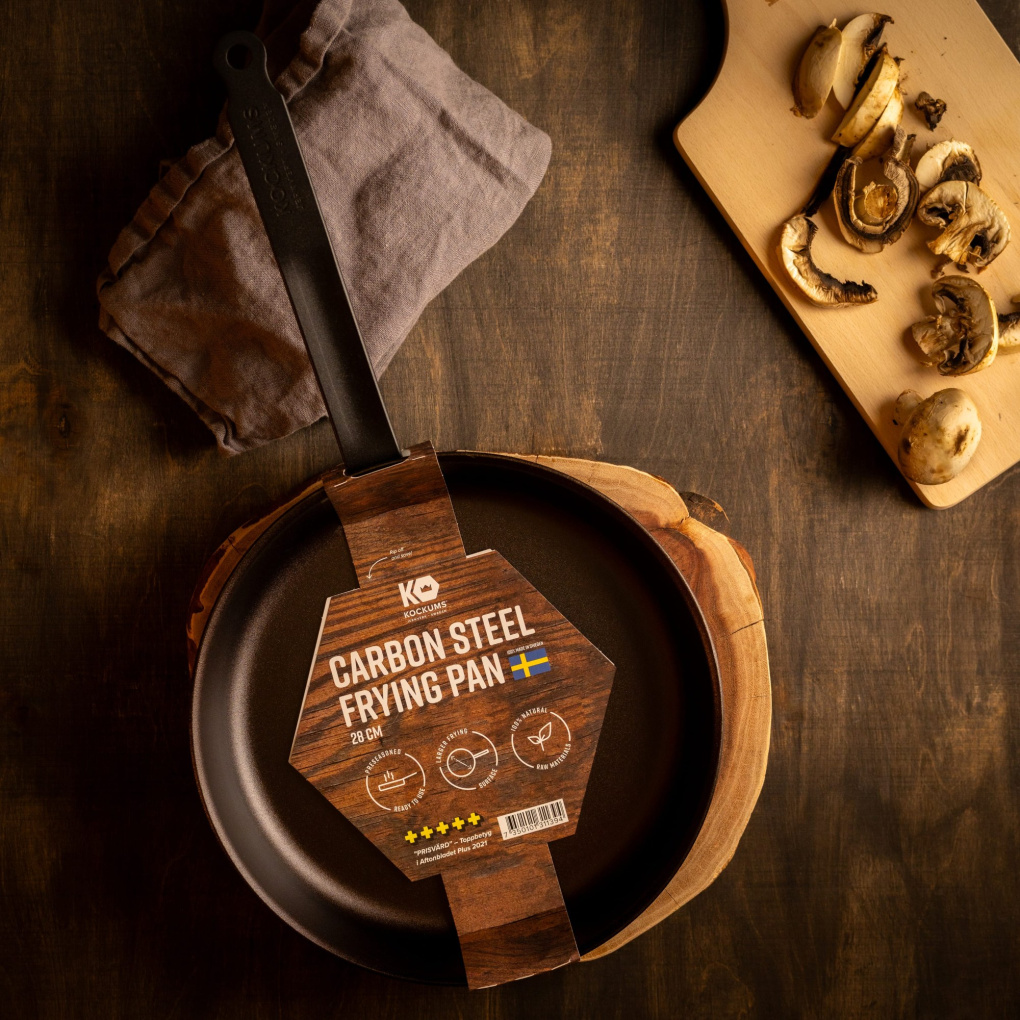
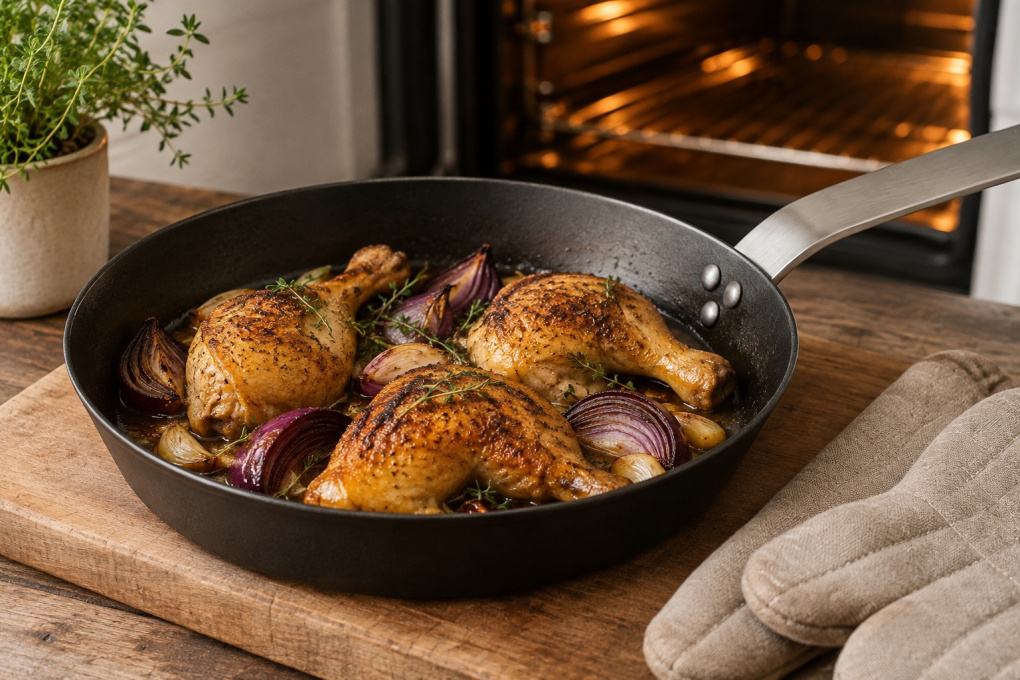
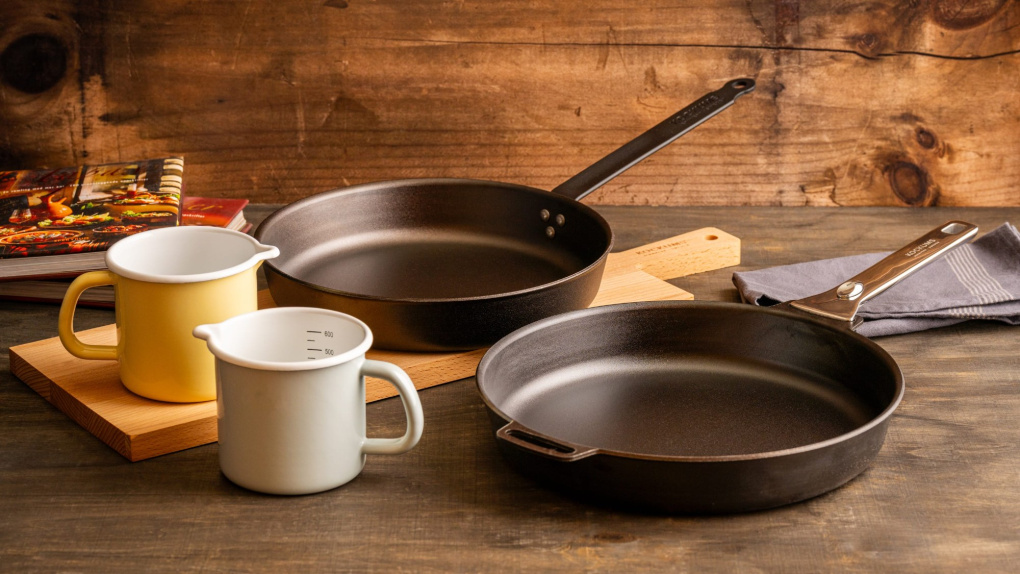
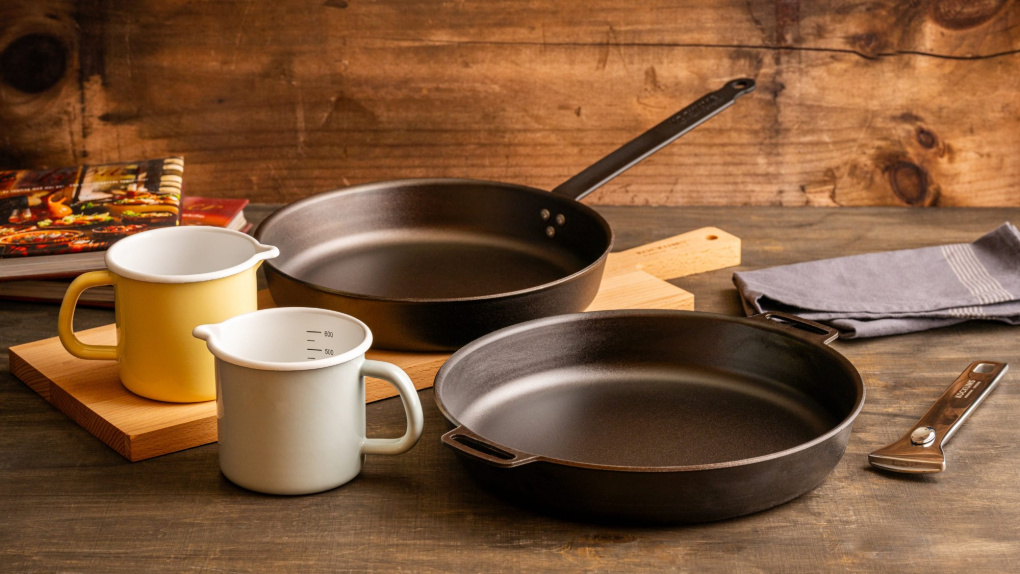
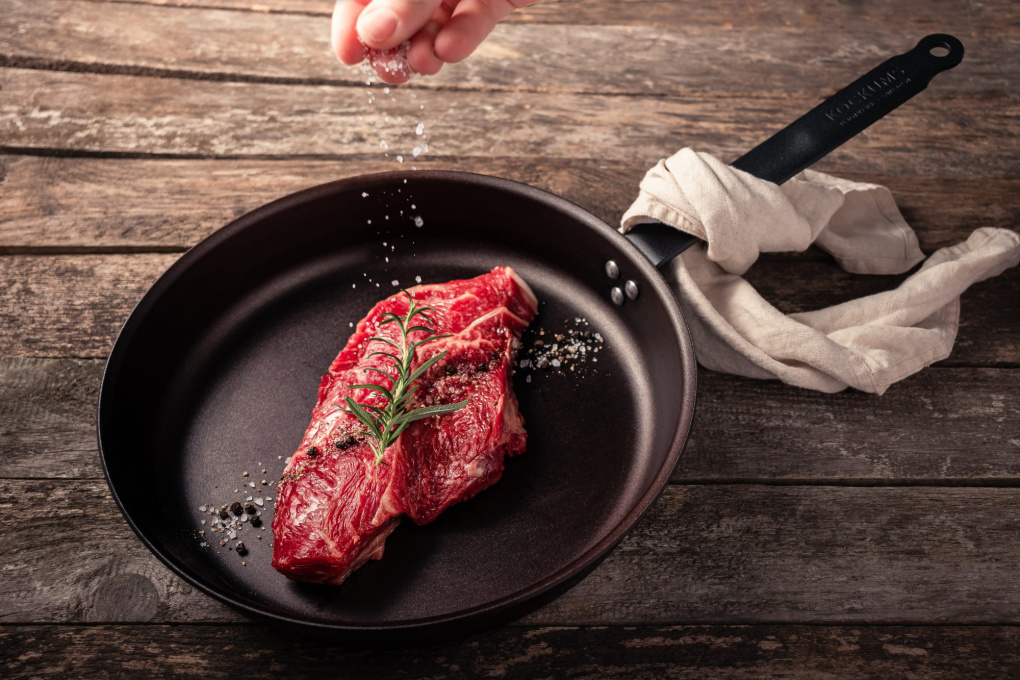
Your new carbon steel pan is already seasoned and ready to use. The first week is about heating gently, cooking with plenty of fat and looking after the pan properly once the meal is done.
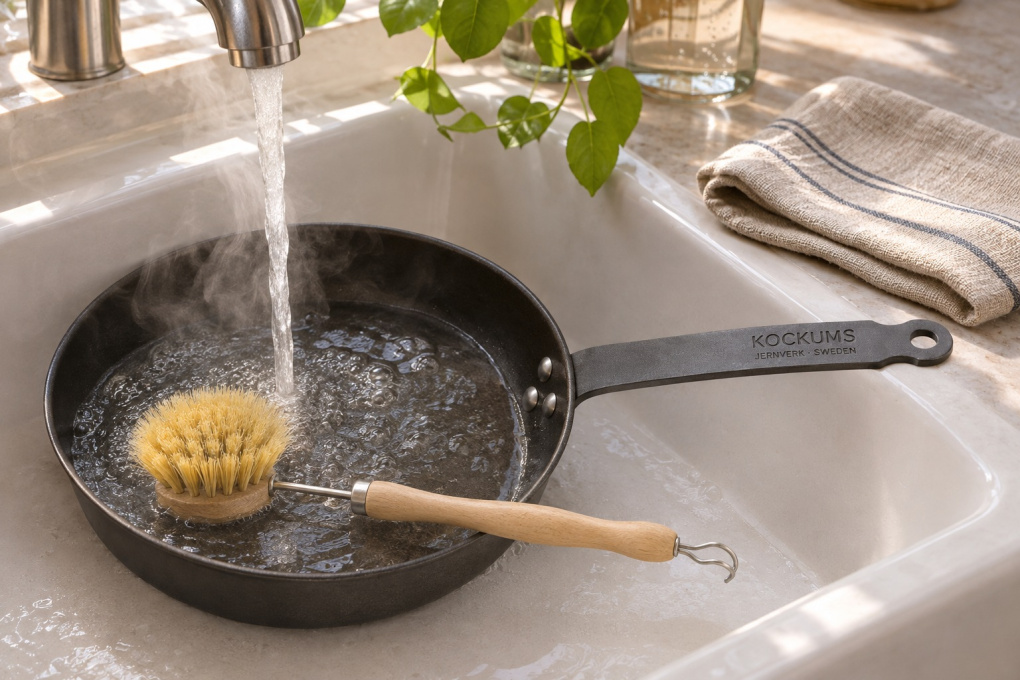
Hot water, a soft dish brush and a dry tea towel – that is all it takes to keep a carbon steel pan clean. Here is the everyday routine that takes a few minutes and protects the surface you are building.
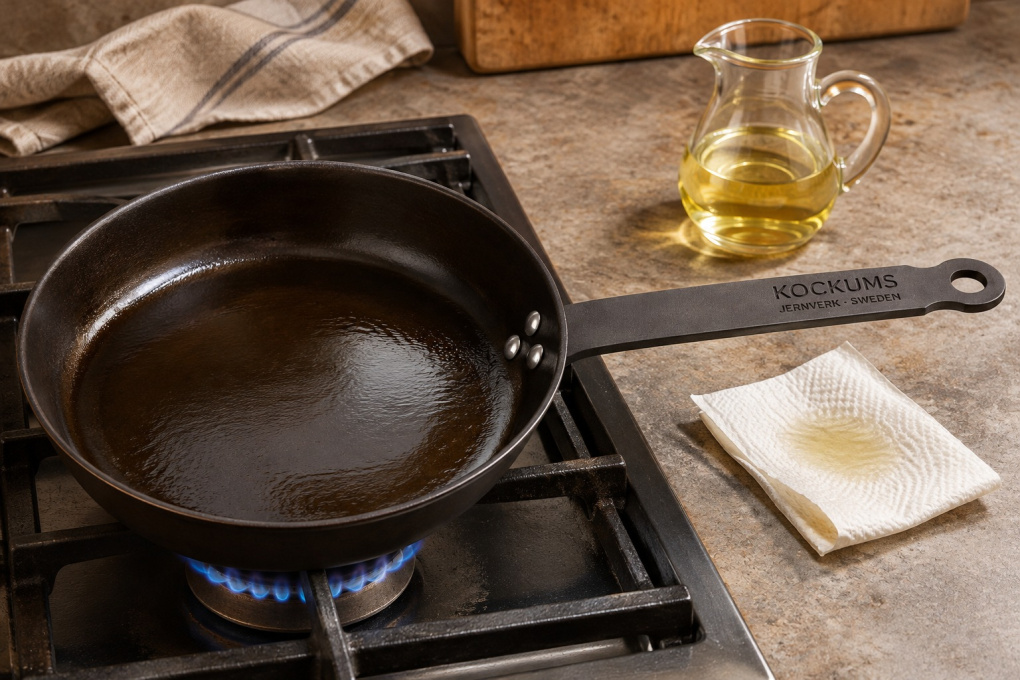
Has your pan turned grey after steel wool, rust or burnt-on food? You can give it a new seasoned surface on the hob. It takes a little time, but it is no harder than frying.
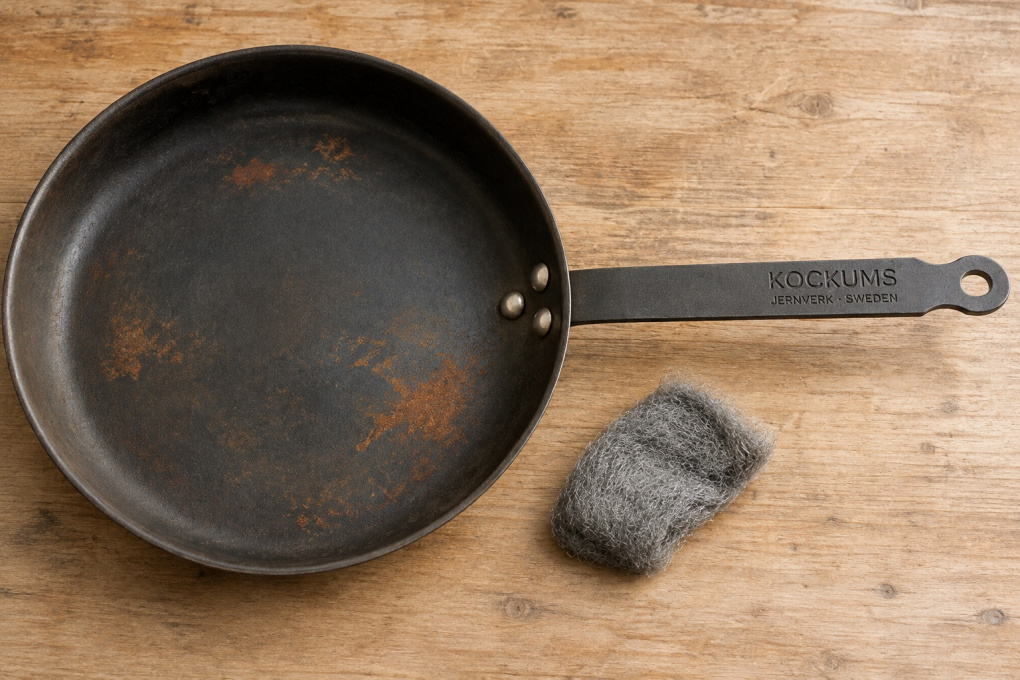
A little rust on a carbon steel pan looks worse than it is. With steel wool, fresh seasoning and better habits after washing up, the pan will soon be ready for cooking again.
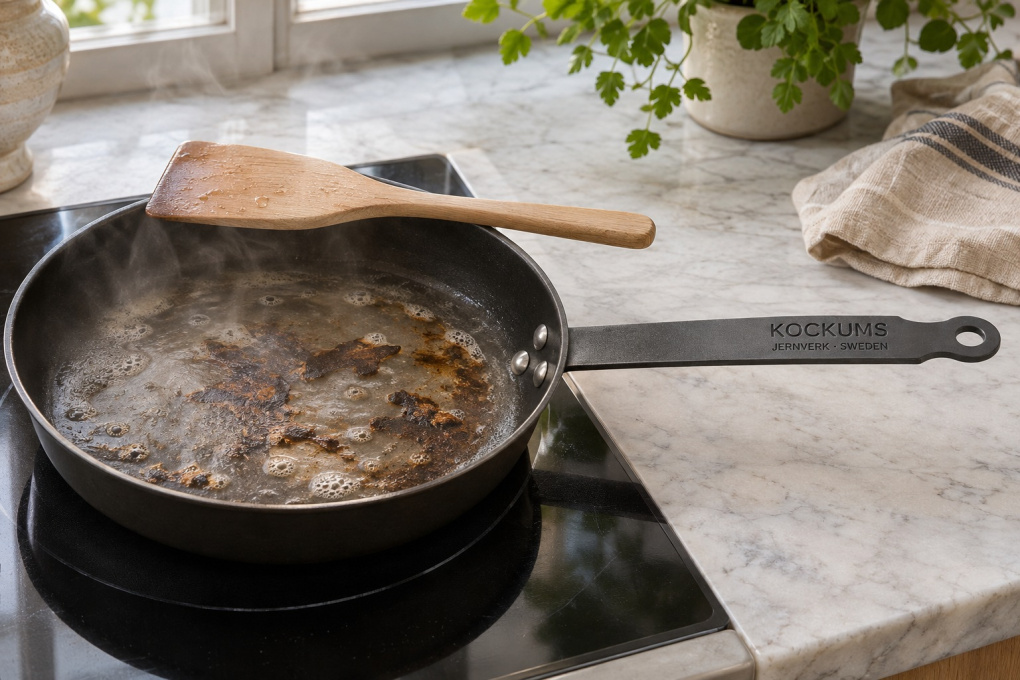
Scorched sauce, stuck potatoes or a sugary marinade? Start with the gentlest method and work up step by step – water, heat and a pan scraper are usually all you need.
When food sticks in a carbon steel pan, the cause is almost always the heat, the fat or a lack of patience – rarely the pan itself. A few simple habits help meat, fish and vegetables release.
Acidic ingredients and carbon steel are not the best match. It is not dangerous and the surface can be restored. Here is what happens, when the enamelled pan is the better choice and what to do afterwards.
Induction heats the steel directly and fast. That is great for frying, but a very hot centre and a cold edge can make the pan warp. With the right zone and a little patience it keeps its shape for years.
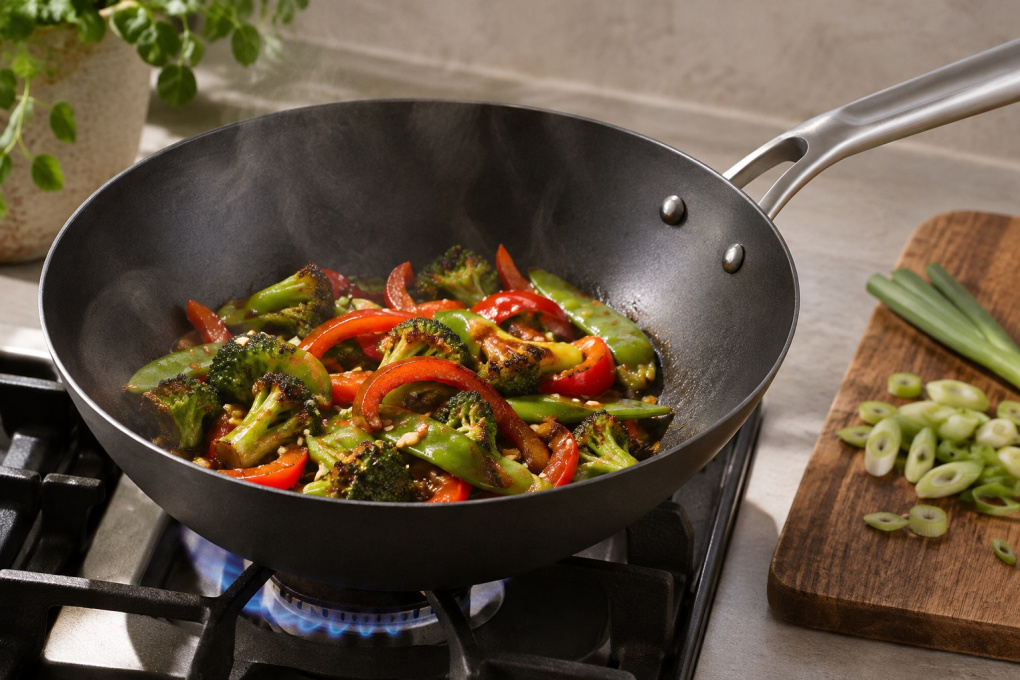
The Stir fry pan is Kockums' deep carbon steel pan, with rounded sides and high edges. You care for it like any carbon steel pan, but heat and storage deserve a few words of their own.
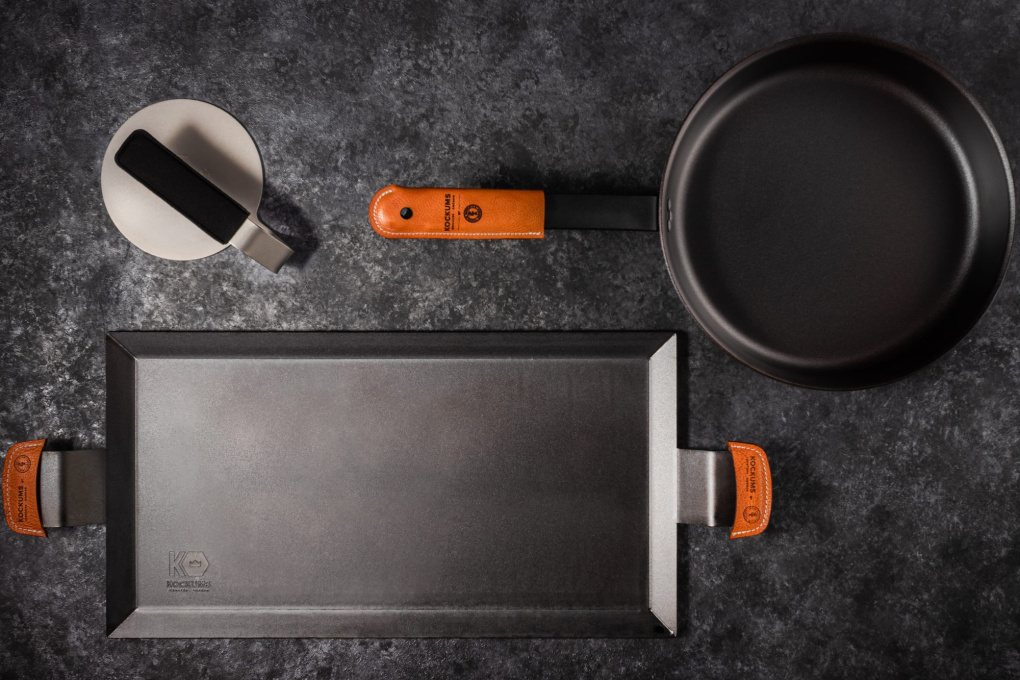
A carbon steel griddle needs a little care and repays it with a surface that gets better every time you cook. Here is the routine, from the first rinse to the oil after washing up.
A griddle is longer than a single cooking zone. On induction, the trick is to let two zones work together and give the heat time to spread through the steel.
If the griddle has been left out in rain and dew, rust spots are common. A carbon steel griddle can almost always be saved – all it takes is steel wool, oil and a little patience.
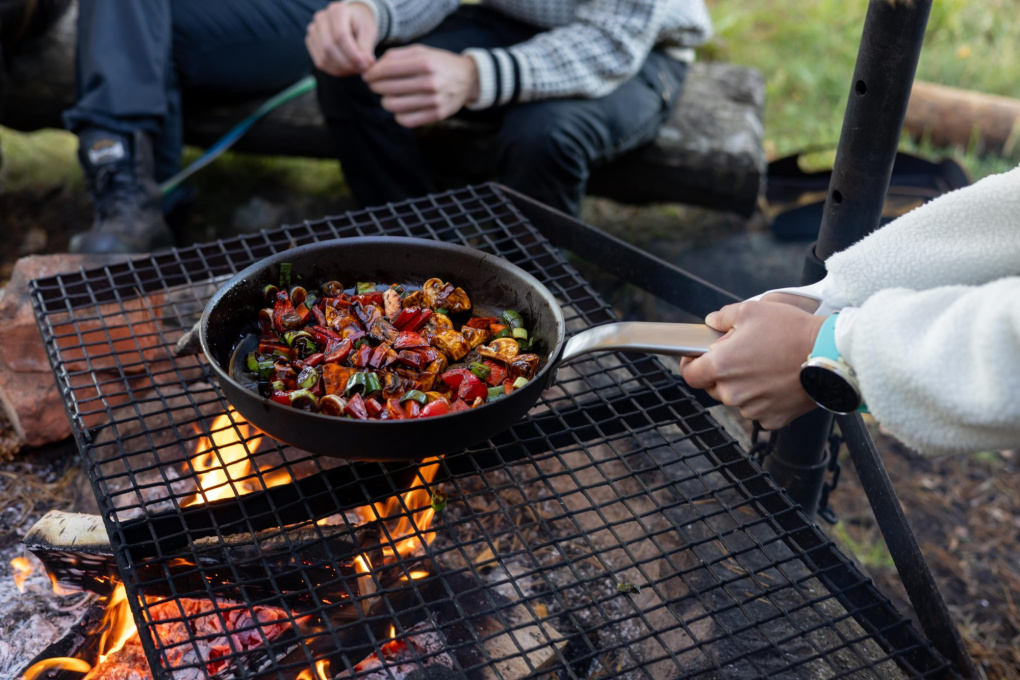
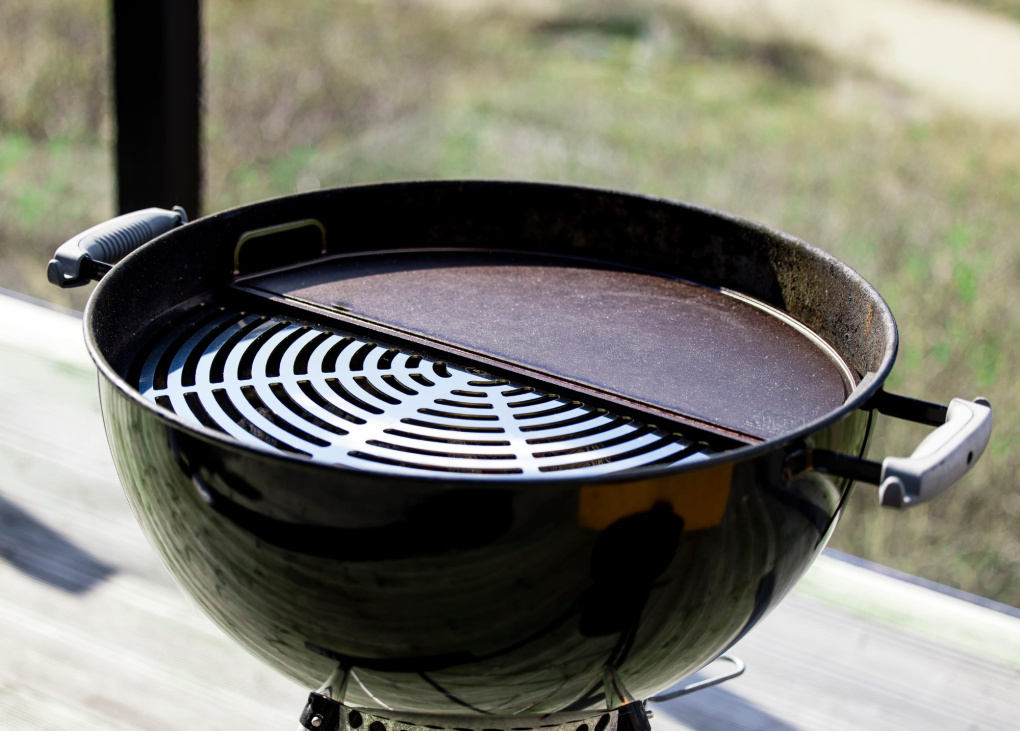
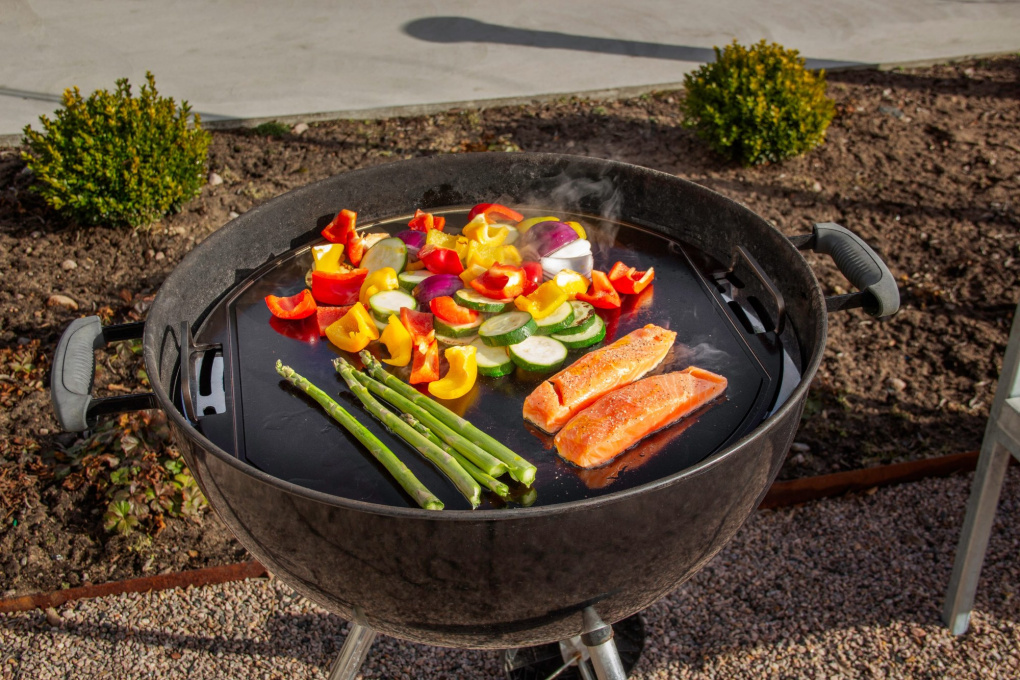
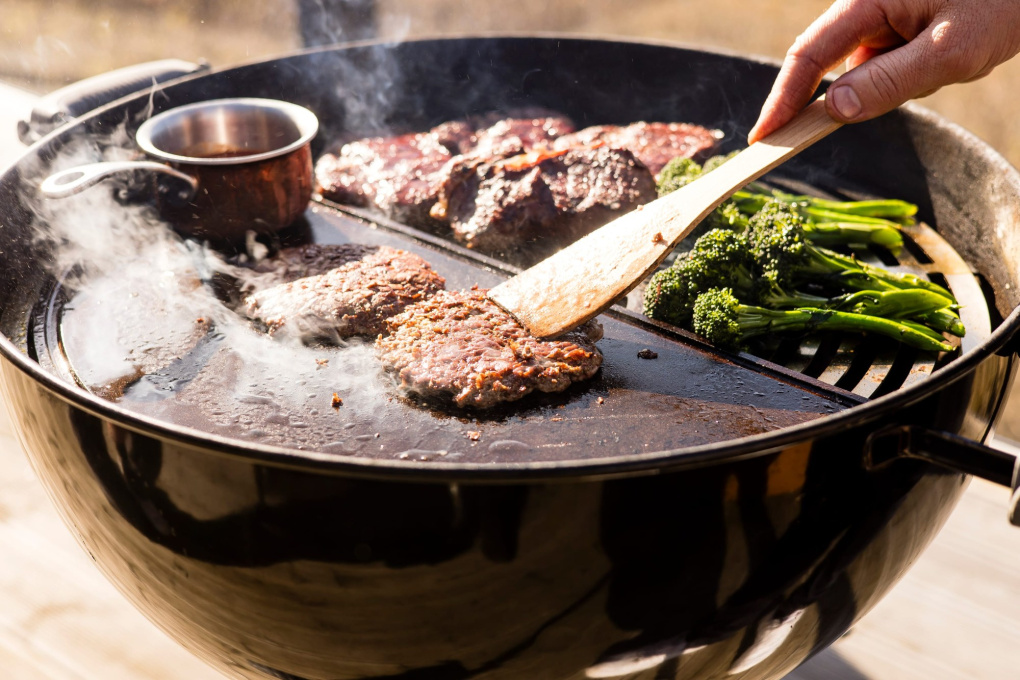
Over embers or on the barbecue grate, the griddle becomes a complete outdoor kitchen. Here is what to do before, during and after, so both the food and the carbon steel stay in good shape.
When the barbecue season ends, a few minutes of care decide how the griddle looks in spring. Carbon steel likes to be clean, dry and thinly oiled – and stored indoors.
A carbon steel pizza steel is almost impossible to wear out, but it does best with a simple routine. Here is how to look after it after every bake – without any washing-up liquid.
Your pizza steel comes ready-seasoned, but after steel wool, acidic ingredients or a rust spot the surface may need building up again. It is easy to do in an ordinary oven.
The porridge caught or the sauce got too much heat. No harm done – with water, a little patience and lemon juice or linseed oil soap, burnt-on food comes away without any scraping.
Coloured food residue, discolouration or small rust spots along the rim. The old trick with baking powder and a raw potato is Kockums' own recommendation – and it is gentle on enamel.
The enamelled frying pan is a carbon steel pan with an enamel surface. It copes with acidity and washing-up liquid, but likes to be heated gently. Here is how to get a golden crust and food that releases.
After a while, grey lines can appear on an enamel plate. They usually come from cutlery – metal from knives and forks that has been left behind on the surface.
Cast iron heats slowly and holds heat for a long time. Heat it correctly and food browns beautifully in the matte black enamel; with simple care you will enjoy the casserole for a long time.
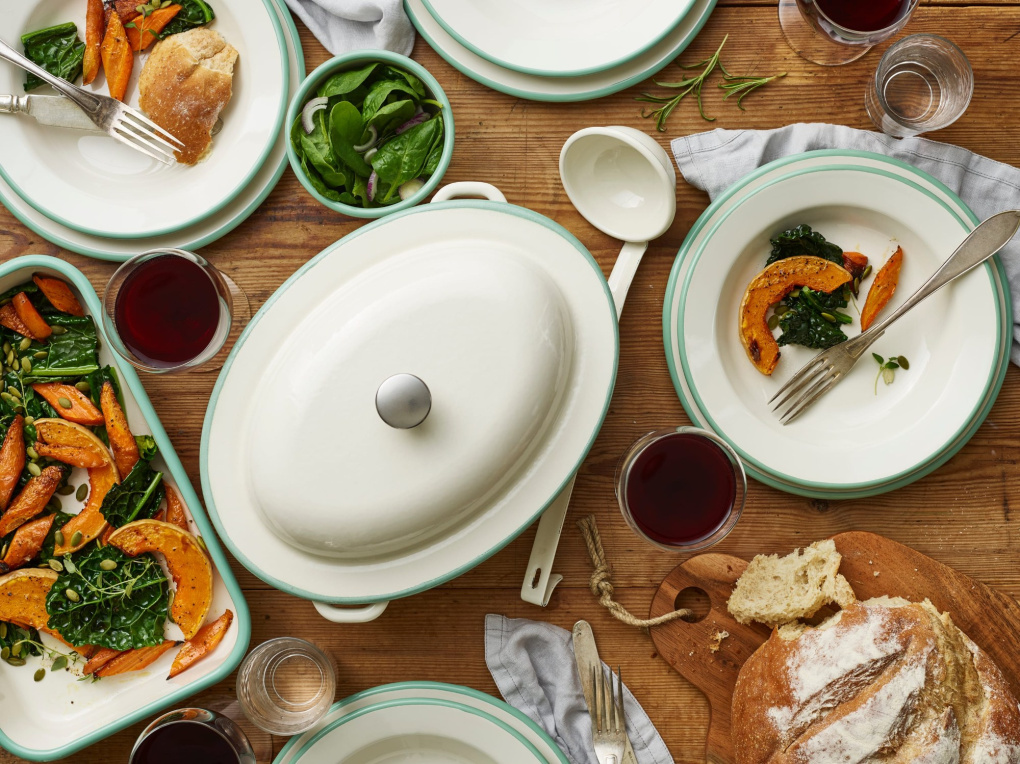
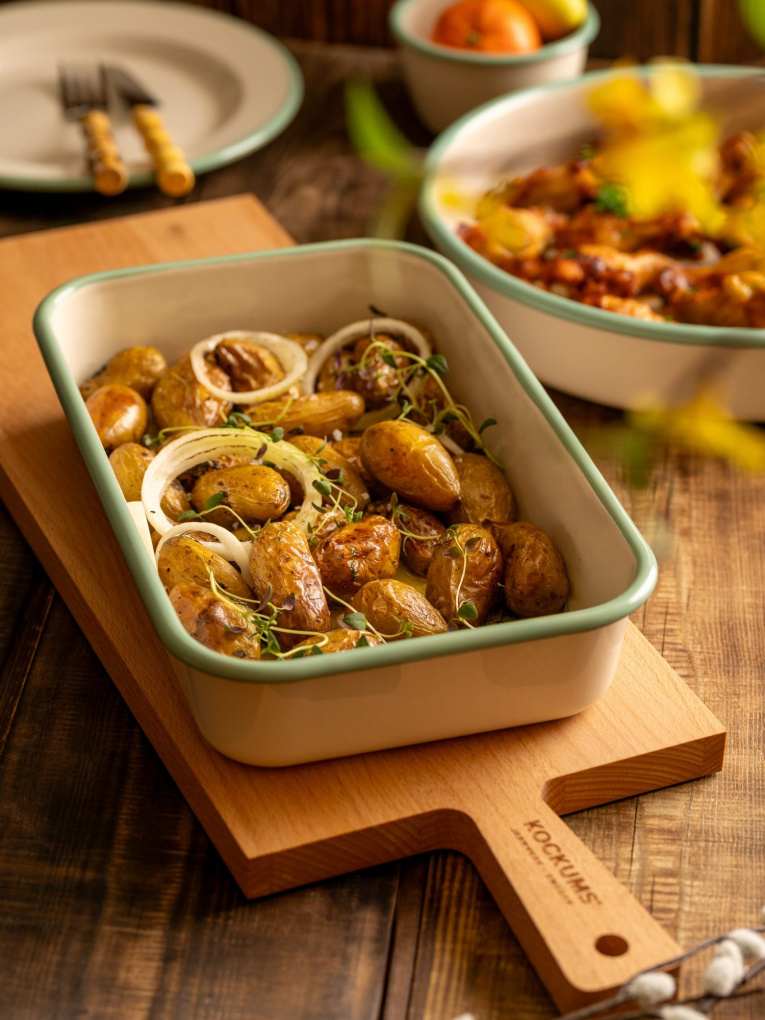
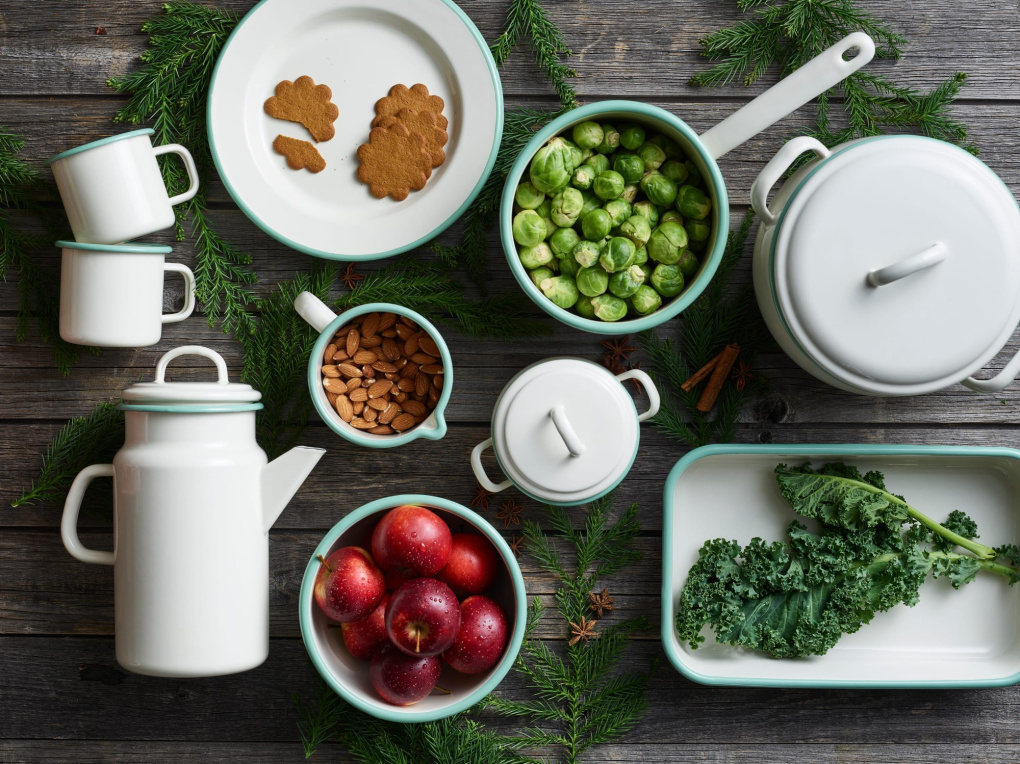
An enamel oven dish makes the whole journey: into the oven, onto the table and into the fridge with the leftovers. The enamel takes on no taste or smell, and the dish is easy to keep clean.
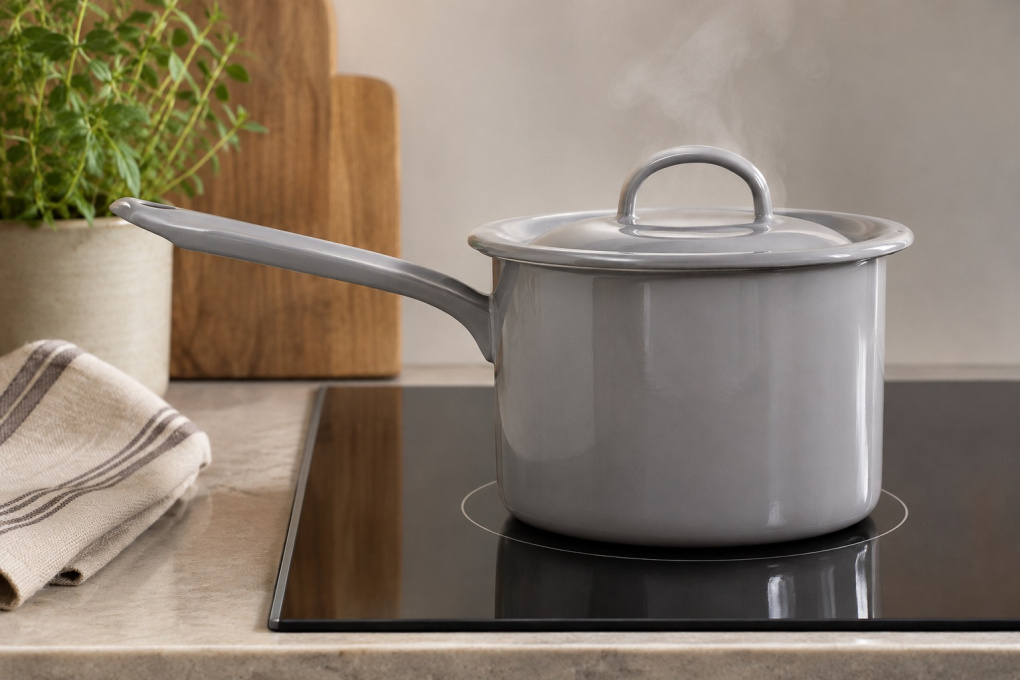
Kockums enamel saucepans and casseroles work on every type of hob, including induction and gas. A few simple habits protect both the base of the pot and the hob itself.
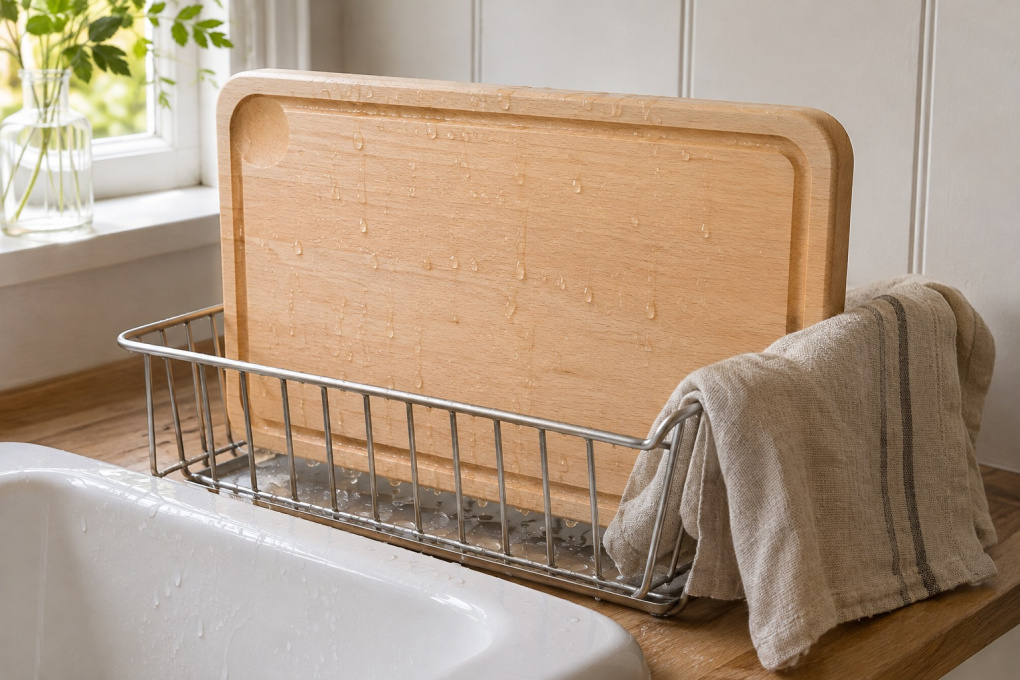
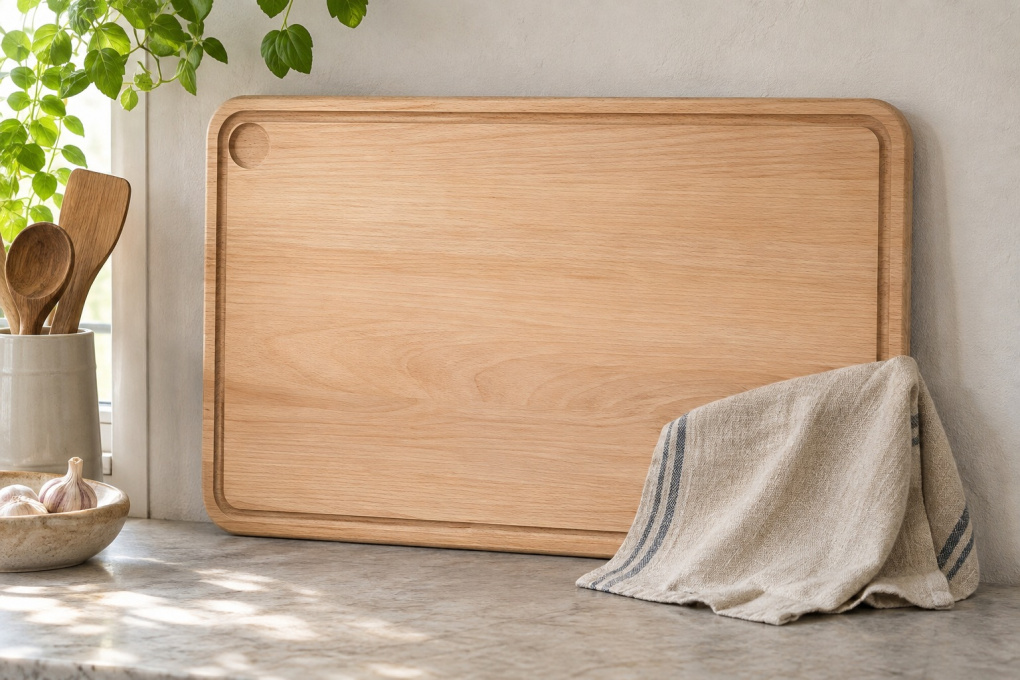
A wooden chopping board will last for years if it gets three things: a quick hand wash, a proper dry and oil at regular intervals. Here is the whole routine, from the sink to the oil bottle.
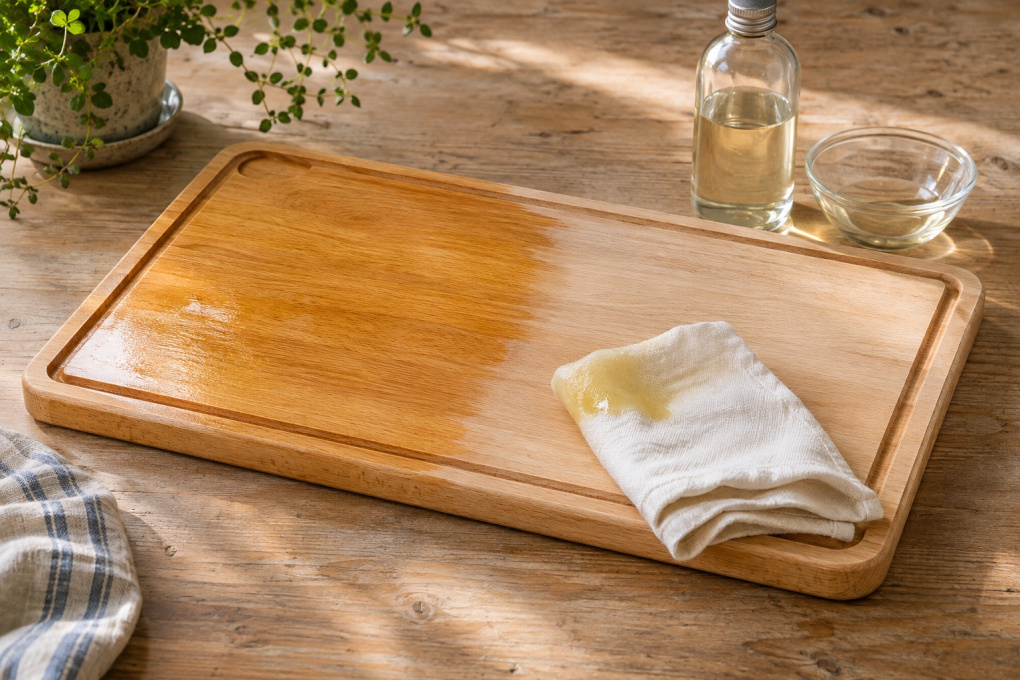
Paraffin oil (mineral oil) is a non-drying oil that saturates the wood and helps the board keep its qualities. It takes a few minutes of work and a little waiting – here is how to get an even finish that isn't tacky.
Wood moves with moisture. A board that gets wetter on one side than the other can bow or crack. Sometimes it can be improved, sometimes not – here is how to tell.
Onion and garlic leave a smell, beetroot leaves colour. With salt, lemon and a little patience the board freshens up again – and some of the colour simply becomes patina.
The wooden spatula, spoon and tongs get used every day and are gentle on your pots and pans. With a quick hand wash, a proper dry and a little oil now and then, they last for years.
Two or three boards in different sizes make kitchen work easier. The bread stays free of onion, the meat has room, and the cheese can go straight to the table.
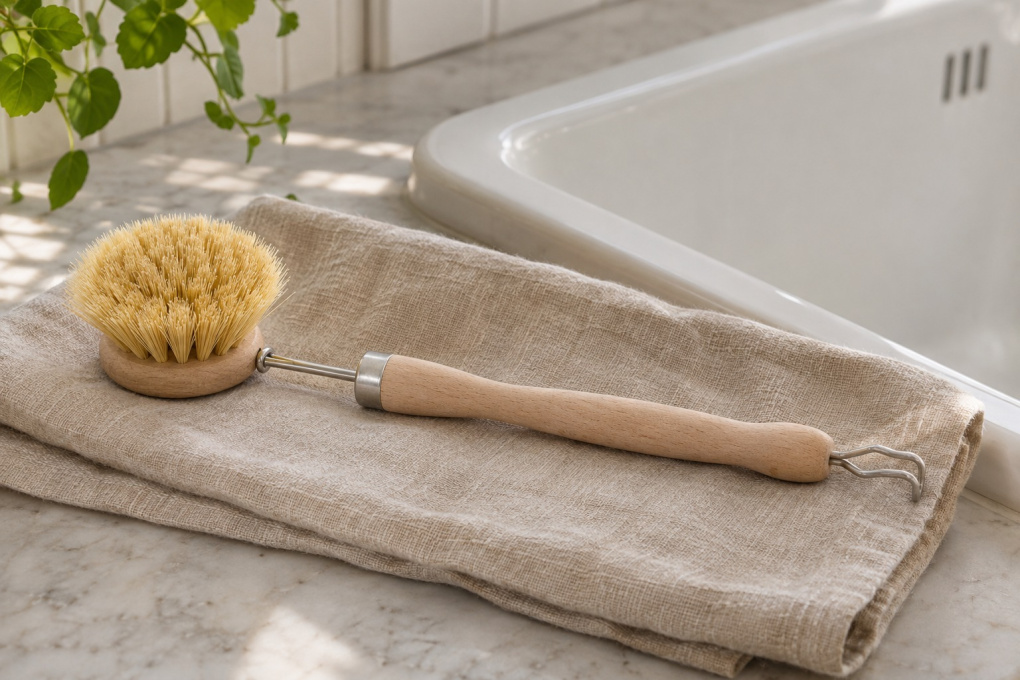
A dish brush in beech and horsehair is gentle on pots and pans and looks good by the sink. With a little care the handle lasts for years – and when the bristles wear out, you simply change the head.
After a party the trays are often left with marks from wine, sauce and butter. Ten minutes of care the same evening keeps them looking good for next time.
Linseed oil soap is a Scandinavian kitchen classic. It cleans gently and suits most materials – but not everything in the kitchen should be washed with soap.
Paraffin oil and linseed oil soap sound like two sides of the same coin, but they do very different jobs. One feeds and protects the wood, the other cleans it.
The carbon steel pan only wants hot water, the enamel pot is happy with washing-up liquid and the chopping board must never go in the dishwasher. Here is the whole kitchen, material by material.
A lot of what happens to a pan happens in the cupboard. A little leftover moisture brings rust to carbon steel, and one pot stacked on another scratches the enamel.
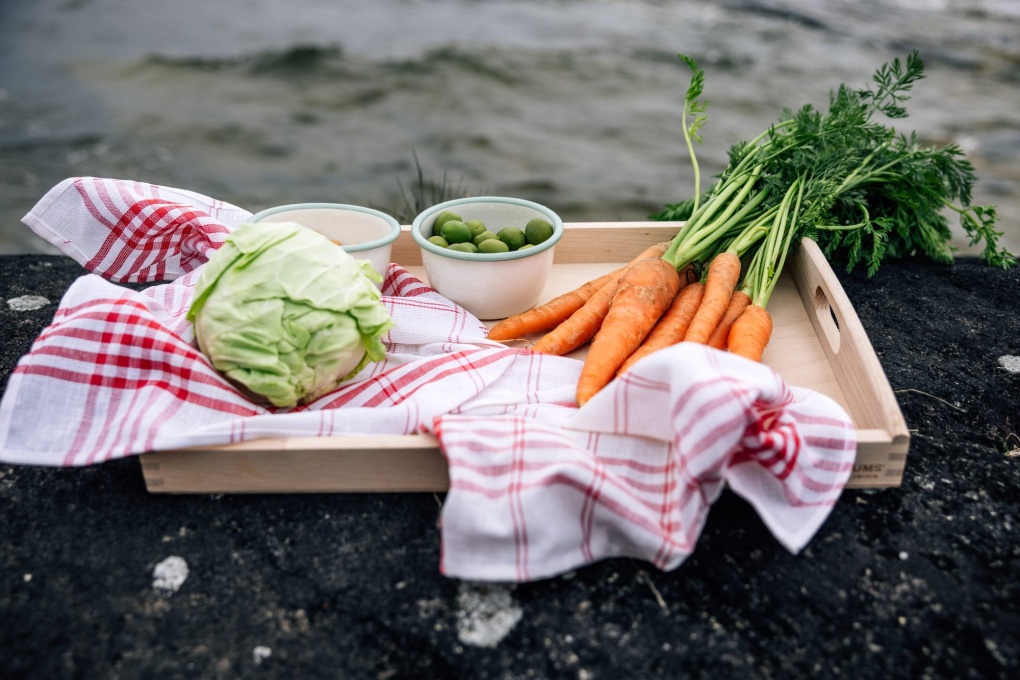
A good brush lifts the soil off gently and often saves you the peeling. Here is how to scrub root vegetables under the tap, clean mushrooms completely dry and make the brushes last.
Carbon steel conducts heat efficiently and cast iron holds it for a long time – that is why they cook so nicely. It also means the handles get hot. Here is how to pick the right protection at the hob, oven and fire.
Before Christmas the kitchen has to cope with more than usual. Go through pans, pots, boards and utensils at a calm pace, and everything will be clean, dry and ready when the table is laid.
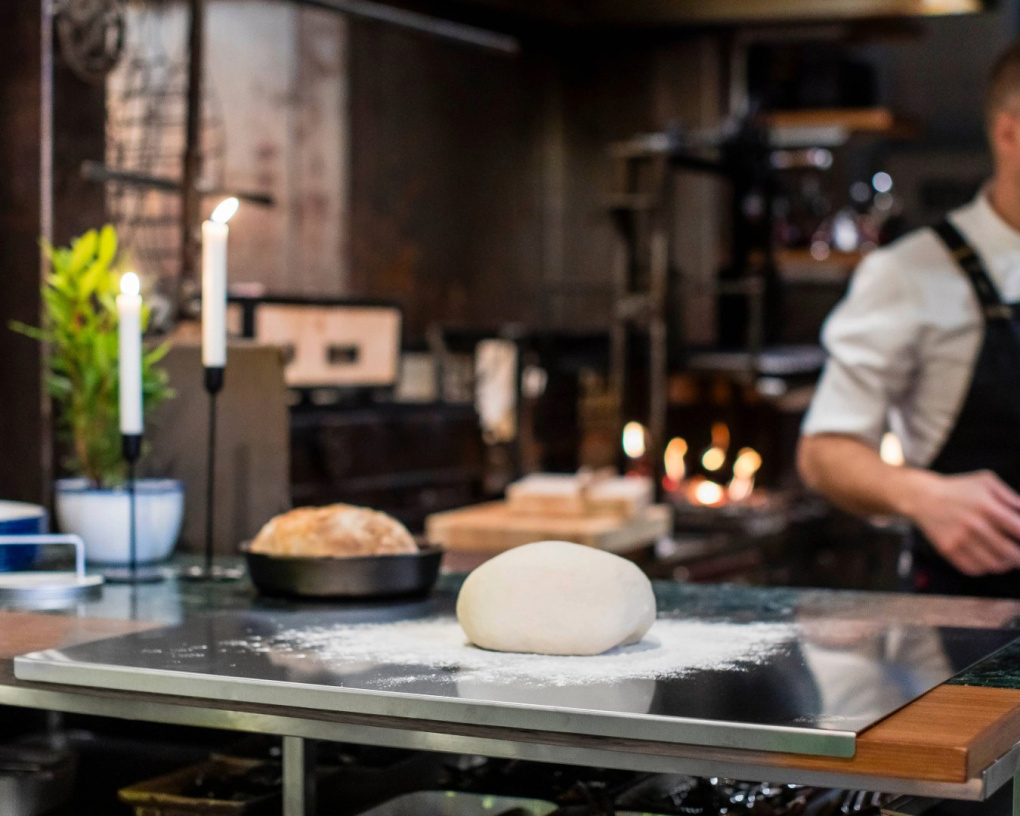
A stainless steel baking board gives you a smooth, dense surface for kneading and rolling. Clean it in the right order and the job takes just a few minutes.
The centre of a frying pan heats up first. Give the heat time to spread to the edges and the pan fries evenly, food releases more easily and the pan keeps its shape.
A deep golden-brown crust gives meat flavour and texture. In a carbon steel pan it comes down to three things: a dry surface, a properly hot pan and patience before you turn.
Fish is delicate and full of moisture, which is why it sticks so easily. With dry fish, an evenly hot carbon steel pan and a little patience, it lifts away whole – with crisp skin.
The fried egg is the carbon steel pan's first real test. With gentle heat, a generous knob of butter and a little patience, it releases the very first time – even in a brand-new pan.
The first pancake is rarely the best – but the second one can be. With the right heat and a little butter, pancakes and small Swedish plättar turn out even in carbon steel pans.
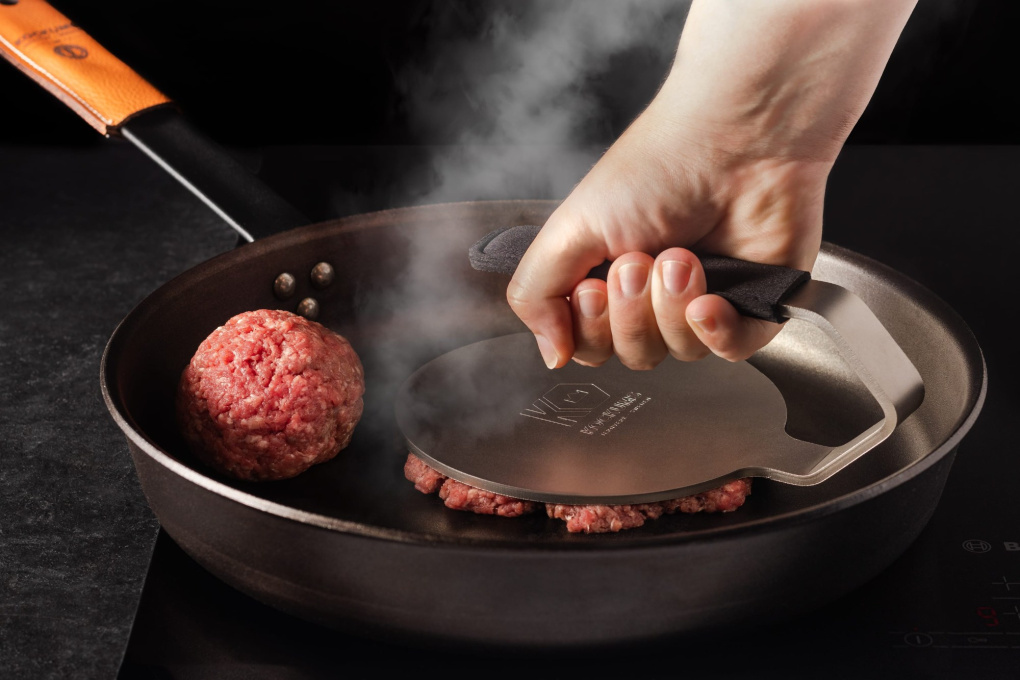
A smash burger needs three things: a hot, even surface, a flat iron and a griddle scraper. Here is how to get the crust – and how to get the griddle clean afterwards.
The cheapest heat is the heat already in the pot. With a lid, the right ring and a pot that holds its warmth, you can switch off the hob sooner than you think.
A good kitchen doesn't need to be full. Five well-chosen pieces cover breakfast, weekday dinners, a Sunday stew and Friday pizza – and last for years if you look after them properly.
Our lowest price 1-30 days before price reduction:
NOTE. The price is the lowest price applied for the product 1-30 days before the current price reduction was implemented. The exception is if gradual reductions have been made, then the lowest price 1-30 days before the first price reduction is shown.