


How to fry fish without it sticking
Time: about 15 min
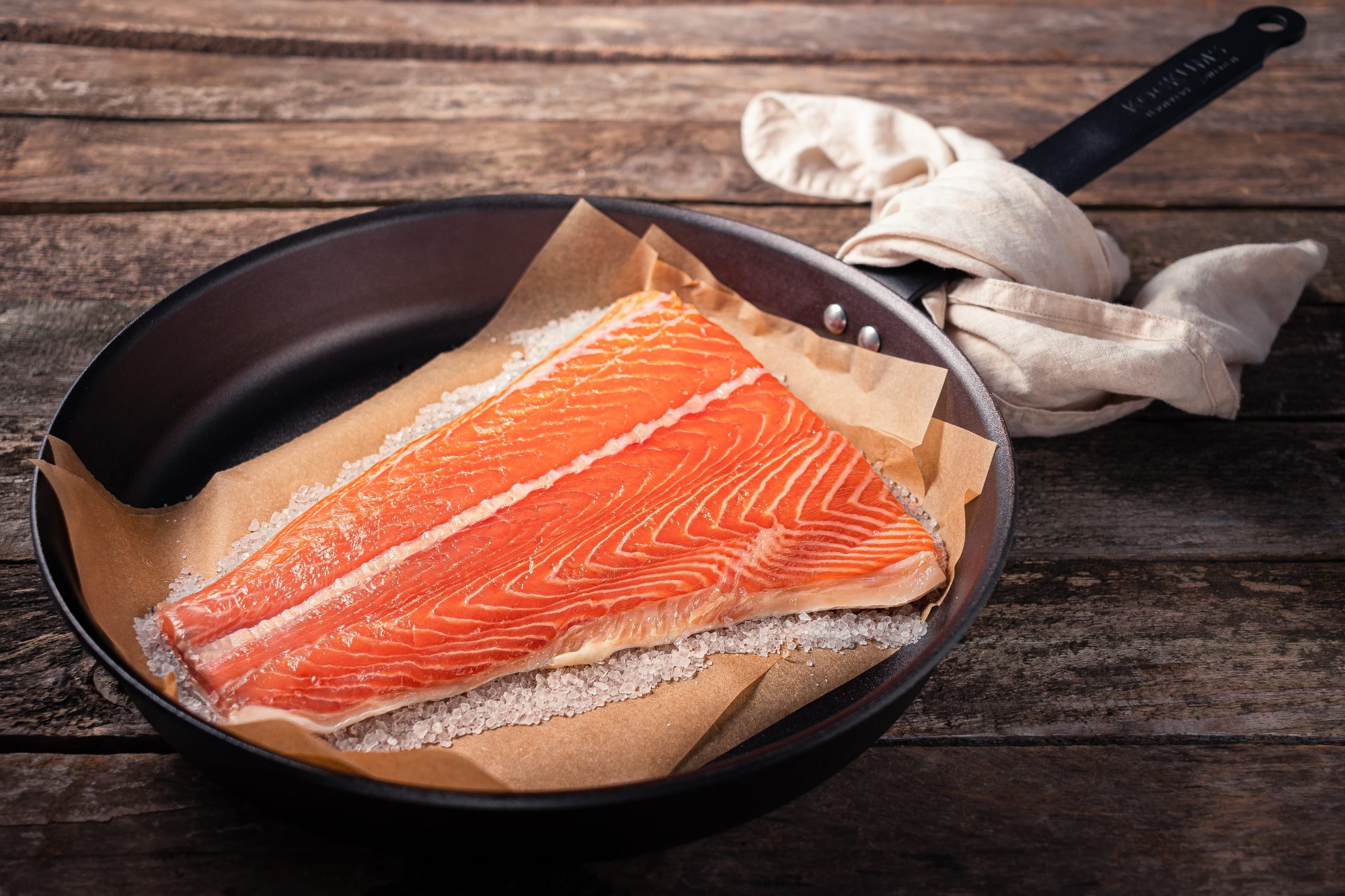
Fish is delicate and full of moisture, which is why it sticks so easily. With dry fish, an evenly hot carbon steel pan and a little patience, it lifts away whole – with crisp skin.
Short answer
Pat the fish thoroughly dry with kitchen paper and heat the carbon steel pan slowly to medium-high with plenty of oil or butter. Lay the fish in skin side down, press lightly with the spatula so the skin stays flat, and leave it untouched until it releases by itself. Turn once with a wide spatula and finish cooking on a lower heat.
What you need
- Carbon steel frying pan
- Slotted spatula
- Kitchen paper
- Rapeseed oil and butter
- Salt
How to do it
- Dry the fishTake the fish out of the fridge a little while before and pat it dry with kitchen paper on both sides, especially the skin. The drier the surface, the less it sticks.
- Heat the pan slowlyPut the pan on a zone the size of its base and raise the heat gradually to medium-high. An evenly hot pan means the whole fillet cooks at the same time.
- Use plenty of fatAdd a generous layer of rapeseed oil, with a knob of butter if you like. The fat should cover the whole base and be runny before the fish goes in.
- Lay it in skin side downSalt the fish and lay it in the pan skin side down, away from you. Press lightly with the spatula for the first few seconds so the skin does not contract and curl.
- Leave it aloneDo not touch the fish for a few minutes. Once the skin has formed a crust it releases from the pan; if it still sticks, give it a little longer.
- Turn onceSlide the slotted spatula under the whole fillet and turn it in one calm movement. The slots let the fat run through, so it stays in the pan.
- Finish on a lower heatTurn down the heat and let the fish finish on the other side, ideally with a knob of butter spooned over. Squeeze the lemon over the fish on the plate rather than into the pan.
- Clean the panLet the pan cool, rinse it in hot water without detergent, dry it thoroughly and wipe on a few drops of oil.
Common mistakes
- Adding the fish before the pan and the fat are properly hot.
- Moving or turning the fish too early, so the skin tears.
- Frying too many pieces at once, so the pan cools and the fish stews in its own juices.
- Squeezing lemon or reducing wine in the carbon steel pan, where the acid can loosen the seasoned surface.
Why the fish releases
Fish contains a lot of water, and the proteins on its surface readily bond to the pan before a crust has had time to form. When the pan is evenly hot and the fat covers the base, the crust forms quickly and the fish comes away by itself. The seasoned surface of carbon steel gives a better release the more the pan is used.
FAQ
Should fish be fried with or without the skin?
With the skin if possible: it protects the delicate flesh, holds the fillet together and turns crisp. Cook skin side down for most of the time.
Which fish is easiest to fry in a carbon steel pan?
Firm fillets with the skin on, such as salmon, Arctic char and thick cod loin, are the easiest to start with. Thin, delicate fillets such as plaice need a little more fat and a gentle hand with the spatula.
Why does fish stick even when the pan is hot?
Often the fish is wet or is turned too early. Dry it thoroughly and wait until it releases by itself.
Can I use a metal spatula in a carbon steel pan?
Yes, all kinds of utensils work in a carbon steel pan, although Kockums recommends wood or silicone. A wide slotted spatula makes it easier to lift the whole fillet.
The pan and spatula in this guide


More kitchen know-how
 Why you should heat a frying pan slowly
 The essential kitchen – five pieces that handle almost everything
 A golden-brown crust on meat – how to do it in carbon steel
Comments