


Why you should heat a frying pan slowly
Time: about 5 min
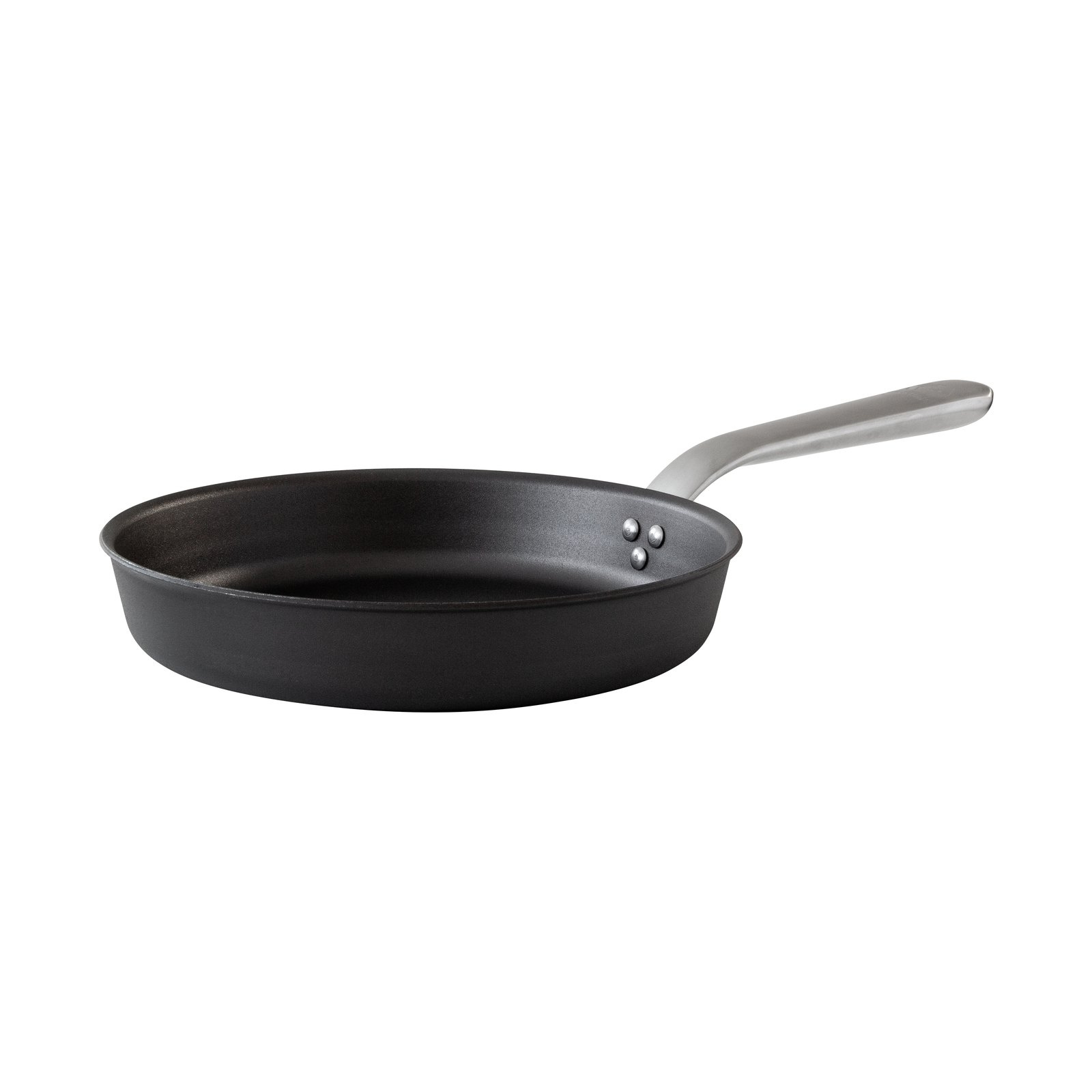
The centre of a frying pan heats up first. Give the heat time to spread to the edges and the pan fries evenly, food releases more easily and the pan keeps its shape.
Short answer
A carbon steel pan should be heated slowly because the centre gets hot faster than the edges. Start on low heat and turn it up gradually, and the heat has time to spread across the surface, so food cooks evenly and does not burn in the middle. Slow heating also reduces the risk of warping, which can happen if the pan heats too fast on induction or above 450 °C.
What you need
- Carbon steel frying pan
- Hob ring or induction zone of the right size
- A knob of butter or a little rapeseed oil
- Oven glove
How to do it
- Choose the right zonePut the pan on a ring or induction zone that matches its base. A ø28 cm pan has a 22.5 cm base; a zone that is too small makes the centre hot while the edges stay cool.
- Start low with fat in the panAdd a knob of butter or a little rapeseed oil and switch on low heat. The fat shows you how the heat is spreading across the surface.
- Raise the heat in stagesTurn the heat up gradually over a few minutes rather than going straight to the top setting. Avoid the boost function on an induction hob while the pan is cold.
- Watch the fatWhen the pan is hot right out to the edges, butter foams evenly across the whole base and oil turns runny and shimmers. If it only sizzles in the middle, the pan needs more time.
- Turn down once it is hotCarbon steel conducts and holds heat efficiently, so you rarely need the highest settings. Once the pan is hot, you can often cook on a lower heat.
- Let it cool calmlyLet the pan cool before you clean it. Cold water in a hot pan can make it warp, for the same reason as heating it too fast.
Common mistakes
- Putting a cold pan on the highest setting or on boost on induction.
- Using a zone that is much smaller than the base of the pan.
- Adding the food before the heat has reached the edges.
- Rinsing the hot pan under cold water after cooking.
How carbon steel behaves
Heat comes from below and spreads outwards through the steel, which is why the centre heats first. Steel expands as it warms, and big temperature differences between centre and edge create stresses that can make the pan warp. Kockums pans have a slightly curved base that allows for this expansion, but slow heating is the best protection.
FAQ
How long should a carbon steel pan be preheated?
It depends on the hob and the pan, but allow a few minutes with the heat raised step by step. The pan is ready when the fat sizzles evenly across the whole base.
Can I use the boost setting on induction?
Not with a cold carbon steel pan. Heating too fast on induction can in some cases make the pan warp, so raise the heat in stages instead.
Why does my frying pan have a slight curve in the base?
Kockums deep-draws its pans and gives the base a slight upward curve, so the steel has room to expand as it heats. This reduces the risk of the pan warping.
Why does food burn in the middle of the pan?
Usually the pan has been heated too fast or on a zone that is too small, so the centre is much hotter than the edges. Heat more slowly and choose a zone the size of the base.

More kitchen know-how
 A golden-brown crust on meat – how to do it in carbon steel
 How to fry fish without it sticking
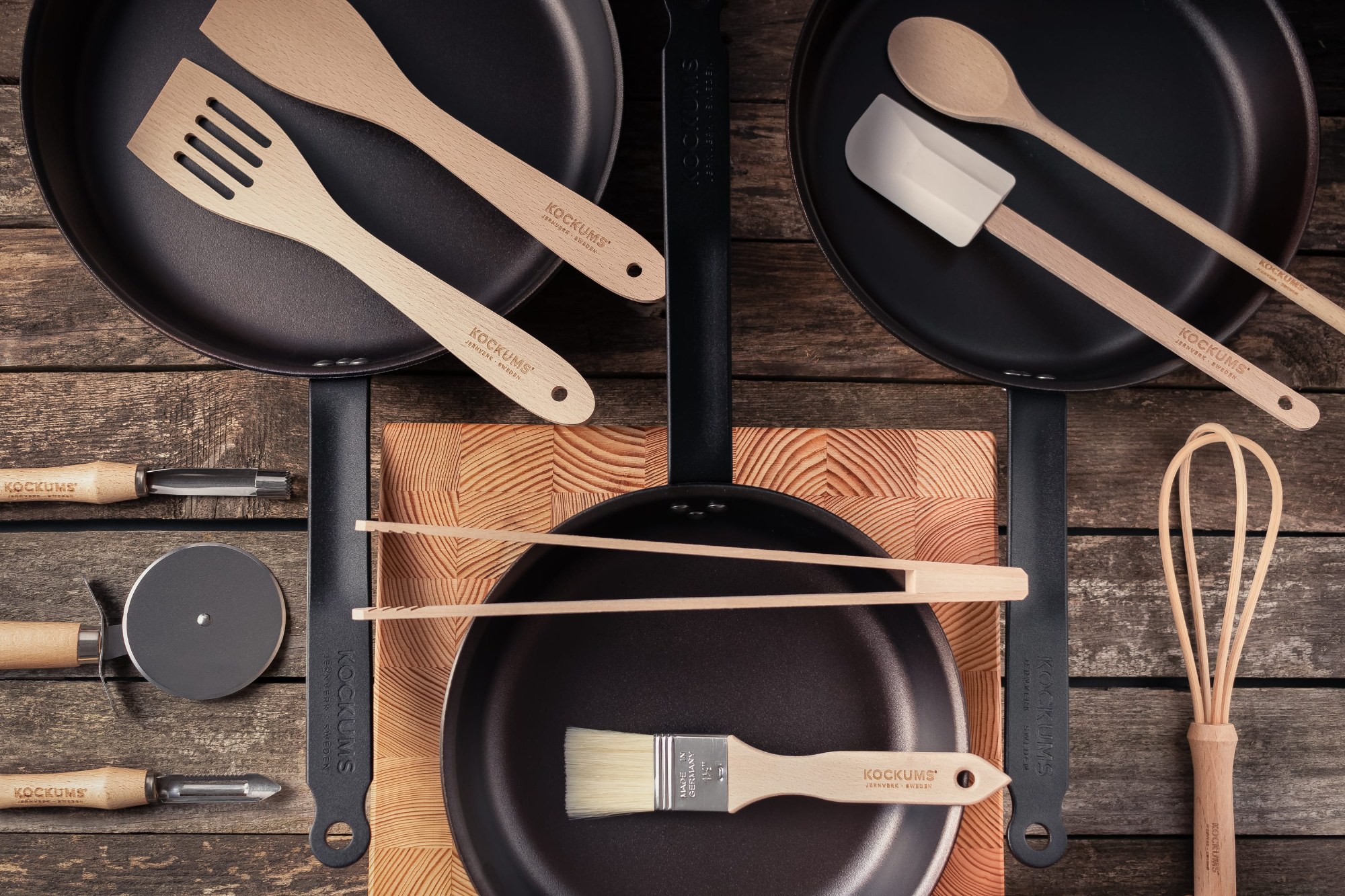 The essential kitchen – five pieces that handle almost everything
Comments