


Soap, water or dishwasher? A washing-up guide to carbon steel, enamel, wood and stainless steel
Time: about 15 min
The carbon steel pan only wants hot water, the enamel pot is happy with washing-up liquid and the chopping board must never go in the dishwasher. Here is the whole kitchen, material by material.
Short answer
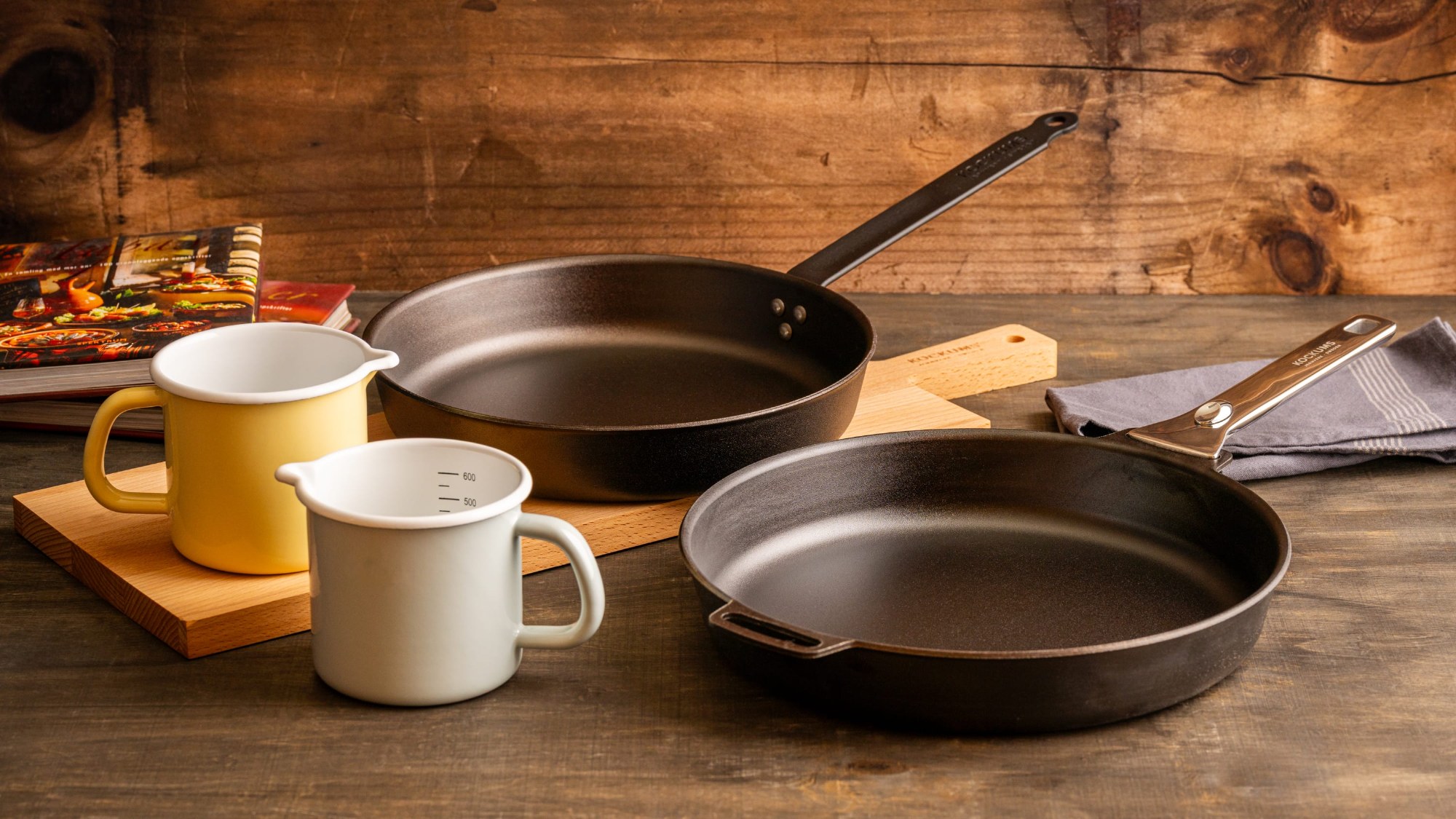
Carbon steel – frying pans, griddles and pizza steels – is cleaned with hot water only, without washing-up liquid and never in the dishwasher. Enamelled steel and the enamelled frying pan handle both washing-up liquid and the dishwasher, but washing by hand keeps the shine longer. The enamelled cast iron pot is best washed by hand. Wood is washed by hand and dried at once. Stainless steel utensils are easiest: ordinary washing-up liquid is fine.
What you need
- Beech and horsehair dish brush
- Soft nylon sponge
- Mild washing-up liquid
- Dry tea towel
- Neutral cooking oil
How to do it
- Carbon steel: hot water onlyLet the frying pan, griddle or pizza steel cool, then clean it with hot water only. Never use washing-up liquid or the dishwasher, and never leave it to soak.
- Carbon steel: dry and oil straight awayDry it thoroughly, underside included, and wipe on a few drops of neutral oil. Carbon steel left to air-dry can start to rust.
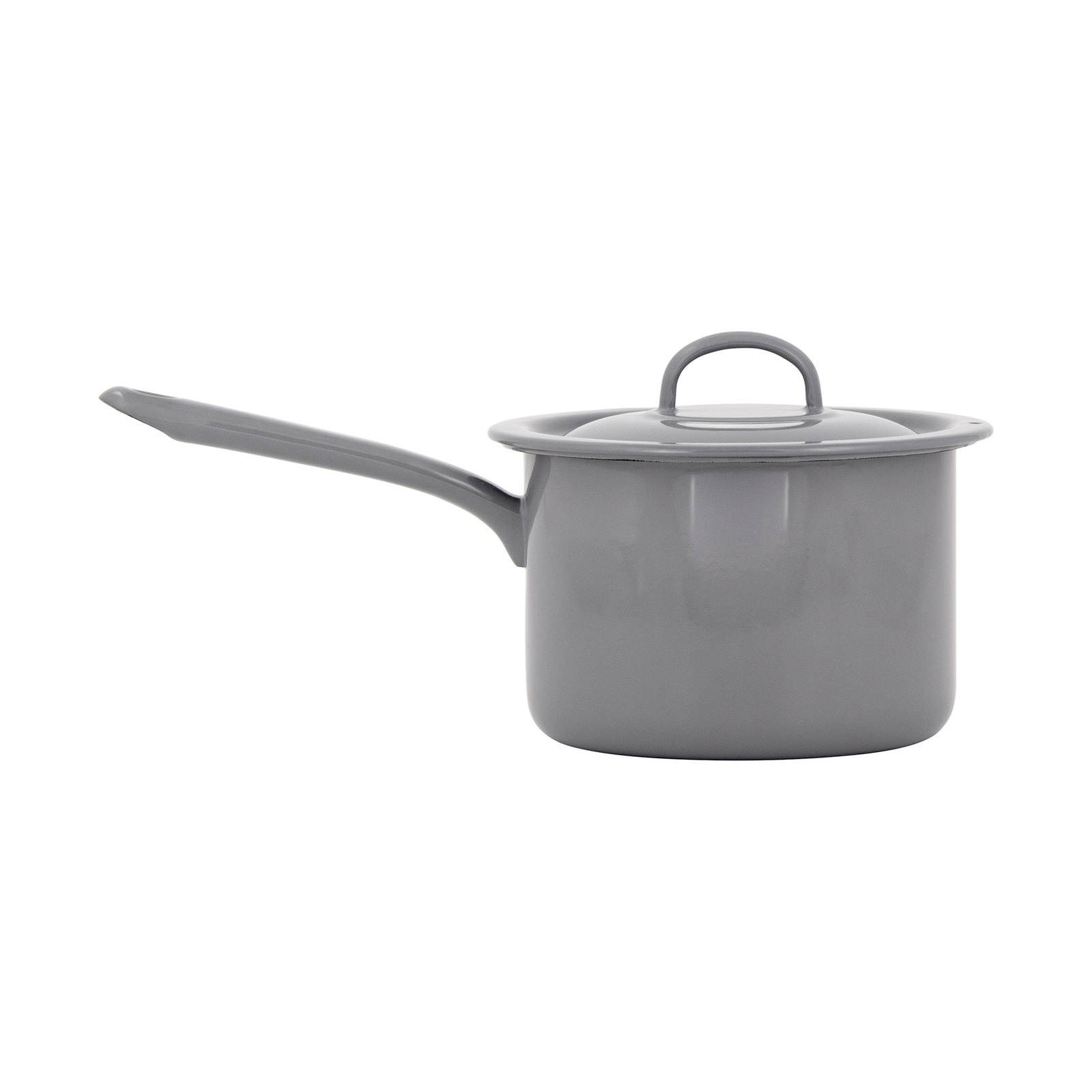
- Enamelled steel: washing-up liquid is fineLet the pan cool, then wash it with warm water, mild washing-up liquid and a soft nylon sponge or dish brush. The dishwasher works too, but washing by hand keeps the colour bright.
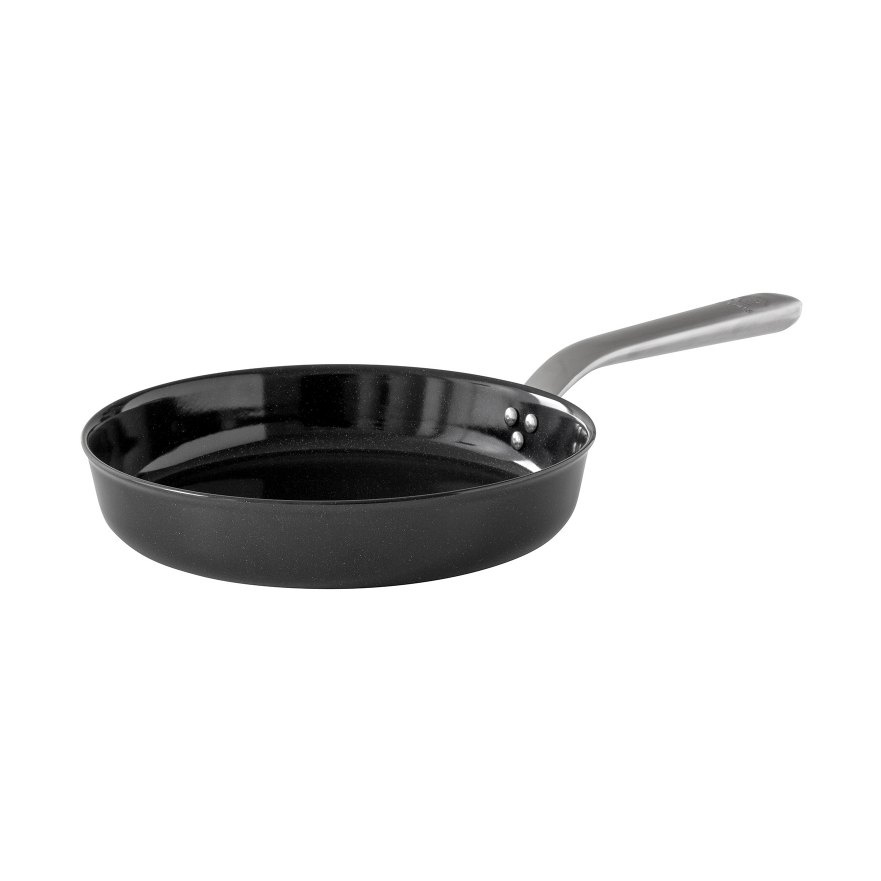
- Enamelled frying pan: just as easyThe enamelled carbon steel pan can take both washing-up liquid and the dishwasher. Washing it by hand keeps the enamel glossy for longer.
- Enamelled cast iron pot: by handLet the pot cool and wash it with hot water and a mild detergent. If food has stuck, fill it with hot water and leave it for 15–20 minutes; avoid metal utensils and abrasive cleaners.
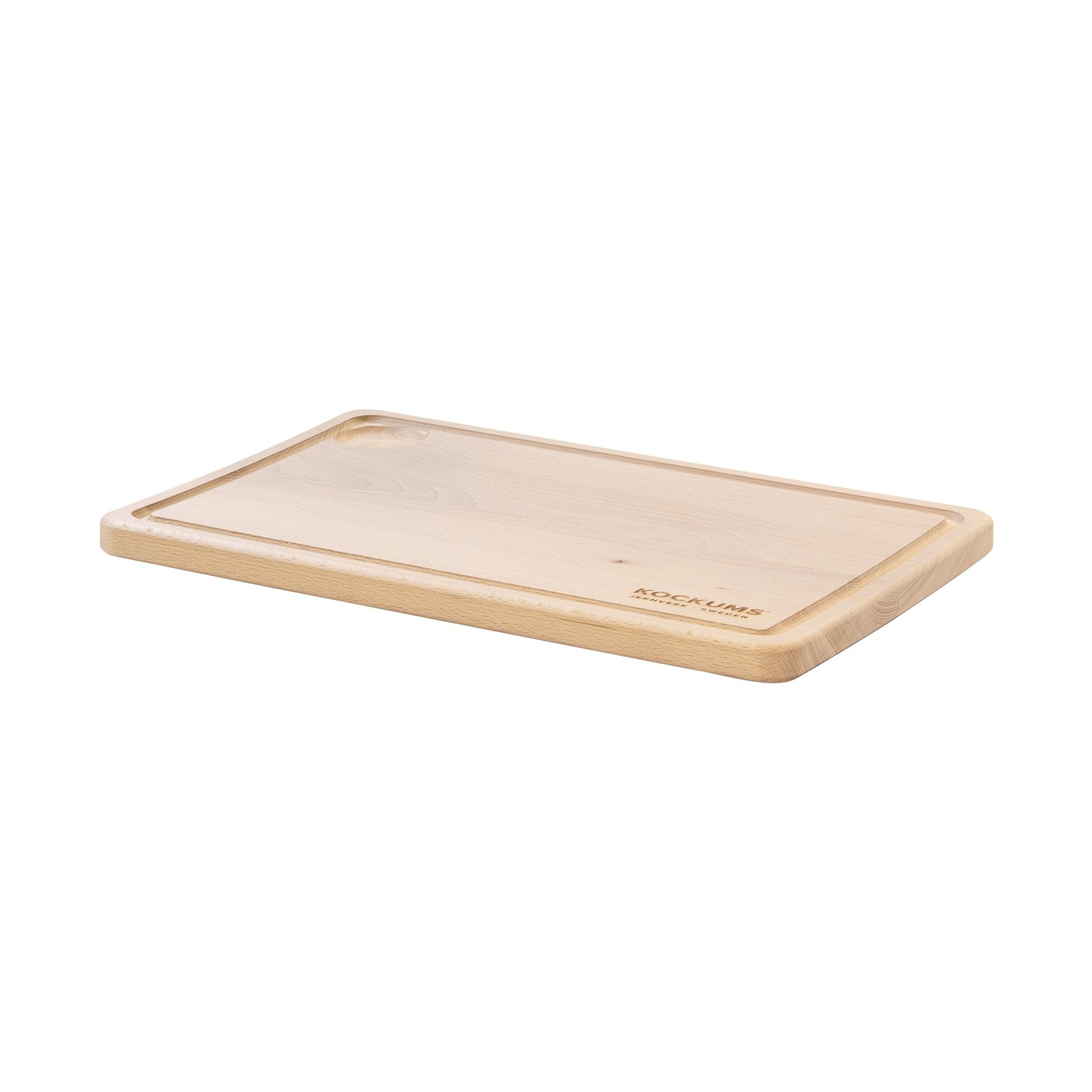
- Wood: a quick hand wash, never the machineWash chopping boards and wooden utensils by hand and dry them with a towel straight away. Never soak them and never put them in the dishwasher.
- Stainless steel utensils: the easiestStainless steel spatulas and scrapers are washed with ordinary washing-up liquid and warm water. Dry them afterwards so they stay shiny without water marks.
Common mistakes
- Leaving the carbon steel pan to soak in the sink – it can start to rust within minutes.
- Running cold water into a hot pan, which can warp carbon steel and damage enamel.
- Scrubbing enamel with steel wool or a hard scourer, which can damage the surface.
- Putting chopping boards and wooden utensils in the dishwasher.
Why each material needs different handling
The protective surface on carbon steel is made of seasoned-in vegetable oils, and washing-up liquid and dishwashers wear it away so the steel can start to rust. Enamel is a glass-like surface that copes with washing-up liquid, but washing by hand keeps the colour bright the longest. Wood soaks up water, so it does best with a quick wash and immediate drying.
FAQ
My carbon steel pan went through the dishwasher – is it ruined?
Usually not. Remove any rust with steel wool or a similar scourer, then season the pan again.
Why is hand washing recommended for enamel if it is dishwasher safe?
The enamel copes with the machine, but washing by hand keeps the colour and gloss longer.
Can I use washing-up liquid on a chopping board?
Yes, by hand. Kockums' pine chopping boards are washed with warm water and washing-up liquid, then dried with a towel.
Which sponge for which material?
A soft nylon sponge or dish brush for enamel and wood. For burnt-on food in carbon steel, steel wool is fine, followed by fresh seasoning.



Comments