


Oiled wooden worktops and tables – paraffin oil or soap?
Time: about 30 min
Paraffin oil and linseed oil soap sound like two sides of the same coin, but they do very different jobs. One feeds and protects the wood, the other cleans it.
Short answer
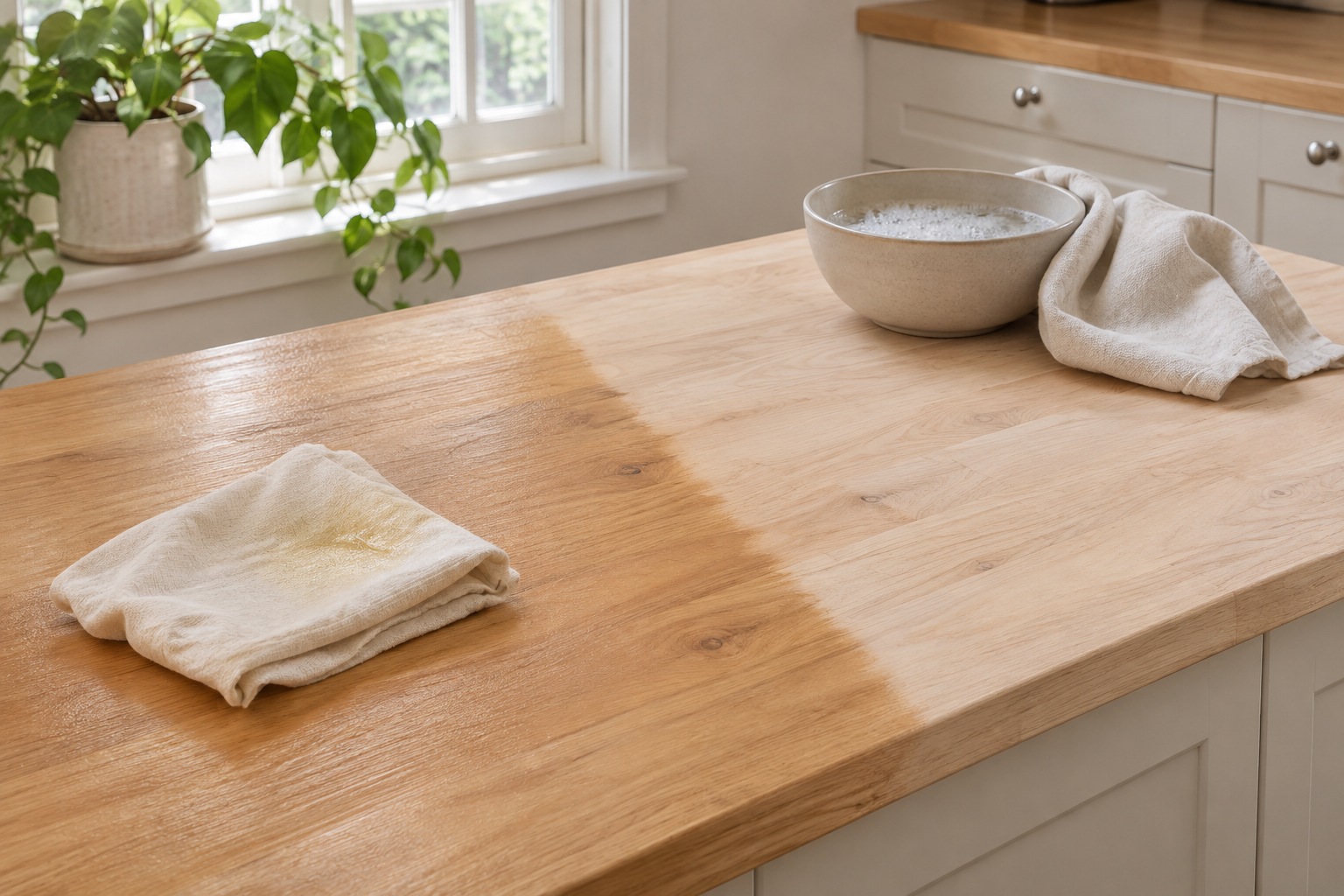
Use both, but for different things. Linseed oil soap cleans: mix 1 dl (100 ml) into 10 litres of lukewarm water, dampen the wood first and wipe with a well-wrung cloth so the soapy water never dries in. Paraffin oil protects: spread it on the dry surface with a cloth, wipe off the excess and repeat until the wood is saturated. The soap does not replace the oil.
What you need
- Paraffin oil (PAO-050)
- Linseed oil soap (LIO-050)
- Bucket of lukewarm water
- Two clean cotton cloths
- Kitchen paper
How to do it
- Wipe with a damp cloth day to dayCrumbs and spills are best removed straight away with a damp, well-wrung cloth. Never leave puddles of water standing on the wood.
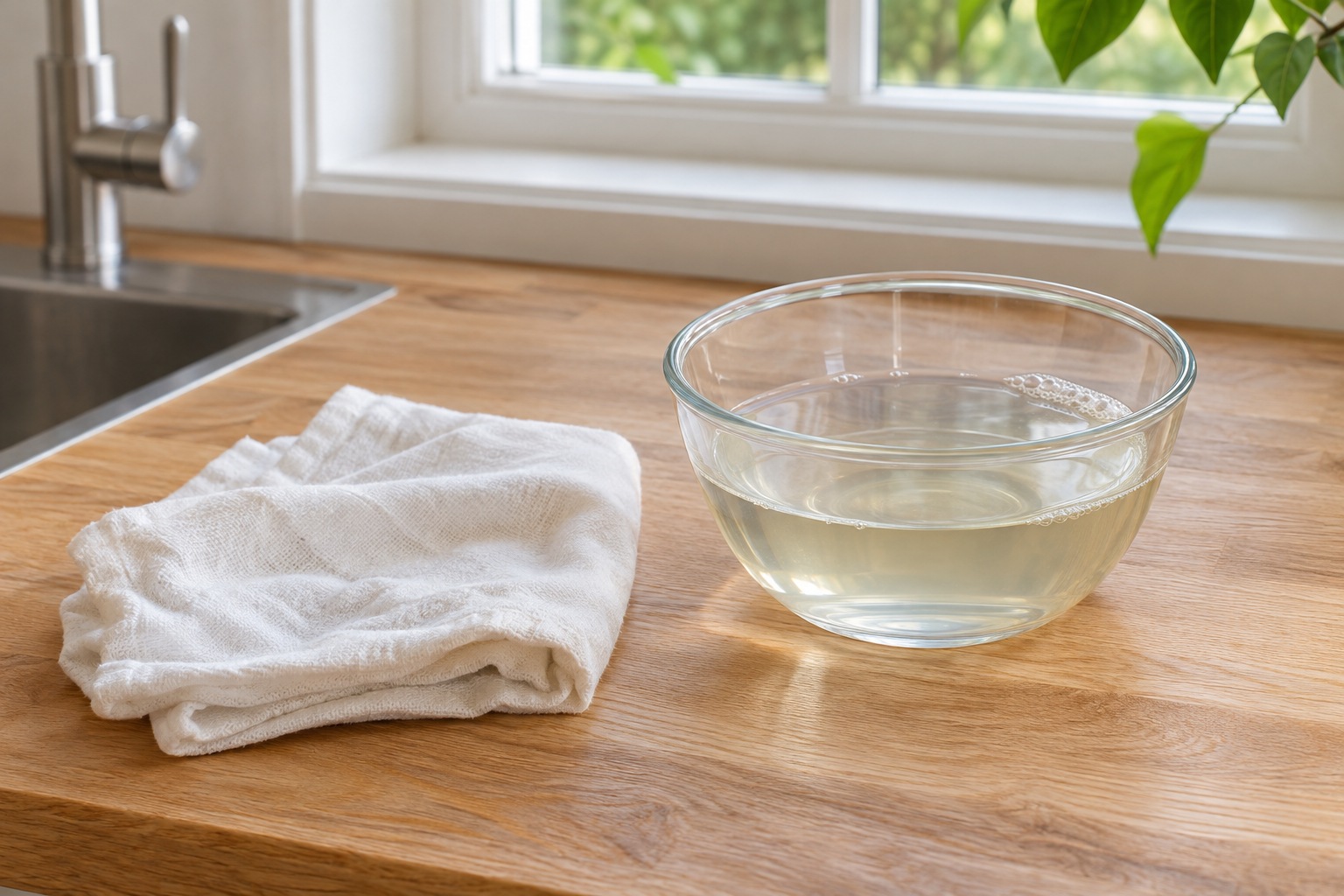
- Mix the soap solution correctlyAdd 1 dl (100 ml) of linseed oil soap to 10 litres of lukewarm water. That is Kockums' dilution for everyday cleaning.
- Dampen the wood before washingFirst wipe the surface with clean water. Neat soap on dry wood can leave brown marks that will not come out.
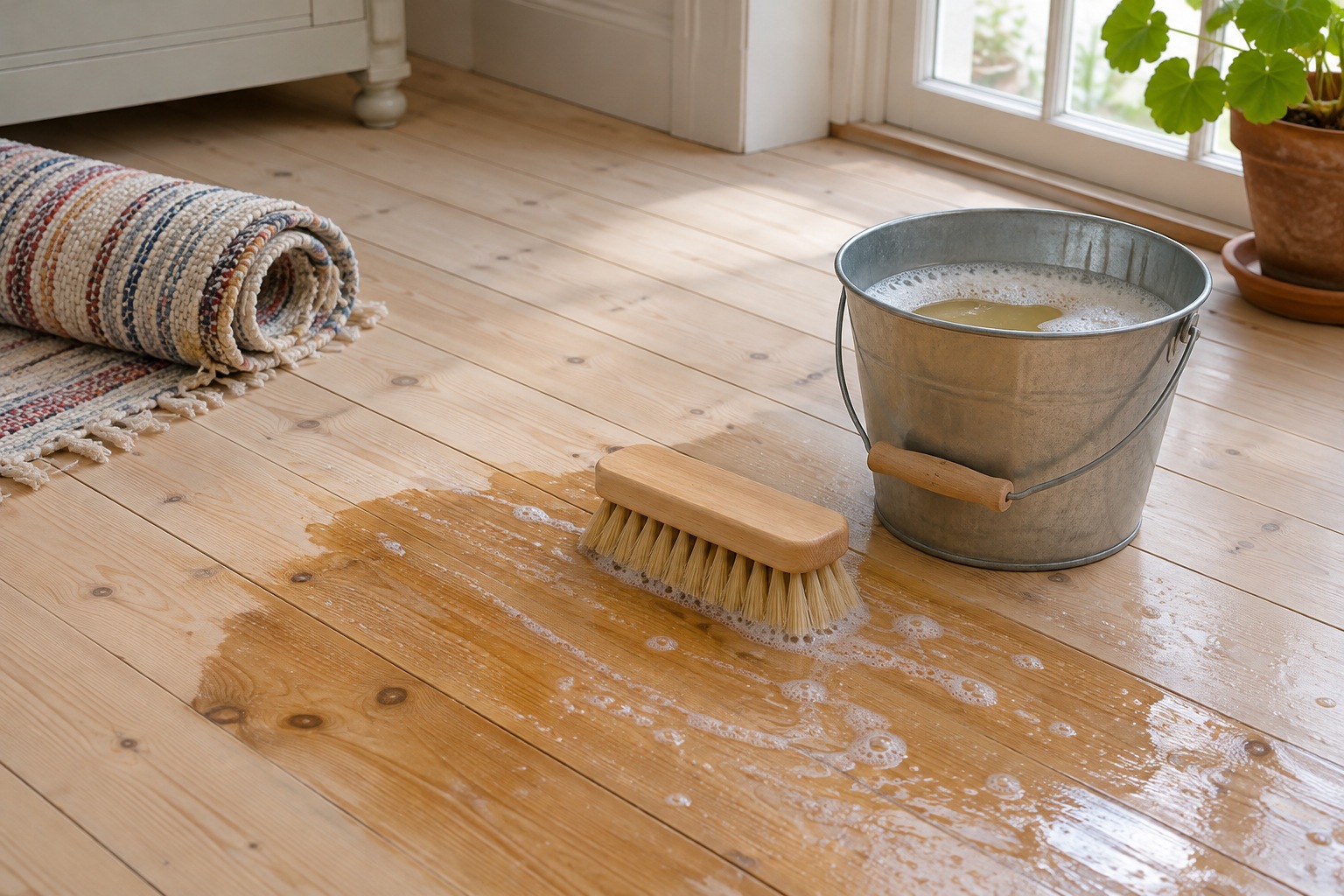
- Wash, then wipe againWash with a well-wrung cloth and follow with a clean, damp cloth. Do not let soapy water sit and dry in; Kockums warns that dried-in soapy water can make wooden floors turn yellow.
- Let the surface dry completelyWait until the wood is fully dry before you oil it.
- Oil with paraffin oilSpread the paraffin oil with a cloth along the grain over the whole surface and the edges. Wipe off the excess.
- Repeat until the wood is saturatedRepeat until the wood will not take up any more oil. Finish by wiping the surface thoroughly so it does not feel oily.
Common mistakes
- Thinking the soap protects the surface – it cleans; the oil is what feeds the wood.
- Pouring neat soap straight onto dry wood, which can leave brown marks.
- Leaving excess oil on top; paraffin oil does not dry, so the surface stays sticky.
- Oiling a varnished tabletop – the oil cannot get through the varnish.
Why you need both oil and soap
Paraffin oil is a non-drying oil: rather than forming a hard film, it soaks into the wood and fills it, making it harder for water and dirt to get in. Linseed oil soap is a gentle cleaner that can be used on most materials; on untreated wood it lightens the surface over time and gives it a soft patina. So you clean with the soap and protect with the oil.
FAQ
Can I use linseed oil soap instead of oil on my worktop?
No, the soap is for cleaning. To feed and protect an oiled surface, use paraffin oil.
How often should an oiled worktop be re-oiled?
When the wood looks dry and pale or feels rough, it is time. A worktop in daily use needs oil more often than a table that mostly just stands.
Does paraffin oil suit every type of wood?
It can be used on most types of wood. Try it first on a spot that will not show.
Can I use the paraffin oil on garden furniture?
It is made for indoor wood, such as chopping boards, worktops and tables.

Comments