


Scrubbing a wooden floor with linseed oil soap – the right dilution
Time: about 60 min
A soap-washed wooden floor slowly takes on a pale, soft patina. What matters most is the right dilution – and never putting neat soap on dry wood.
Short answer
To scrub a wooden floor, mix 5–8 dl (500–800 ml) of linseed oil soap into 10 litres of cold water; for weekly cleaning, 1 dl (100 ml) in 10 litres of lukewarm water is enough. Dampen the floor first, scrub with a brush or mop and wipe up with a well-wrung cloth so no soapy water dries in. Let the floor dry fully before the rugs go back.
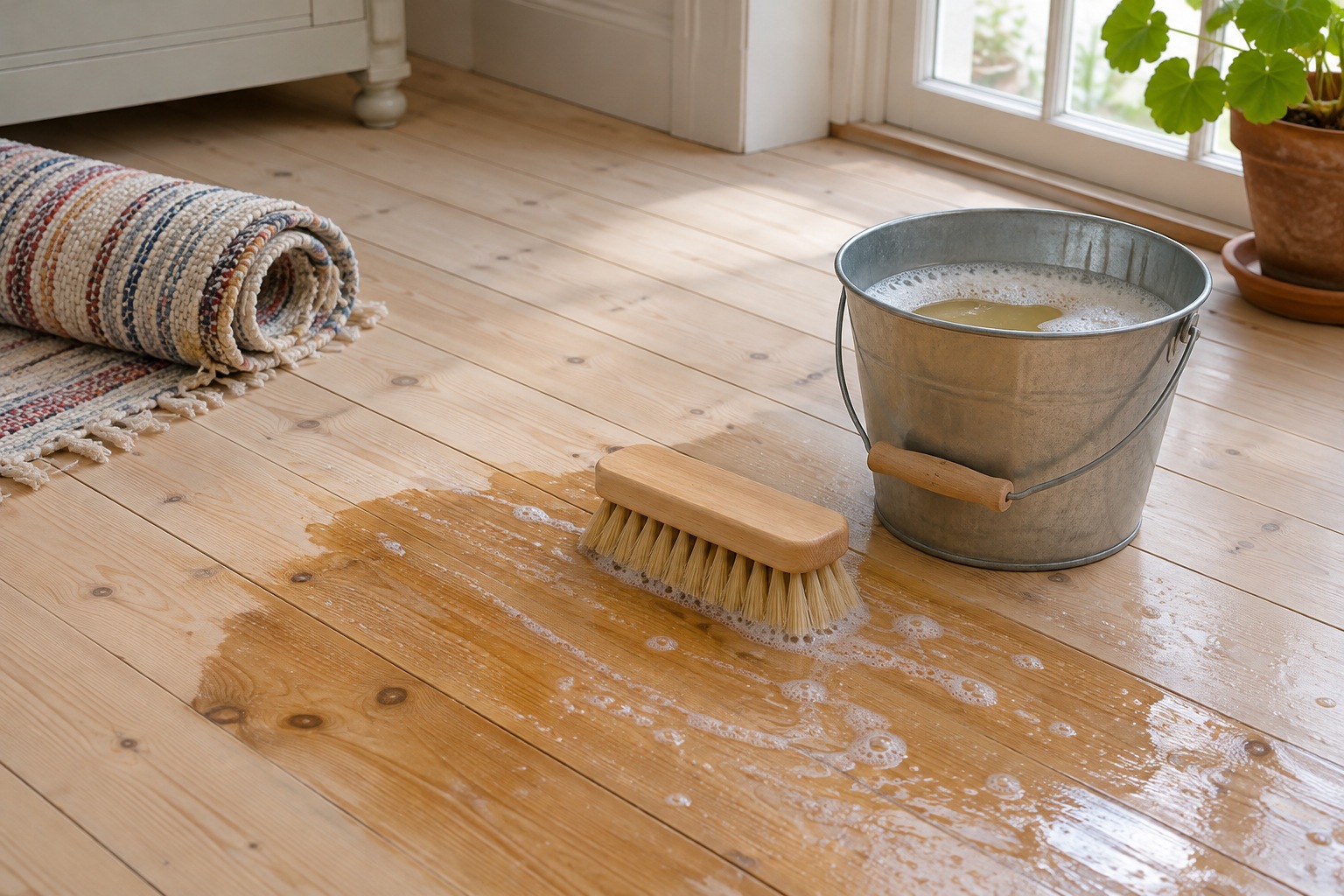
What you need
- Linseed oil soap
- Large bucket (at least 10 litres)
- Cold water
- Scrubbing brush
- Mop or floor cloth
- Measuring jug
How to do it
- Clear the floor and vacuumTake out rugs and loose furniture and vacuum or sweep thoroughly. Grit and crumbs left behind can easily scratch when you scrub.
- Mix the scrubbing solutionPour 5–8 dl (500–800 ml) of linseed oil soap into 10 litres of cold water and stir. One 250 ml bottle isn't enough for a full bucket, so allow two to just over three bottles.
- Dampen the floor firstWipe the floor with clean water before any soap goes on. Neat soap on dry wood can leave brown stains that won't come out.
- Scrub a section at a timeDip the brush or mop in the solution and scrub a small area at a time, along the boards. Stubborn marks can take a little neat soap straight on the brush – on dampened wood.
- Wipe up the soapy waterWipe up as you go with a well-wrung cloth or mop. Never let soapy water sit and dry in, as it can contribute to the floor turning yellow.
- Let the floor dryOpen a window if you can and let the floor dry completely. Don't put the rugs back until it is dry.
- Keep it up with a weaker mixBetween scrubs, washing the floor with 1 dl (100 ml) of soap in 10 litres of lukewarm water is enough. Over time the soap bleaches untreated wood and gives the floor a fine patina.
Common mistakes
- Pouring neat soap straight onto a dry floor.
- Measuring by eye – follow the dilution: 1 dl (100 ml) for cleaning, 5–8 dl (500–800 ml) for scrubbing.
- Leaving soapy water standing to dry into the floor.
- Putting the rugs back before the floor is dry.
Why soap gives the floor its patina
Linseed oil soap cleans gently, and on untreated wood it bleaches over time and gives the surface a fine patina. That is why soap-washed wooden floors turn pale and soft in tone. The right dilution and dry surfaces afterwards are what separate an even, pale floor from a blotchy or yellowed one.
FAQ
Should I scrub with cold or warm water?
Kockums specifies cold water for the scrubbing solution, 5–8 dl (500–800 ml) to 10 litres. For everyday cleaning, 1 dl (100 ml) of soap goes into 10 litres of lukewarm water.
Why are there brown stains on my floor?
Brown stains can appear when neat soap lands on dry wood, and they won't come out. Always dampen the floor with water before putting soap straight onto a mark.
Why is my floor turning yellow?
Soapy water that is left to sit and dry in can contribute to the floor yellowing. Wipe up as you go with a well-wrung cloth or mop.
Can I scrub a lacquered or oiled floor with linseed oil soap?
Linseed oil soap can be used on most materials, but always follow the floor manufacturer's advice for lacquered and oiled floors. The patina from the soap shows most clearly on untreated wood.
Comments