


Linseed oil soap in the kitchen – what it suits and what it doesn't
Time: about 30 min
Linseed oil soap is a Scandinavian kitchen classic. It cleans gently and suits most materials – but not everything in the kitchen should be washed with soap.
Short answer
Linseed oil soap suits kitchen floors, cupboard doors and other washable surfaces: mix 1 dl (100 ml) of soap into 10 litres of lukewarm water and wipe with a well-wrung cloth. It also loosens burnt-on food in enamel pans. Don't use it on carbon steel pans, griddles, pizza steels or chopping boards – carbon steel is cleaned with hot water only and a few drops of oil, and chopping boards are washed by hand and oiled.
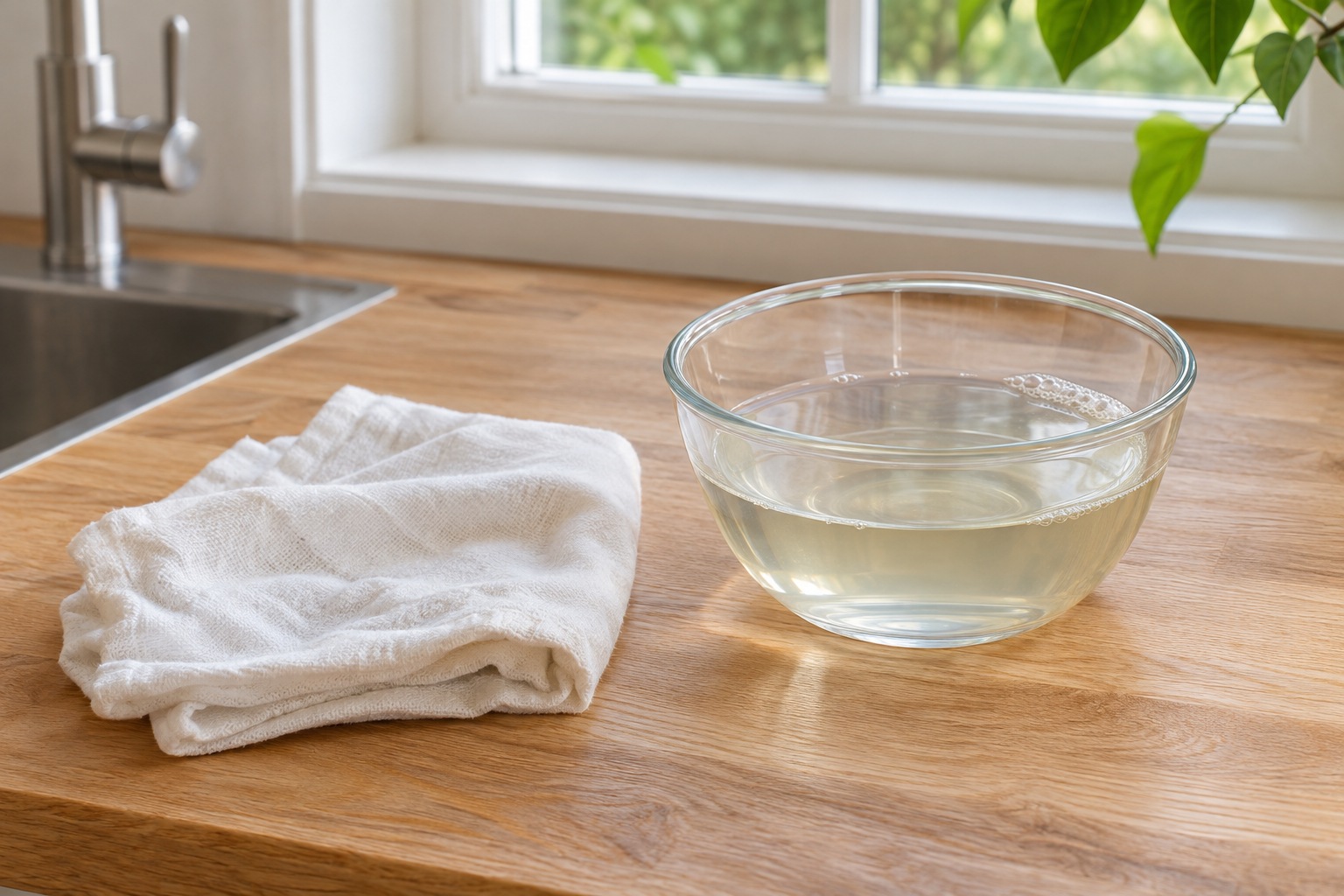
What you need
- Linseed oil soap
- Bucket
- Lukewarm water
- Cloth or mop
- Soft brush
- Measuring jug
How to do it
- Mix a cleaning solutionFor everyday cleaning, mix 1 dl (100 ml) of linseed oil soap into 10 litres of lukewarm water. If you only need 5 litres, use ½ dl (50 ml).
- Wring the cloth out wellDip the cloth or mop and wring it out thoroughly. Surfaces should be damp, not wet.
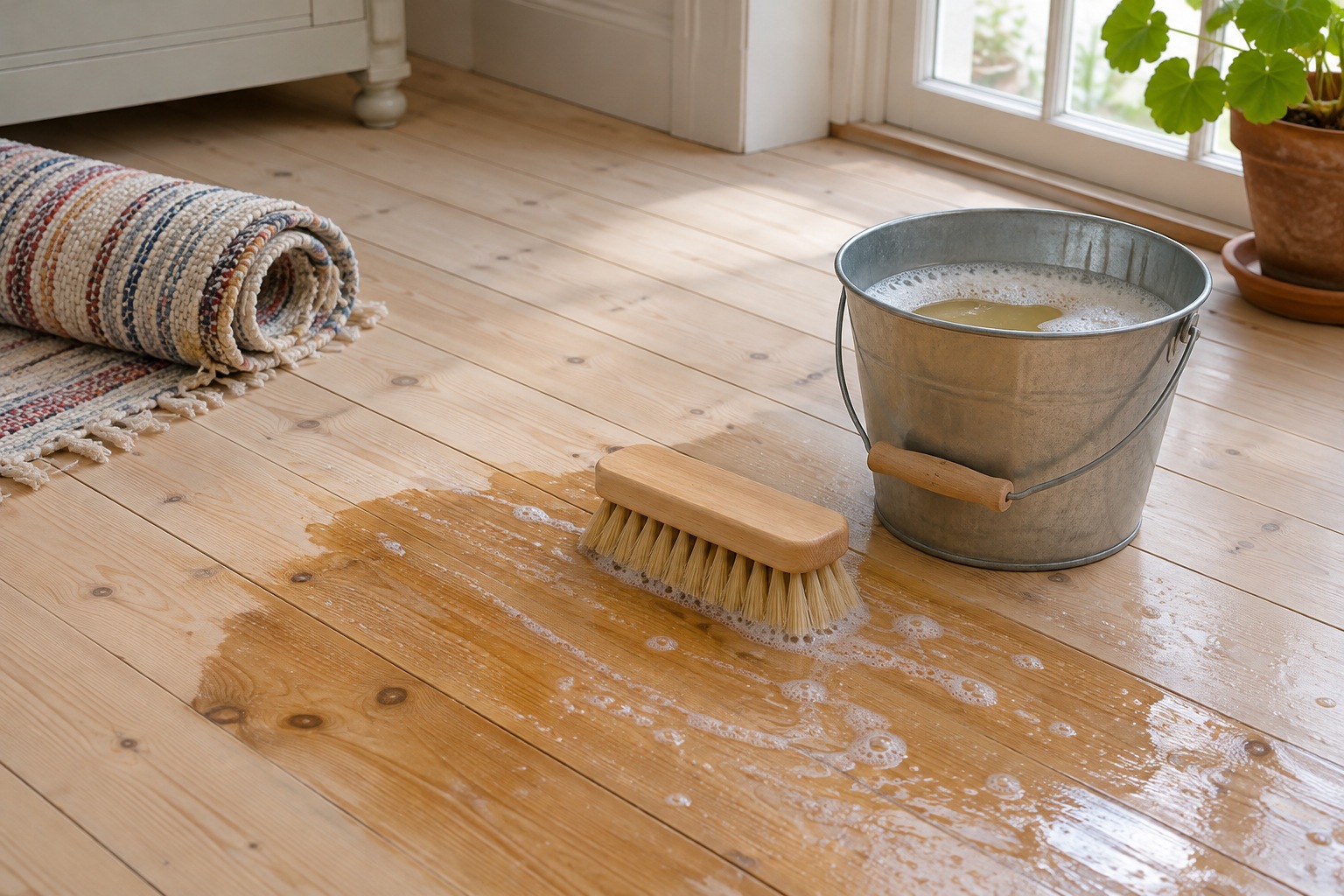
- Wipe doors, skirting and floorWipe cupboard doors, skirting boards and the kitchen floor with the solution. Do the floor last, once crumbs and splashes from the higher surfaces have landed there.
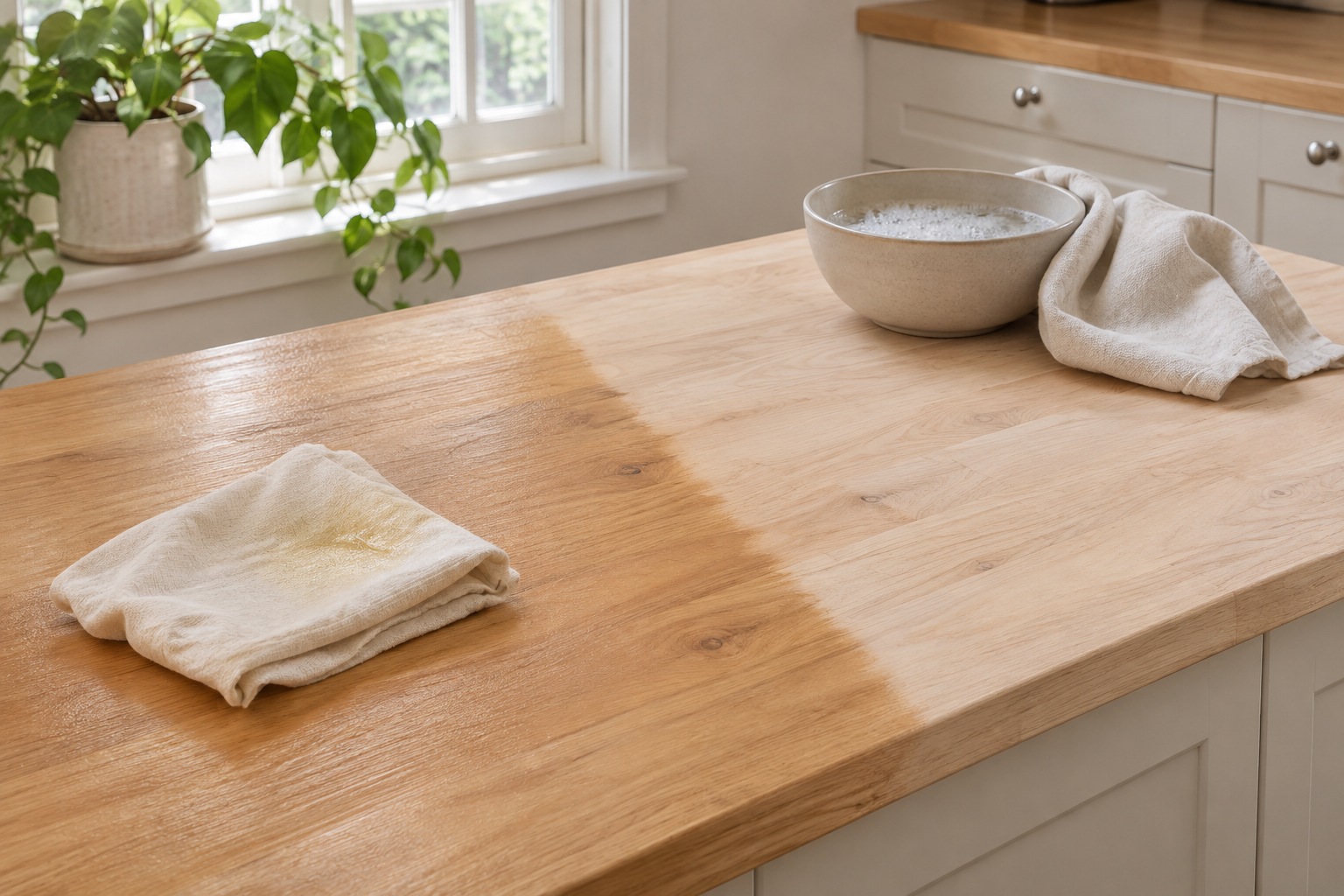
- Work on stains with a brushStubborn marks can be worked with a little neat soap straight on a brush. Always dampen wood with water first, as neat soap on dry wood can leave brown stains that won't come out.
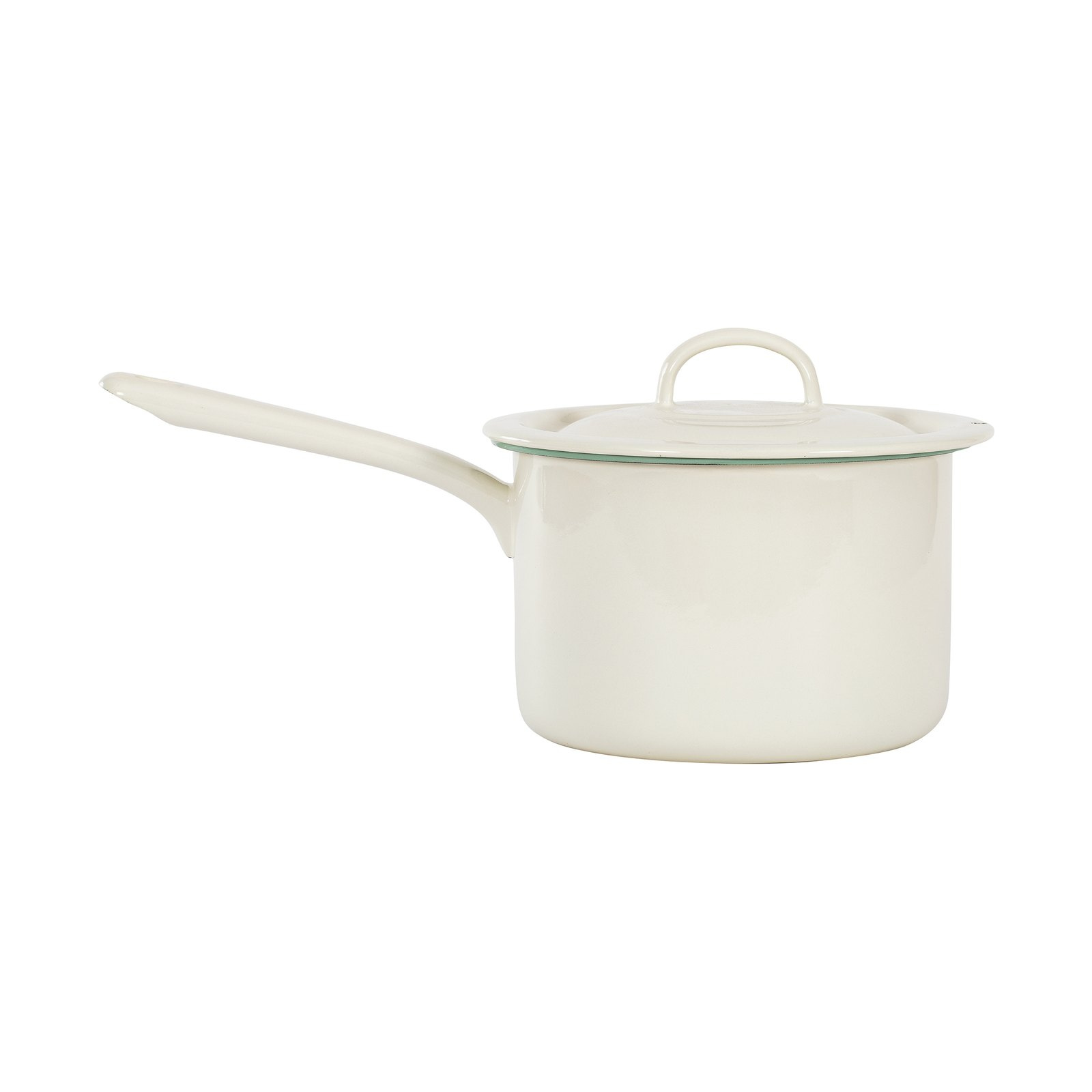
- Loosen burnt-on food in enamelIf something has burnt onto an enamel pan, let it cool, then leave it to stand with water for 10–15 minutes before pouring the water away. Add a little linseed oil soap, leave it for a few minutes and lift off the rest with a soft sponge. Wash and rinse the pan as usual afterwards.
- Don't let soapy water dry inWipe over with a clean, wrung-out cloth so no soapy water is left standing. Soapy water that dries in can contribute to wooden floors turning yellow. Let the floor dry before the rugs go back down.
- Keep soap off carbon steel and boardsCarbon steel pans, griddles and pizza steels are cleaned with hot water only and given a few drops of oil. Chopping boards and wooden utensils are washed by hand and oiled – they don't need soap.
Common mistakes
- Using too much soap – 1 dl (100 ml) to 10 litres is enough for everyday cleaning.
- Putting neat soap straight onto dry wood.
- Washing a carbon steel pan with soap instead of hot water.
- Letting soapy water dry on the floor.
Why linseed oil soap is gentle
Linseed oil soap is a natural product that loosens dirt gently and can be used on most materials. On untreated wood it bleaches over time and gives a lovely patina. The seasoned surface of carbon steel, on the other hand, is built up from oil and heat and shouldn't be washed away, which is why soap stays off the pans.
FAQ
Can I wash my carbon steel pan with linseed oil soap?
No. Carbon steel is cleaned with hot water, dried thoroughly and given a few drops of oil. Washing-up liquid and soap don't belong on the seasoned surface.
How much linseed oil soap goes in the bucket?
For everyday cleaning, 1 dl (100 ml) to 10 litres of lukewarm water, so 50 ml in a 5-litre bucket. A 250 ml bottle is then enough for two and a half 10-litre buckets.
Can I wash my chopping board with linseed oil soap?
Kockums' advice for chopping boards is to wash them by hand, dry them well and oil them regularly. Soap isn't part of that routine, so save it for floors and cupboard doors.
What does it mean that the soap bleaches wood?
On untreated wood, linseed oil soap lightens the surface over time and gives it a fine patina. If you want to keep the wood's original tone, don't wash it with soap regularly.
Comments