


Residual heat and lids – cooking with less energy
Time: about 60 min
The cheapest heat is the heat already in the pot. With a lid, the right ring and a pot that holds its warmth, you can switch off the hob sooner than you think.
Short answer
Always put the lid on when heating liquid, choose a ring or zone that matches the base and turn the heat down as soon as it boils. A cast iron casserole or an enamel pot holds its heat well, so you can switch off the hob a little before the food is done and let residual heat finish it under the lid. Don't lift the lid unnecessarily.
What you need
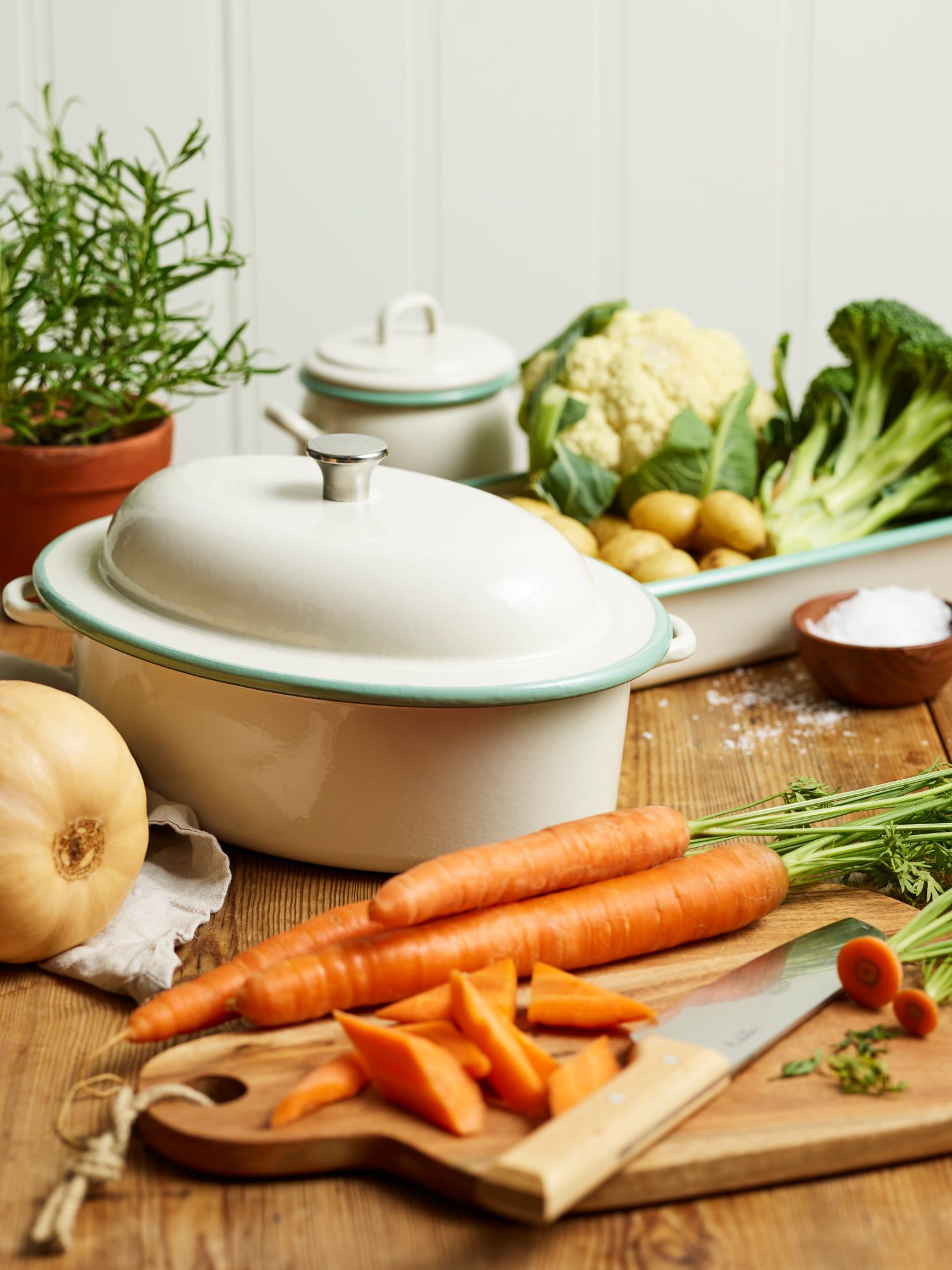
- Cast iron casserole 4 l with a tight-fitting lid
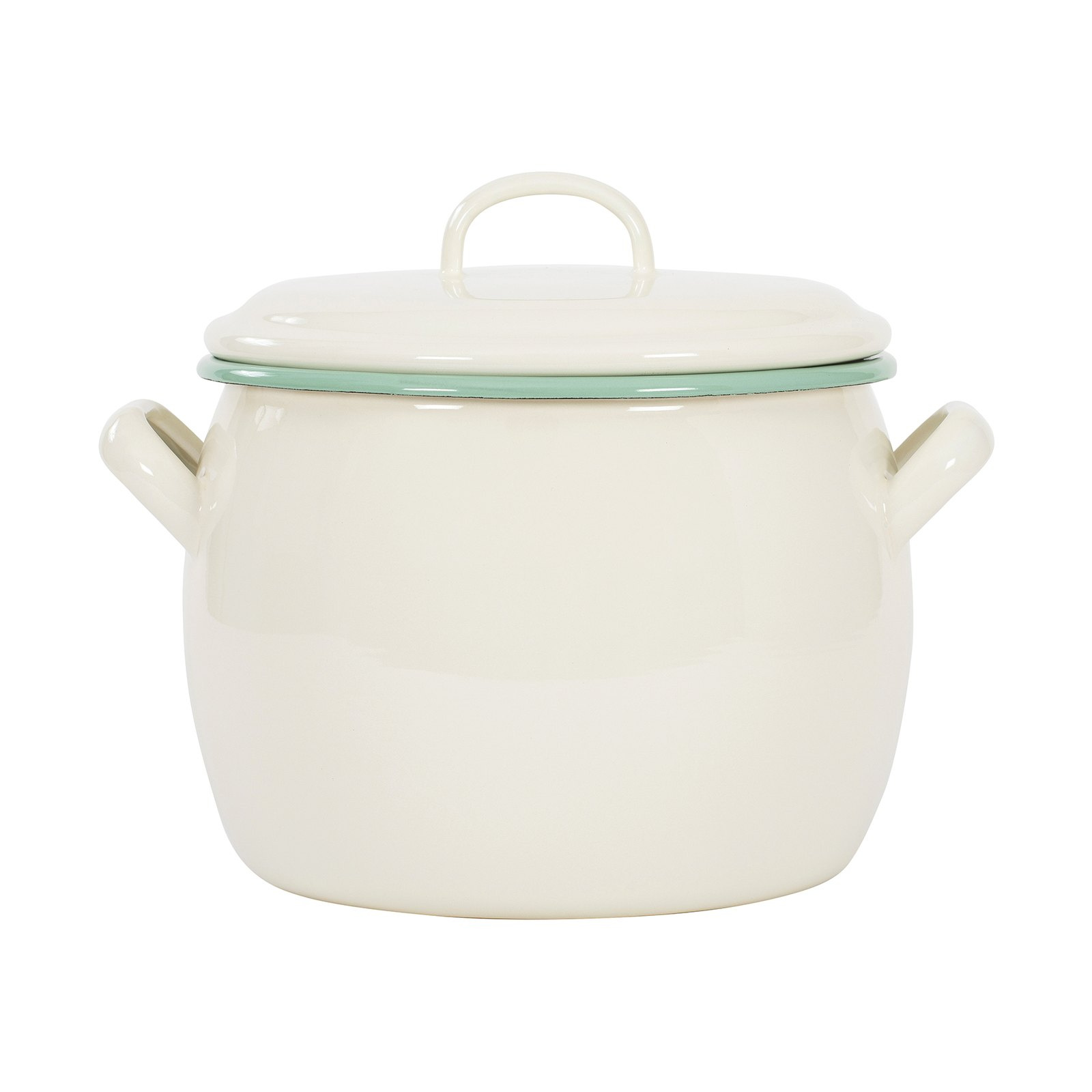
- Enamel pot 4 l with lid
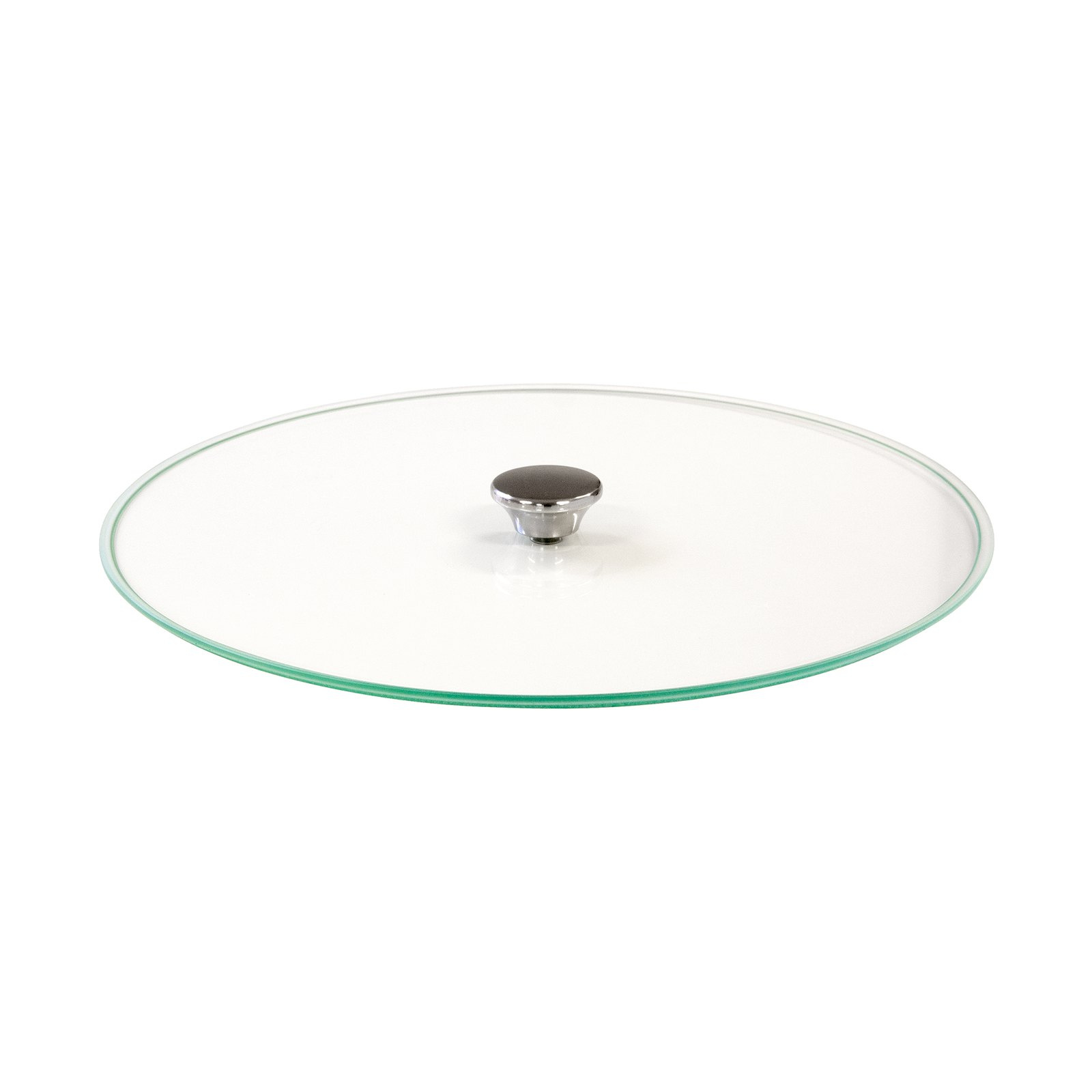
- Glass lid Ø28 cm for the frying pan
- Oven gloves
- A tea towel or blanket for the hay box
How to do it
- Choose the right ringPut the pot on a ring or zone that matches the size of its base. On gas, adjust the flame so it doesn't lick up the sides – the heat should go into the base, not into the kitchen.
- Put the lid on from the startWith a lid, water and stews heat up faster and less steam escapes. The tight lid of the cast iron casserole has a drip function that returns the condensation to the food.
- Turn down once it boilsOnce the pot has reached the heat you want, a lower setting is enough to keep it there. A steady simmer under the lid usually does the same job as a rolling boil.
- Use the glass lid on the frying panA glass lid on the frying pan lets you steam vegetables, melt cheese or warm leftovers on low heat – and you can see how it is going without lifting it.
- Switch off before it is doneTurn off the hob a little before the food is ready and leave the pot standing with the lid on. Residual heat carries on cooking potatoes, rice, porridge and stews, for example.
- Try the hay boxPorridge and stews that need to swell or finish slowly can be wrapped, hot and covered, in a tea towel or blanket, just like a grandmother's hay box. Stand the pot on a heat-resistant surface and let the retained heat do the work.
- Use the oven's residual heatThe cast iron casserole works in all ovens except microwaves, and the lid knob withstands 250 °C. Switch off the oven a while before the casserole is done and leave it inside with the lid on.
Common mistakes
- Lifting the lid often to check – every time, heat and steam escape.
- Keeping the heat on full after it has come to the boil, when a lower setting would do.
- Putting a small pot on a large ring so the heat goes past the base.
- Heating the enamel pot empty or letting the cast iron casserole boil dry – it can damage the enamel.
Why residual heat works
The weight of cast iron gives even, slow heat distribution and holds the warmth for a long time, while the base and sides of the enamel pot store heat well and pass it on to the food. A tight lid keeps heat and steam in, so the food carries on cooking for a good while after the hob is switched off.
FAQ
Does residual heat work on an induction hob?
An induction zone stops heating the moment you switch it off, whereas a solid hotplate or ceramic hob keeps giving off heat for a while. On induction it is the pot's own heat that does the work, so a heavy pot with a lid works best.
Why does the cast iron casserole lid have a drip function?
Steam condenses under the lid and drips back over the food, so the casserole bastes itself and less liquid boils away.
What is the best way to heat the cast iron casserole?
Heat it for 5–7 minutes on a lower setting until it reaches a medium-high temperature, then cook on a lower heat. High heat isn't needed and can make food catch.
Can leftovers be stored in the enamel pot?
Yes, enamelled steel doesn't pass on taste or smell, so food can be kept in the pot once it has cooled. Let the pot cool gradually – never under cold water.

Comments