


Winter storage for griddles and griddle plates
Time: about 30 min
When the barbecue season ends, a few minutes of care decide how the griddle looks in spring. Carbon steel likes to be clean, dry and thinly oiled – and stored indoors.
Short answer
Before winter, clean the griddle or griddle plate with hot water and no washing-up liquid, removing any burnt-on residue or rust with steel wool. Dry everything completely, including the underside and handles, and wipe on a thin layer of neutral cooking oil. Then store the steel somewhere dry indoors, protected from damp and knocks, and check on it once during the winter.
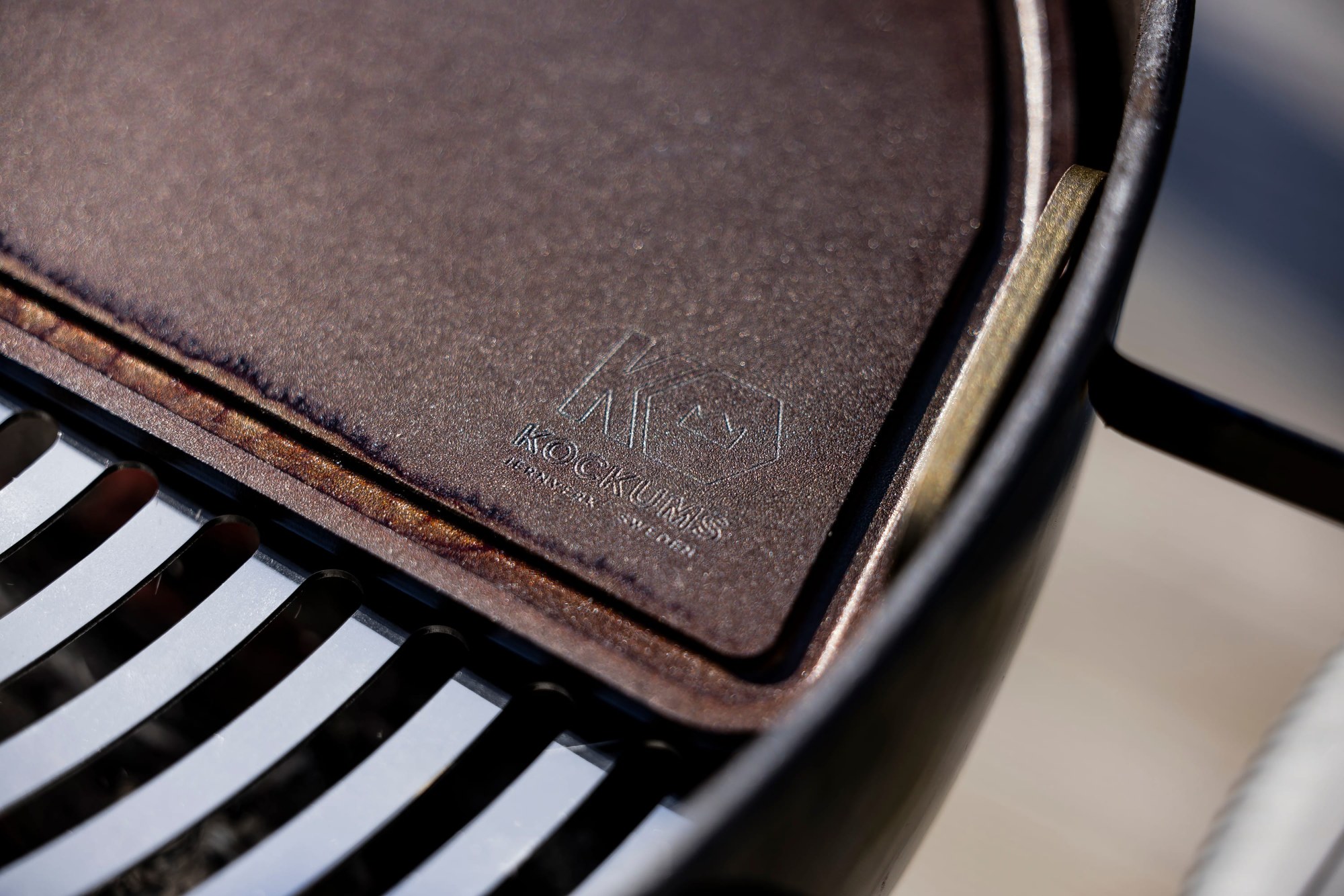
What you need
- Carbon steel griddle or griddle plate
- Hot water and a dish brush
- Steel wool if needed
- Neutral cooking oil
- Kitchen paper or a tea towel
- A dry storage spot indoors
How to do it
- Clean it thoroughlyScrape off food residue and clean the cooking surface with hot water and no washing-up liquid. If anything is burnt on or rust spots have appeared, remove them with steel wool and re-season the surface before storage.
- Dry it completelyDry the steel thoroughly with a tea towel or kitchen paper, including the underside, edges and handles. It helps to warm it briefly on the hob so the last moisture evaporates – never leave it to air-dry.
- Oil it thinlyWipe a thin layer of neutral cooking oil over the cooking surface and remove the excess with kitchen paper. The surface should feel lightly oiled, not sticky.
- Choose a dry spot indoorsKeep the griddle somewhere dry indoors, such as a cupboard or a dry storeroom shelf. Avoid damp cellars, garages with condensation and leaving it out on the barbecue.
- Protect it from scratches and knocksPut a dry cloth or paper between griddles, griddle plates and lids if you stack them. Do not seal the steel in a tight bag unless it is completely dry.
- Check on it before springTake a look at the steel once during the winter. Before the first barbecue evening, a rinse, a dry and gentle heating with a little butter or oil is usually all it needs.
Common mistakes
- Putting the griddle away damp or with food residue on it.
- Leaving the griddle on the barbecue or in a damp shed all winter.
- Applying a thick, sticky coat of oil instead of a thin one.
- Wrapping the steel in a tight plastic bag before it is completely dry.
Why dry and thinly oiled is enough
Carbon steel rusts when moisture is left on its surface. Clean, dry steel with a thin film of oil gives moisture little to cling to, and the seasoning stays intact until next season. If rust does appear, a carbon steel griddle can almost always be saved.
FAQ
Can the griddle stay outside over winter?
It is better to bring it in. Carbon steel rusts when it stays damp, and rain, snow and condensation make it hard to keep the surface dry outdoors.
How much oil should I apply before storage?
Just a thin layer of neutral cooking oil, wiped back with kitchen paper. The surface should be protected, not glossy with oil.
Can I use the griddle outdoors in winter?
Yes, the griddle works well for winter cooking in the fresh air. Just bring it in afterwards, let it cool, then clean and dry it before putting it away.
What should I do if it has rusted in storage?
Rub off the rust with steel wool or a coarse scourer, rinse with hot water, dry and re-season the surface. Carbon steel can almost always be saved.

Comments