


Burnt-on food in your pan – how to remove it gently
Time: about 20 min
Scorched sauce, stuck potatoes or a sugary marinade? Start with the gentlest method and work up step by step – water, heat and a pan scraper are usually all you need.
Short answer
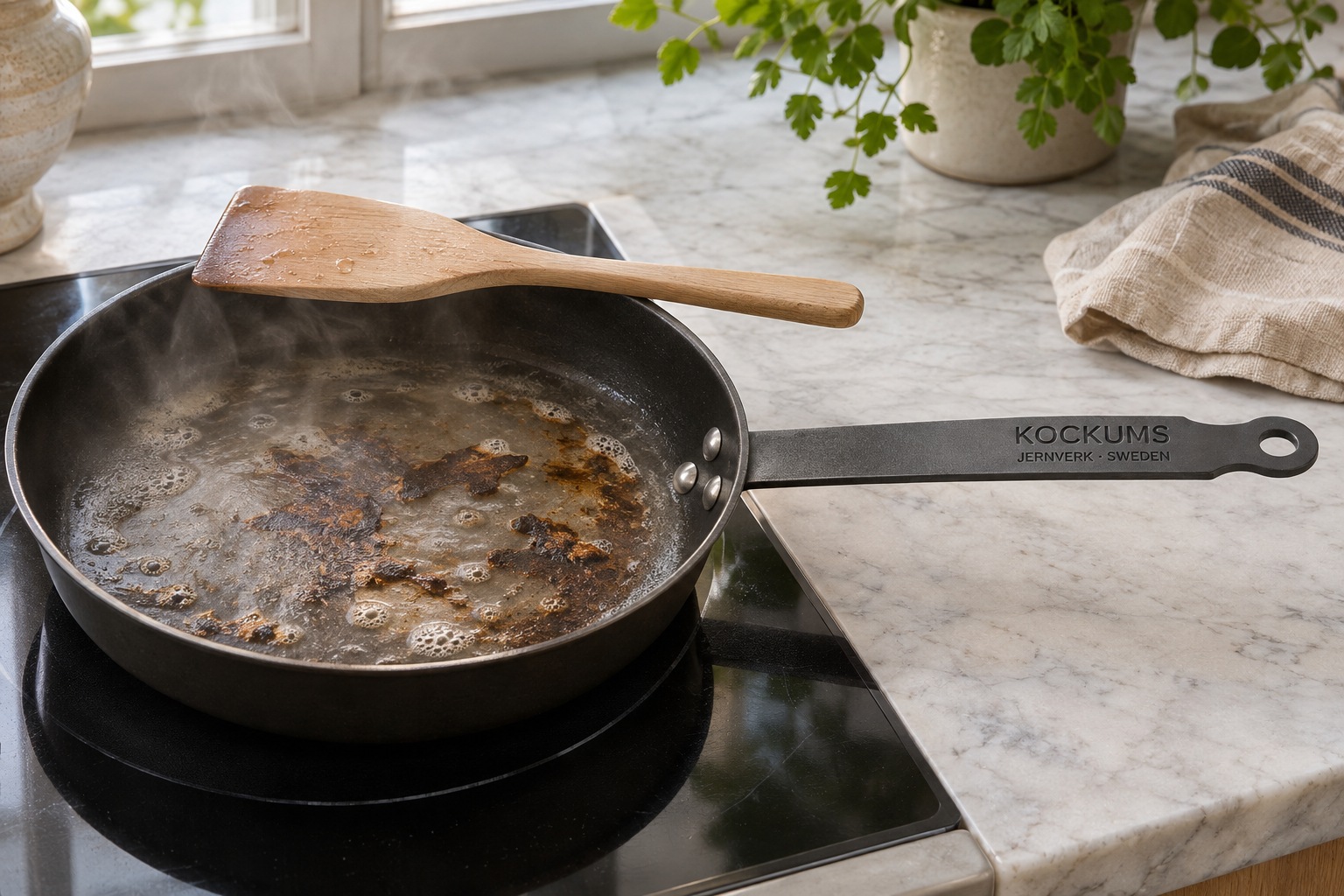
Pour a little water into the slightly cooled pan and heat it gently on the hob so the burnt-on residue softens. Loosen it with a pan scraper, rinse with hot water and brush clean with a dish brush – no washing-up liquid. If it is still stuck, use steel wool, but then re-season the surface. Always dry the pan thoroughly and finish with a few drops of oil.
What you need
- Carbon steel frying pan (STEK28-080)
- Stainless steel pan scraper (U100-081)
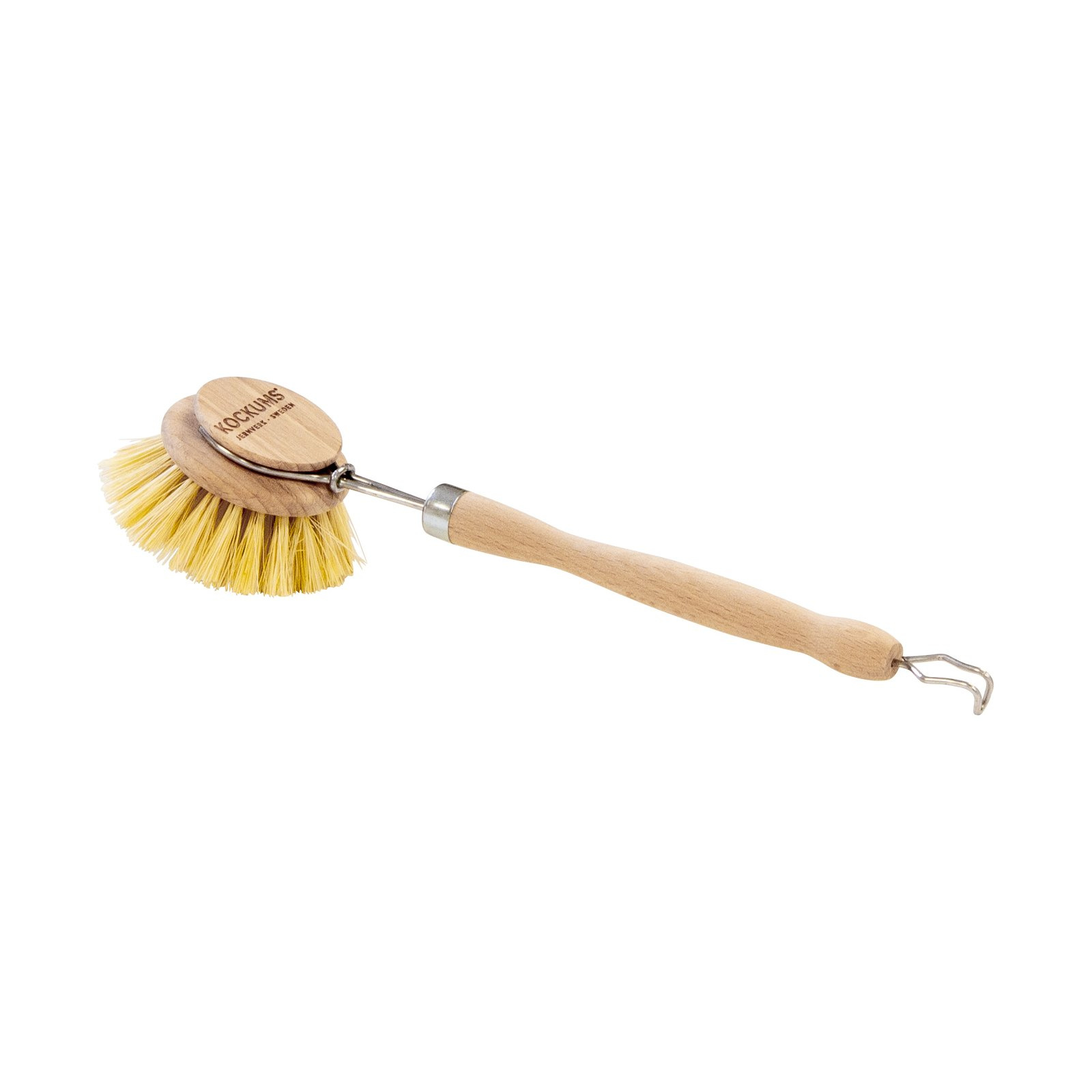
- Beech and horsehair dish brush (TDIS-090)
- Water
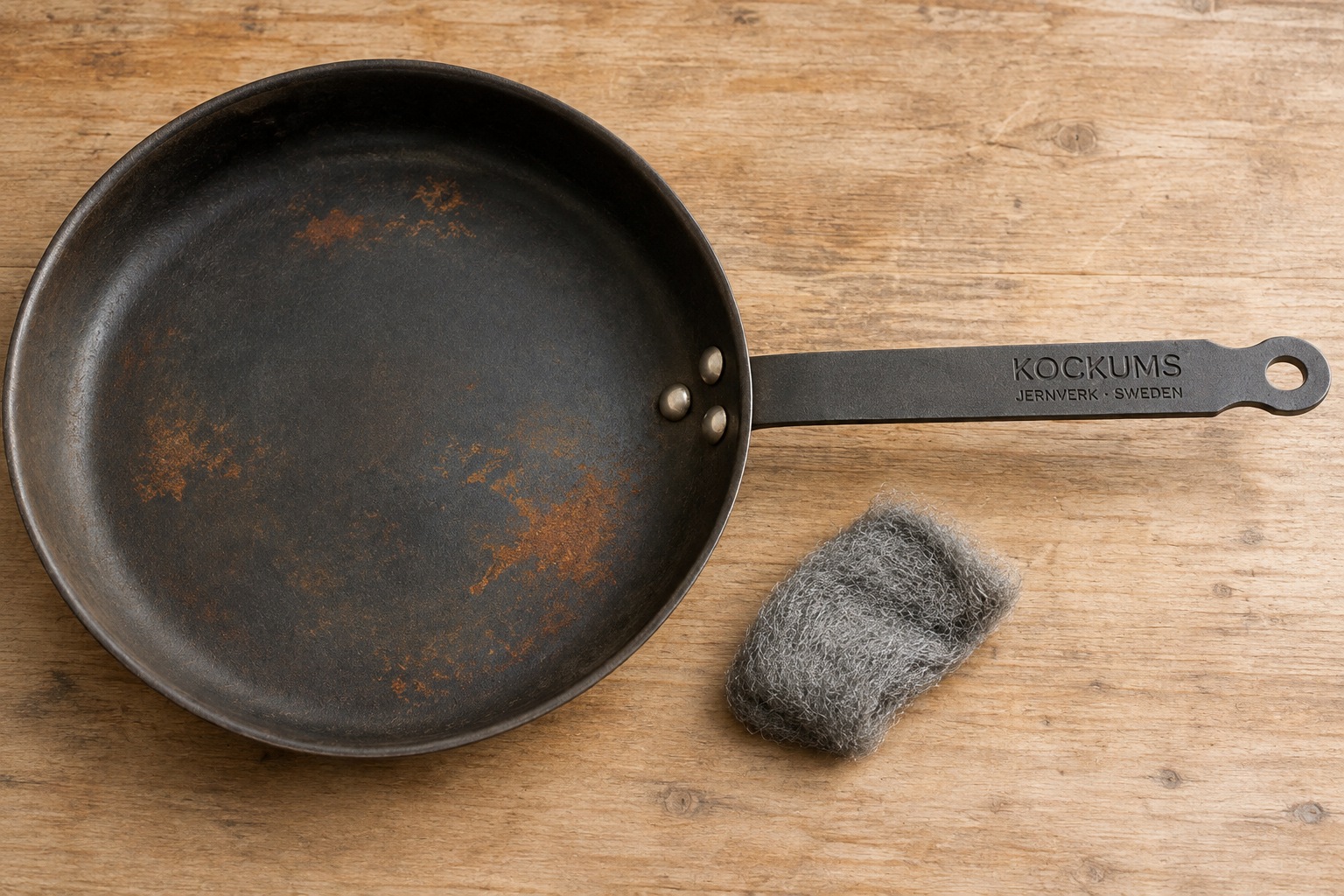
- Steel wool, only if needed
- Neutral cooking oil
How to do it
- Let the pan cool a littleTake the pan off the heat and wait for a while. Never pour cold water into a hot pan – it can warp.
- Add water and heat gentlyCover the base with a little water and heat the pan gently on the hob. The burnt-on residue softens and lets go after a while, with no need for washing-up liquid.
- Loosen with the scraperScrape the residue loose with the pan scraper while the water is still warm. Carbon steel can take metal utensils, but keep the scraper flat against the base rather than chipping at it.
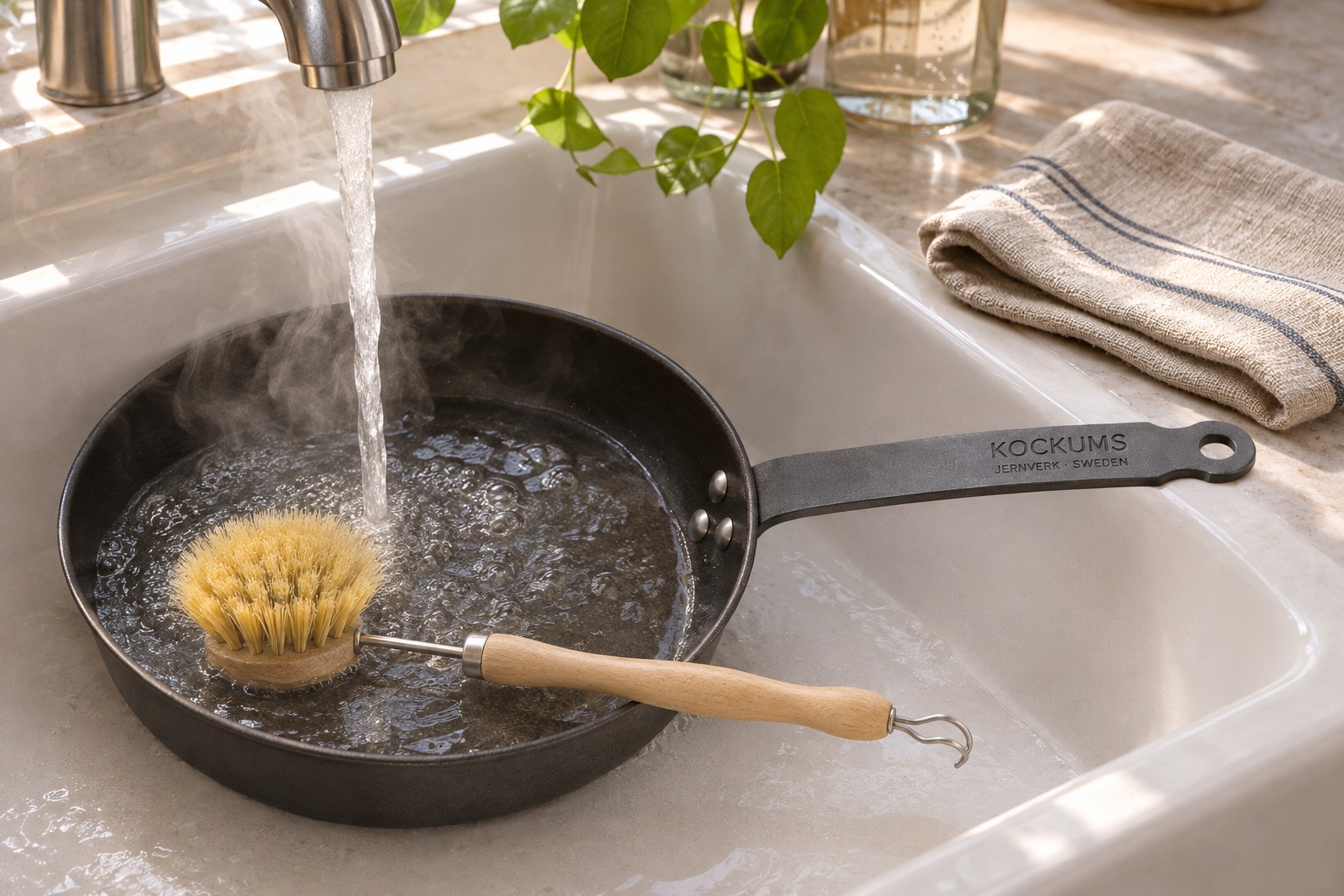
- Rinse and brush cleanPour out the water, rinse the pan with hot water and brush off the last traces with the dish brush.
- Steel wool as a last resortIf anything is still stuck, scrub with steel wool or a coarse pad. This removes some of the seasoning, so re-season the pan before you cook in it again.
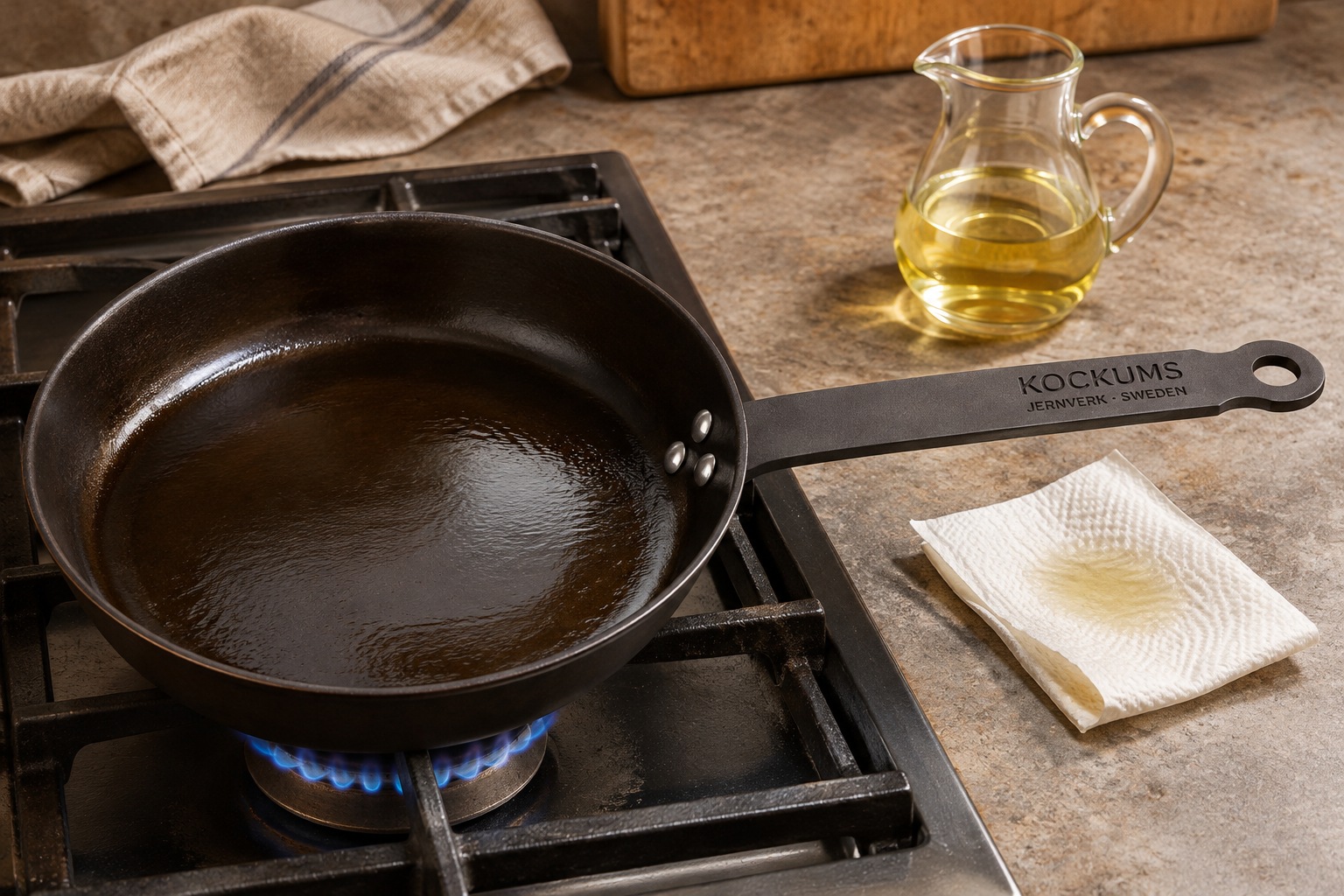
- Dry and oilDry the pan completely, underside included, and spread a few drops of neutral oil over the cooking surface.
Common mistakes
- Reaching for steel wool first – water, heat and a scraper are usually enough and spare the surface.
- Leaving the pan to soak overnight to soften the residue; carbon steel can start to rust within a minute or two.
- Trying to dissolve burnt-on food with vinegar or lemon – acid loosens the seasoned surface.
- Using washing-up liquid to shift the last bits.
Why water and heat work
What burns on is usually sugar, starch and protein from the food that has dried onto the surface. Warm water softens the residue so it lifts off with the scraper, while the pan's seasoning stays in place. Steel wool, on the other hand, removes both residue and some of the seasoning, which is why the pan needs re-seasoning afterwards.
FAQ
Can I use vinegar or lemon on burnt-on food?
Best not in carbon steel. Acid can loosen the seasoned surface and give a metallic taste – plain water and gentle heat do the job.
Does the pan need re-seasoning after removing burnt-on food?
Only if you have used steel wool or the surface has turned grey and shiny. If water, scraper and brush were enough, you can cook as usual.
Will the pan scraper scratch a carbon steel pan?
All kinds of utensils can be used in Kockums carbon steel pans, including metal. Keep the scraper flat against the base to treat the surface as gently as possible.
Does the same method work on the baking and pizza steel?
Almost. For the pizza steel, Kockums advises scraping off the worst with a scraper or spatula, then using a sponge or nylon brush and hot water. If that is not enough, steel wool is fine, after which the steel may need re-seasoning.


Comments