


Rust on your frying pan? How to rescue it
Time: about 60 min
A little rust on a carbon steel pan looks worse than it is. With steel wool, fresh seasoning and better habits after washing up, the pan will soon be ready for cooking again.
Short answer
Surface rust on a carbon steel pan can be removed. Scrape off loose flakes, scrub the rust spots with steel wool and hot water until the steel is clean, then dry the pan straight away, underside included. Next, re-season: heat slowly until it smokes lightly, wipe on thin layers of neutral oil and repeat until black. Always dry and oil the pan after washing to keep rust from returning.
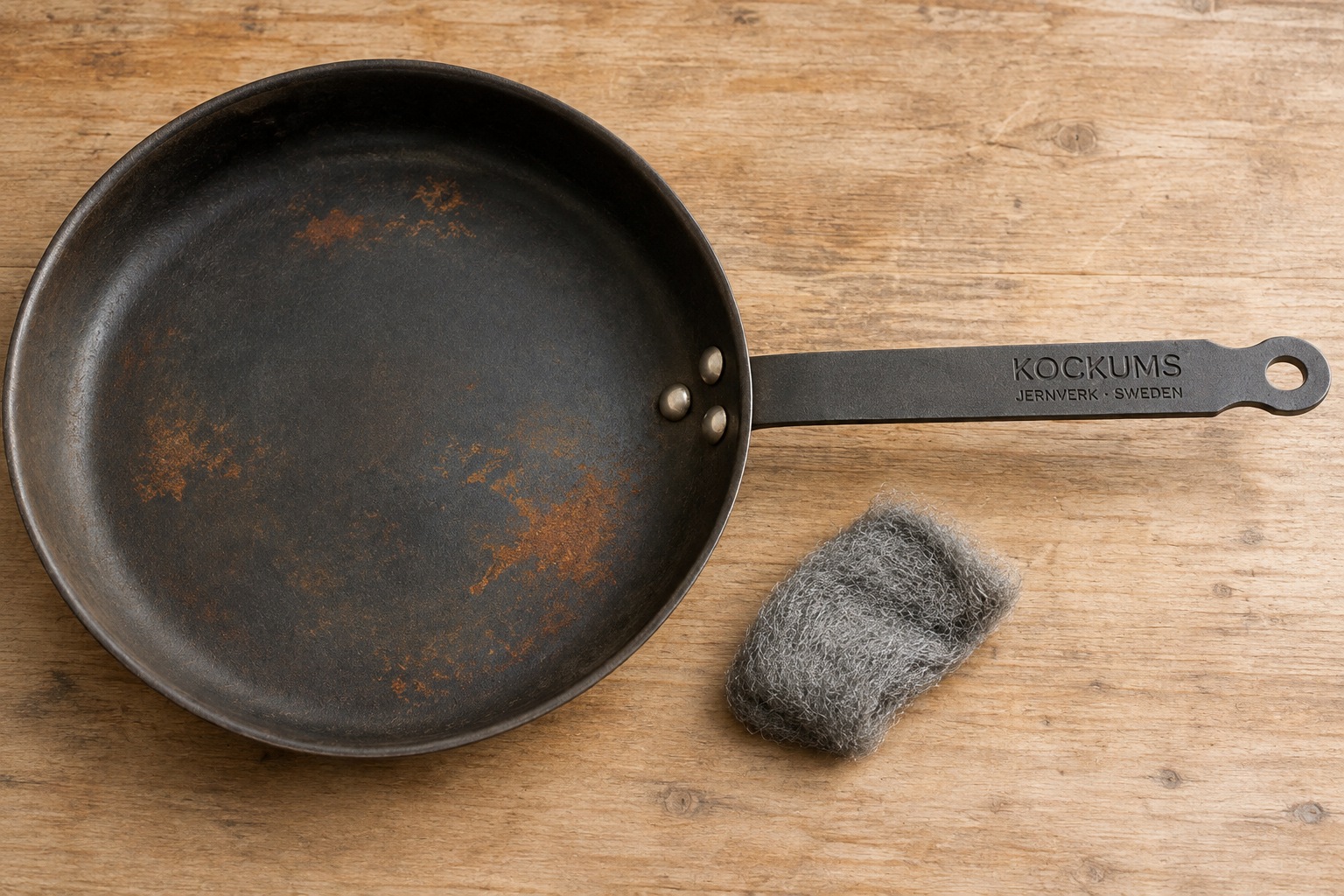
What you need
- Carbon steel frying pan with rust spots (STEK28-080)
- Stainless steel pan scraper (U100-081)
- Steel wool or a coarse scouring pad
- Hot water and a tea towel
- Neutral cooking oil
- Kitchen paper
How to do it
- Check how much rust there isRub the spots lightly with kitchen paper. Orange marks that come off on the paper are rust that needs removing, whereas an even reddish-brown tone in the black surface is natural oxidation that needs no treatment.
- Scrape off loose flakesUse the pan scraper to remove loose rust flakes and old deposits from the base, so the steel wool can get at the rust more easily.
- Scrub with steel wool and hot waterScrub the rust spots with steel wool or a coarse pad under hot water until the surface feels smooth and the steel is clean. Don't forget the rim and underside if the rust has spread there too.
- Rinse and dry immediatelyRinse away all residue and dry the pan completely at once, inside and underneath. Bare steel without a protective surface can rust again very quickly.
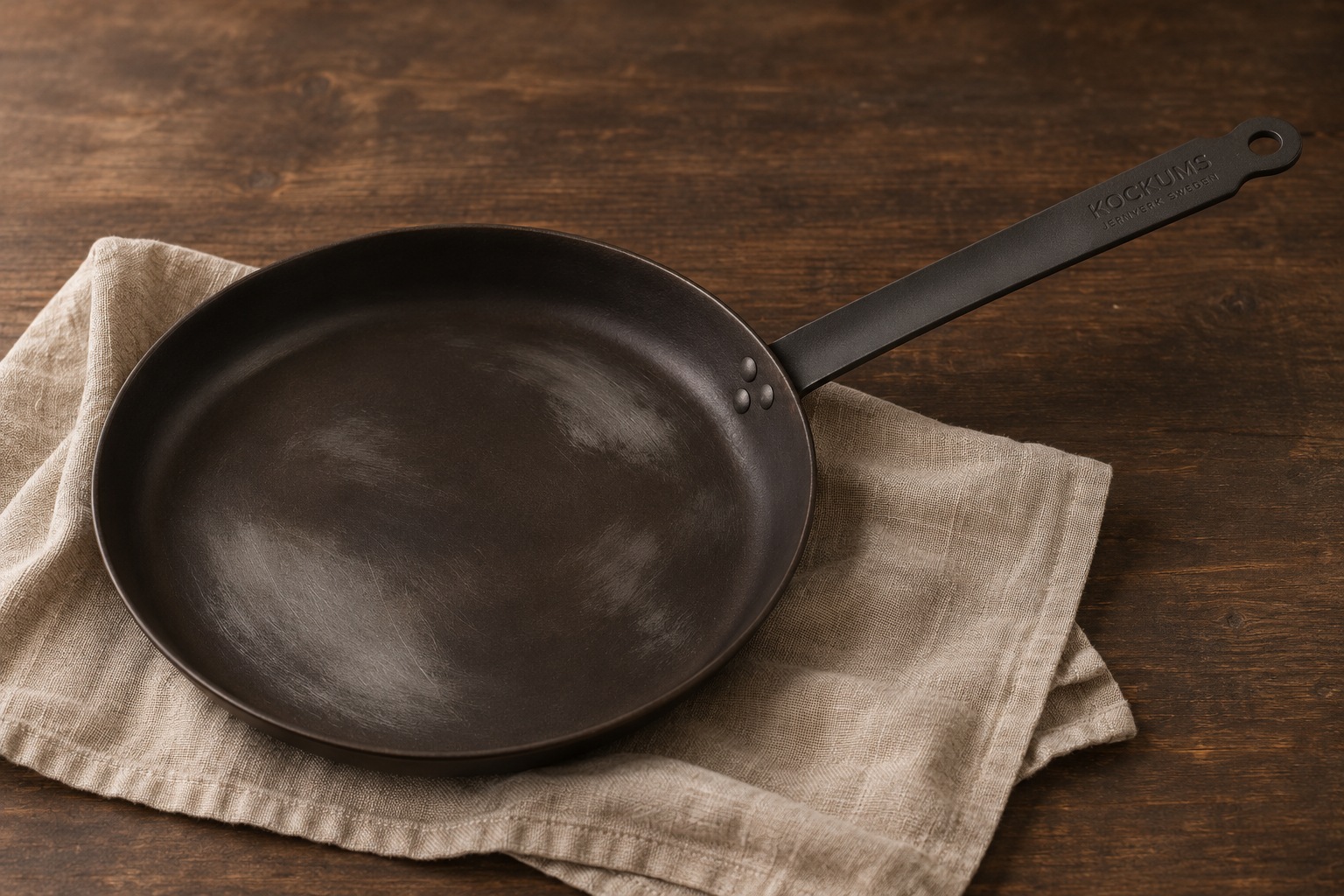
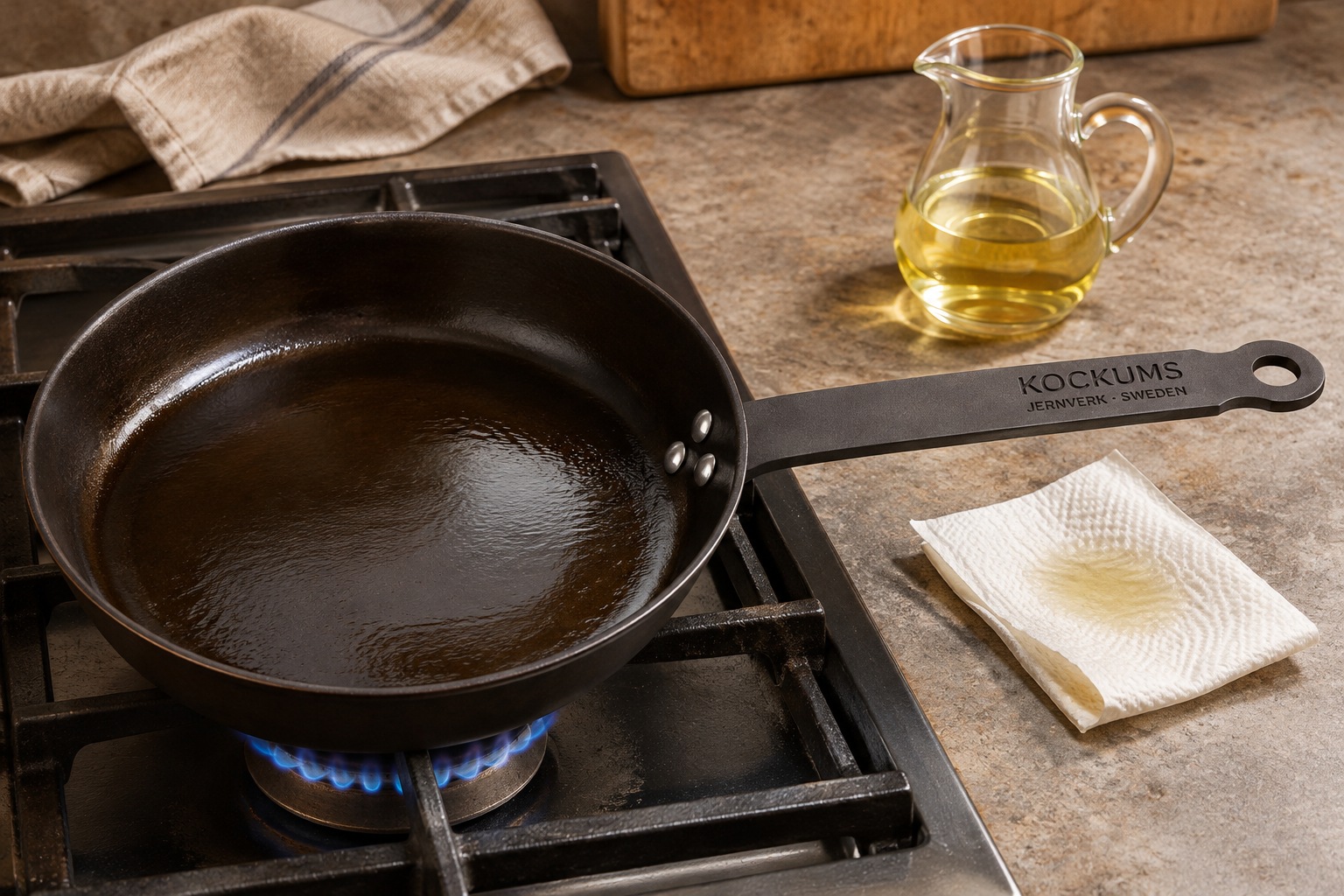
- Re-season the surfaceHeat the pan slowly until it smokes lightly, wipe on a thin layer of neutral oil with a cloth held in tongs, and repeat until the surface is black. Ventilate well and keep an eye on it the whole time.
- Change your washing-up routineRust forms when moisture is left on the steel. Never leave the pan to soak, dry it straight after washing and wipe on a few drops of oil before putting it away.
Common mistakes
- Giving up on the pan – surface rust on carbon steel can be scrubbed off and the surface re-seasoned.
- Starting to cook straight after scrubbing without re-seasoning the surface first.
- Leaving the freshly scrubbed pan to air-dry – bare steel can rust again very quickly.
- Mistaking an even reddish-brown tone for rust – it is natural and does not affect performance.
Why carbon steel rusts – and why it can be saved
Carbon steel is a natural material that rusts if moisture is left on it, especially where the seasoning is thin or damaged. Surface rust sits on the surface and can be scrubbed back to clean steel. Fresh seasoning then gives the pan back its protective layer.
FAQ
How do I tell rust from the natural reddish-brown tone?
Rust shows up as orange, often rough spots that rub off on paper. An even reddish-brown tone in the black surface comes from the carbon steel oxidising with use and is completely natural.
Can I use steel wool on a carbon steel pan?
Yes. Kockums recommends steel wool or a similar pad for rust spots – just re-season the surface afterwards.
The underside of the pan has rusted – do I treat it the same way?
Yes, scrub off the rust, dry thoroughly and wipe on a little oil. Always dry the underside after washing too, as moisture easily lingers there.
Why did the pan rust even though I dried it?
Often a little moisture is left along the rim or on the underside, or the pan has been stored somewhere damp. Always finish with a few drops of oil and keep the pan somewhere dry.


Comments