


Fried eggs in a carbon steel pan – right from the first try
Time: about 10 min
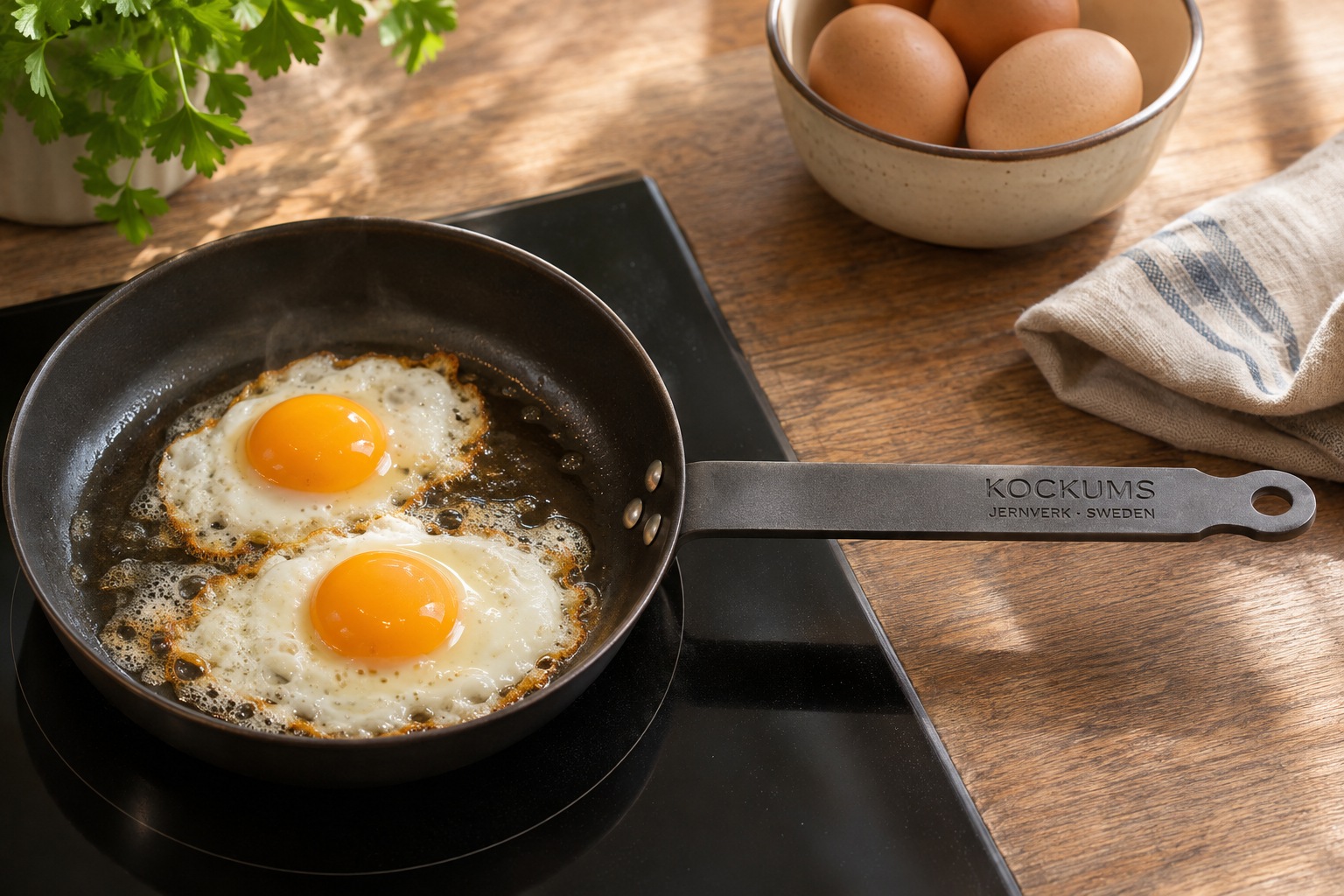
The fried egg is the carbon steel pan's first real test. With gentle heat, a generous knob of butter and a little patience, it releases the very first time – even in a brand-new pan.
Short answer
Heat the carbon steel pan gently over low to medium heat, add a generous knob of butter and wait until it stops foaming. Slide in the egg and leave it alone until the white has set at the edge and the egg glides when you shake the pan. Then loosen it with a thin spatula. New pan? Use a little extra fat for the first few months.
What you need
- Carbon steel frying pan, Ø24 cm
- Stainless steel spatula
- Butter or rapeseed oil
- Fresh eggs
- Salt and pepper
How to do it
- Heat the pan gentlyPlace the pan on a ring or zone that matches its base and start on low heat. Turn it up to medium after a few minutes so the heat has time to spread across the whole surface.
- Add the butterAdd a generous knob of butter and let it melt and foam. Once the foam has settled, the pan is ready for the egg.
- Crack the egg into a cup firstCrack the egg into a cup and slide it into the pan from just above the surface. The yolk stays whole and the white settles evenly.
- Leave the egg aloneDon't touch the egg for the first few minutes. The white sets against the hot steel and releases on its own; give the pan a gentle shake to see whether it glides.
- Lower the heat if neededIf the edge turns brown and crisp before the white around the yolk has set, turn the heat down. For a softer top, baste the white with a little butter using a spoon.
- Loosen and serveSlide the spatula flat under the egg in one confident movement and lift it out. Season with salt and pepper on the plate.
- Clean the pan while it is warmLet the pan cool a little, rinse it with hot water and dry it thoroughly, underside included. Wipe in a few drops of oil before putting it away.
Common mistakes
- Turning the heat straight up to maximum: the centre gets too hot, the white catches and the yolk never turns out the way you want.
- Skimping on fat in a new pan – the surface needs extra butter or oil for the first few months.
- Trying to flip or move the egg too early, before the white has set and released.
- Washing the pan with washing-up liquid or leaving it to soak after breakfast.
Why the egg releases
Carbon steel conducts heat quickly and evenly, and the seasoning of vegetable oils works together with the fat to give a natural release. As the egg white sets, it contracts and lets go of the steel – which is why waiting pays off. The surface gets better the more you cook in it.
FAQ
Why does my egg stick to the carbon steel pan?
Usually the pan was heated too fast, there was too little fat or the egg was moved too soon. Turn the heat down a little, use more butter and leave the egg until it glides.
Should I fry eggs in butter or oil?
Both work. Butter adds flavour and its foam tells you when the pan is hot; rapeseed oil handles higher heat if you want crispy edges.
Can I fry eggs in a brand-new carbon steel pan?
Yes, the pan comes pre-seasoned and is ready to use once you have rinsed and dried it. Use a little extra fat the first few times.
How many eggs can I fry at once?
A Ø24 cm pan takes a couple of eggs with a little space between them. For more, cook in batches so the whites do not run together and the pan keeps its heat.



Comments