


Why does food stick? The right heat and fat for carbon steel
Time: about 15 min
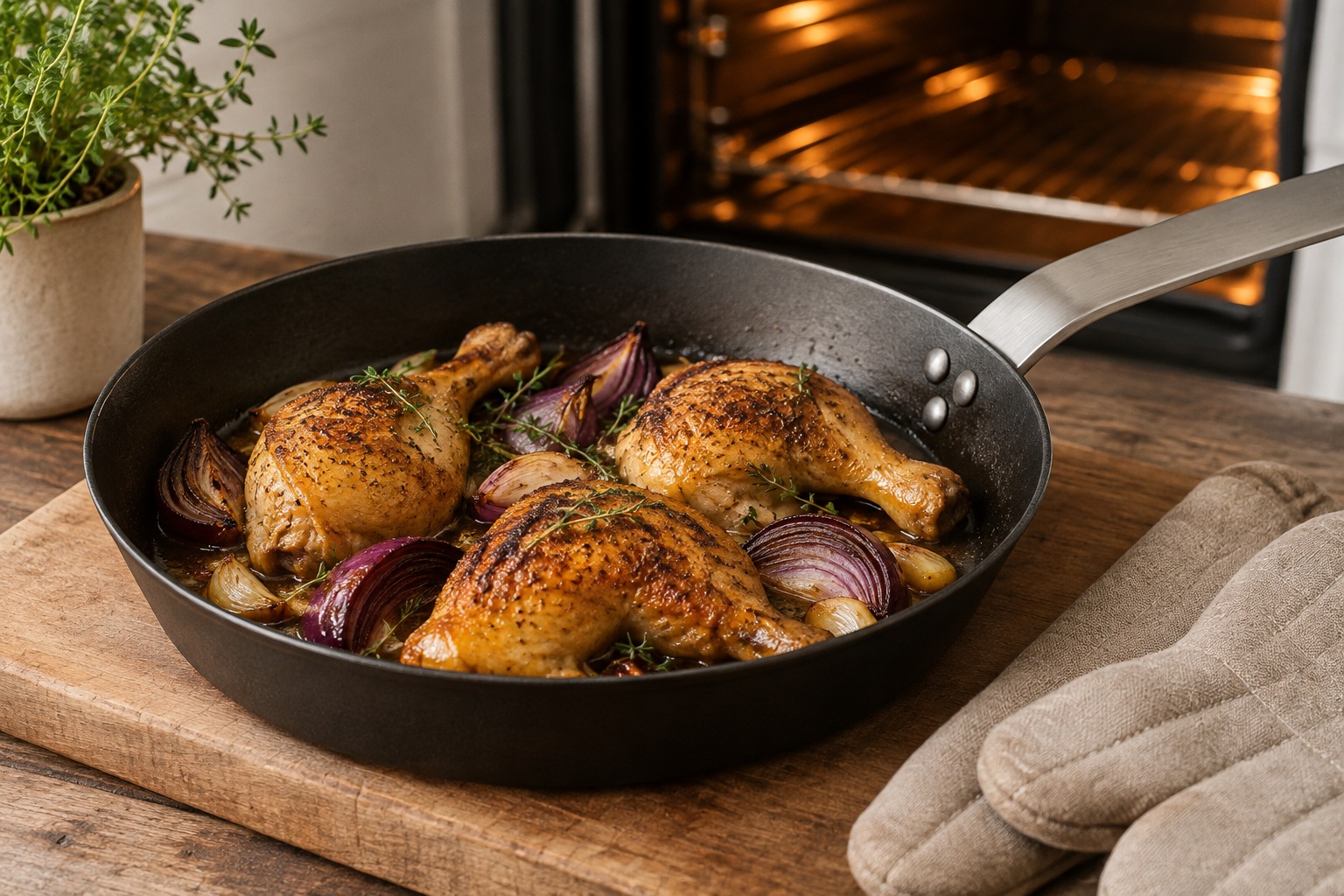
When food sticks in a carbon steel pan, the cause is almost always the heat, the fat or a lack of patience – rarely the pan itself. A few simple habits help meat, fish and vegetables release.
Short answer
Food sticks to carbon steel when the pan is too cold or unevenly heated, when there is too little fat, or when you turn it too soon. Heat the pan slowly on a zone that matches its base, with a knob of butter or some rapeseed oil. Add the food once the fat is hot and leave it until a crust forms – it will then release by itself. A new pan needs more fat for the first few months.
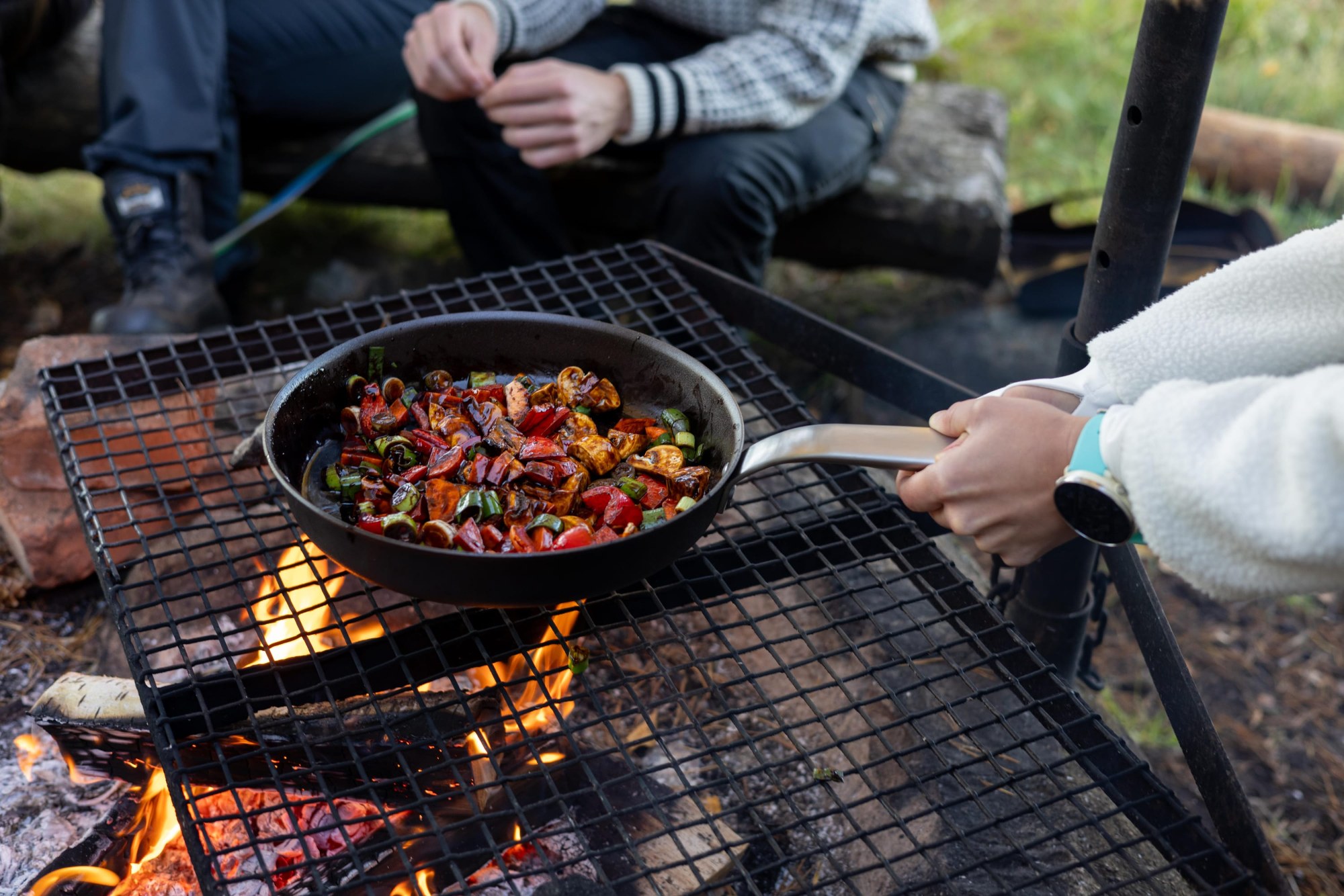
What you need
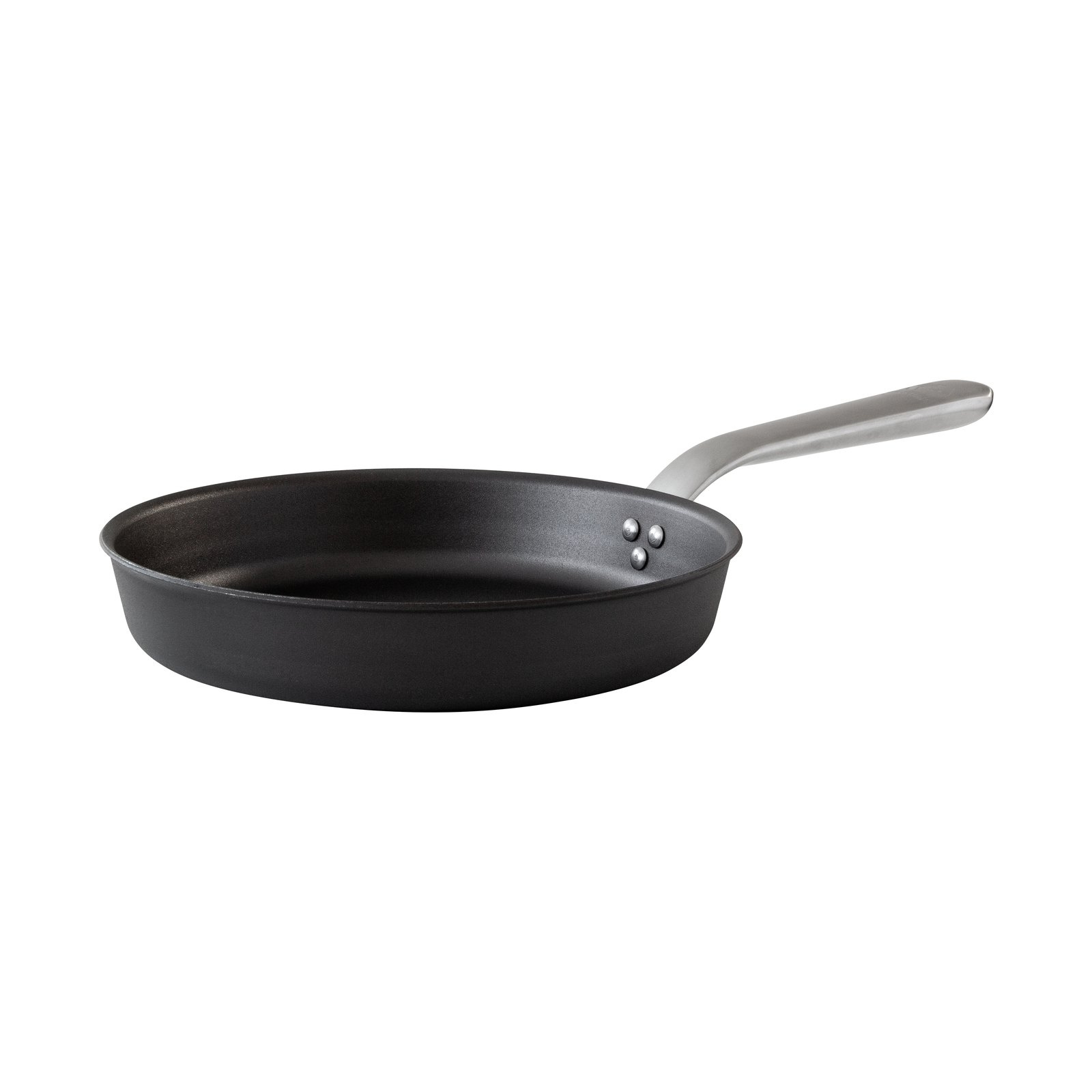
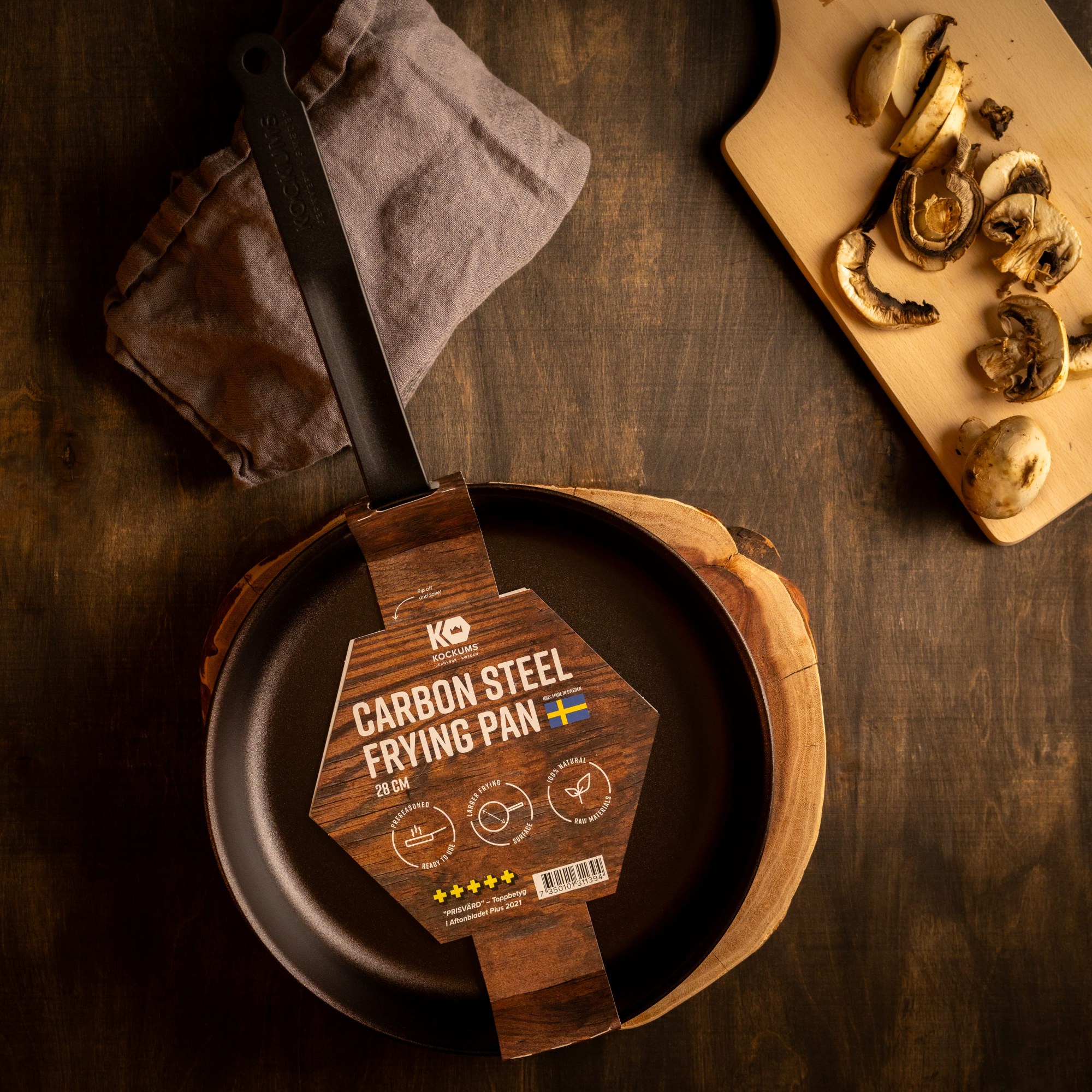
- Carbon steel pan, e.g. ergonomic ø28 cm
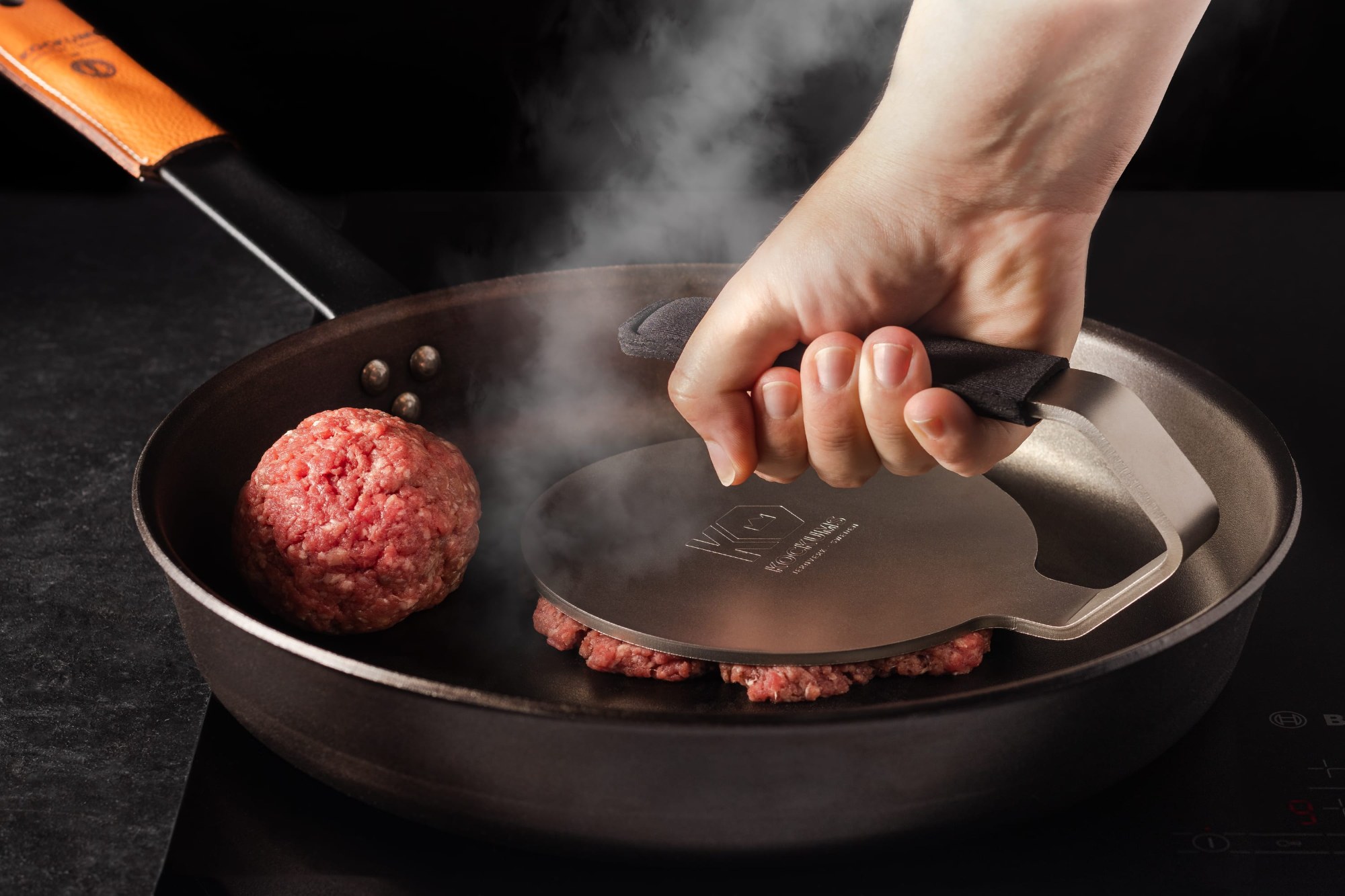
- Stainless steel spatula
- Butter or rapeseed oil
- Kitchen paper
How to do it
- Choose the right ringPlace the pan on a ring or zone that matches the size of its base – a ø28 cm pan has a 22.5 cm base. A zone that is too small only heats the centre, and that is where food sticks first.
- Heat slowly with fatStart on a low heat with a knob of butter or a little rapeseed oil and turn it up gradually over a few minutes. The centre warms up fastest, so give the heat time to reach the edge.
- Pat the food dryPat meat, fish and vegetables dry with kitchen paper before they go in. Moisture cools the pan, so the surface steams instead of browning.
- Add food once the fat is hotThe butter should have stopped foaming and the oil should move freely in the pan. Do not overcrowd it, as too much at once lowers the heat and draws out liquid.
- Wait before you turnLeave the food untouched until it has a good crust; then it lets go by itself. Slide the stainless spatula flat underneath and turn with one confident movement.
- Lower the heat once hotOnce the pan is properly hot, a lower setting is often enough. Carbon steel conducts heat efficiently, and too much heat burns the fat so that residue sticks.
- Finish with a thin film of oilLet the pan cool, rinse it with hot water, dry it thoroughly and wipe on a few drops of oil. Each time, you add to the surface that helps food release.
Common mistakes
- Putting food into a cold pan and waiting for everything to heat up together.
- Turning the heat to maximum straight away, so the centre gets very hot while the edge stays cold.
- Being sparing with fat in a new pan before its own surface has built up.
- Poking and turning the food before it has formed a crust.
Why food releases in a hot, well-greased carbon steel pan
Carbon steel conducts heat efficiently, but the centre of the pan heats up first. Once the whole surface is evenly hot and coated in fat, food quickly forms a crust that comes away by itself. Over time the original seasoning is replaced by a layer of your own that releases better and better.
FAQ
Why does food stick to my new carbon steel pan?
At first the pan only has its factory seasoning. Use plenty of butter or oil for the first few months and you will build the surface that helps food release.
Which fat should I use?
Kockums recommends a knob of butter or rapeseed oil. Butter adds flavour and clearly shows when the pan is hot, while rapeseed oil copes with slightly higher heat.
Does the ergonomic pan cook differently from the classic one?
No. Kockums' ergonomic pan gives the same fine sear as the classic carbon steel pan, so the advice on heat and fat applies to both. The difference is the stainless steel handle.
Can food stick because the pan is too hot?
Yes. Overheated fat burns and leaves a tacky surface, so turn the heat down once the pan is hot – you rarely need the highest setting.

Comments