


Grey marks on enamel plates – what are they?
Time: about 10 min
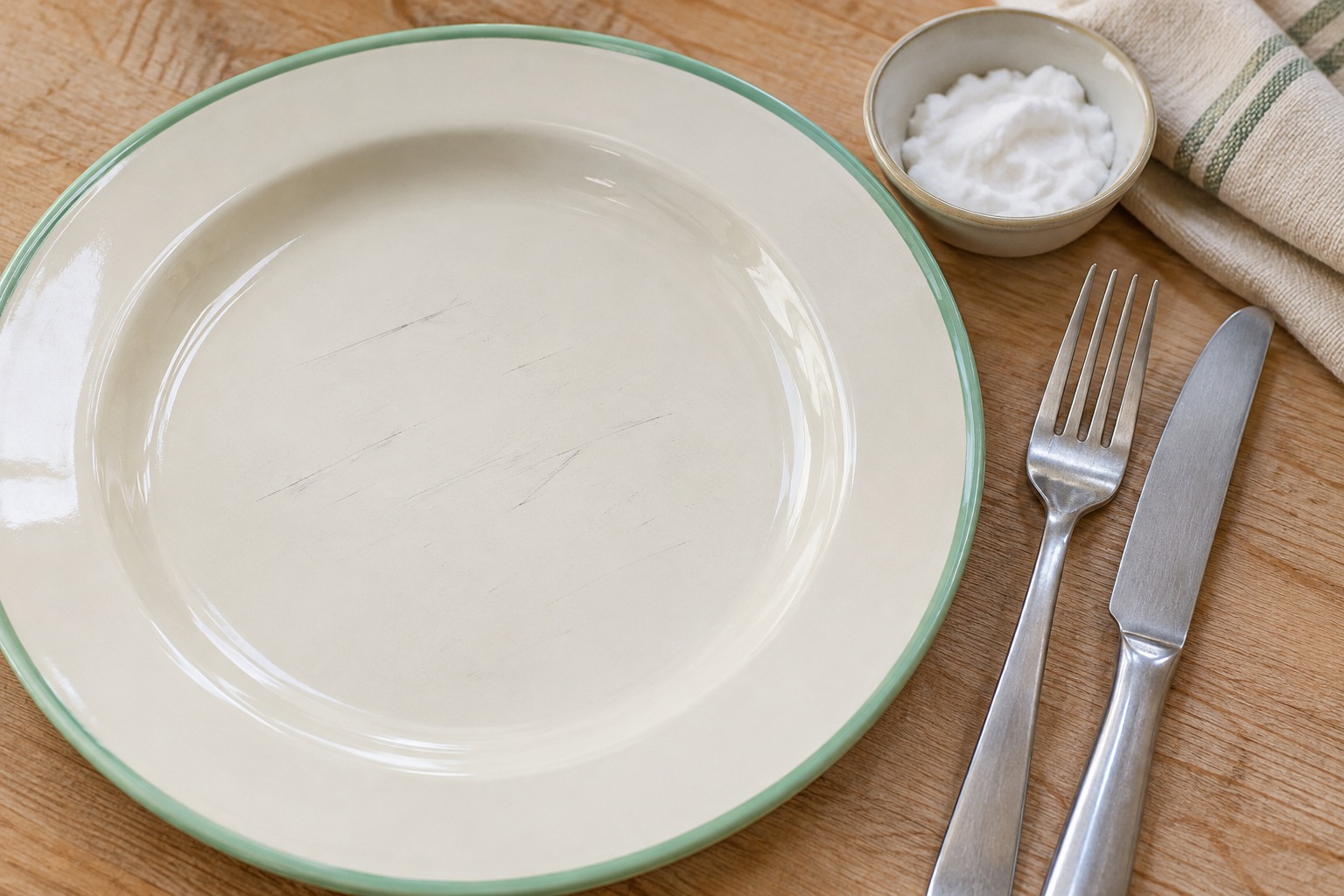
After a while, grey lines can appear on an enamel plate. They usually come from cutlery – metal from knives and forks that has been left behind on the surface.
Short answer
Grey marks on an enamel plate are usually metal deposits from cutlery: traces of metal left on the surface when a knife or fork is drawn across the enamel. In some cases they can be removed with hob cleaner and a soft sponge, but not always. The plate works just as well even if the marks remain.
What you need
- Enamel plate with grey marks
- Hob cleaner
- Soft sponge or cloth
- Hot water and washing-up liquid
- Tea towel
How to do it
- Wash and dry the plateWash the plate in hot water with a little washing-up liquid and dry it. On a clean, dry surface you can clearly see where the marks are.
- Look at the marks in the lightGrey lines that follow the movement of a knife or fork are usually metal deposits from cutlery. A chip, by contrast, shows as a piece of enamel that is missing.
- Apply a little hob cleanerPut a small amount of hob cleaner on a soft sponge or cloth. Do not use steel wool, scouring powder or hard scourers.
- Rub gently over the marksWork in light, circular movements over the marks. Metal deposits can sometimes come away like this, but not always.
- Rinse and washRinse off all traces of the cleaner and wash the plate as usual. Dry it thoroughly.
Common mistakes
- Reaching for steel wool or scouring powder, which can damage the enamel surface.
- Assuming the plate is ruined – the marks can sometimes be removed and the plate can be used as before.
- Scrubbing hard; rub lightly and rinse well afterwards.
Why the marks appear
Enamel is glass fused onto steel, giving a hard, smooth surface. When a knife or fork is drawn across it, metal from the cutlery can be deposited and stay behind as a grey line. Because it is metal sitting on the surface, a hob cleaner can sometimes remove it.
FAQ
Do the marks come from the enamel?
No, the grey marks are usually metal from cutlery that has been left on the surface. Kockums' enamel products made today are free from lead and cadmium and approved for food contact.
Can I keep using an enamel plate with a chip?
Yes, Kockums' current enamel products are fine to keep using with a chip, but Kockums is unable to repair enamel damage. Take a little more care with damaged pieces from the old Kockums Jernverk, as they cannot be guaranteed free from lead or cadmium.
Why are there tiny black or white specks in the enamel?
Enamelling is a craft, and small particles from the air in the factory can end up in the enamel. This makes every piece unique, with slight variations in colour and texture.
Why can rust-brown spots appear on the rim?
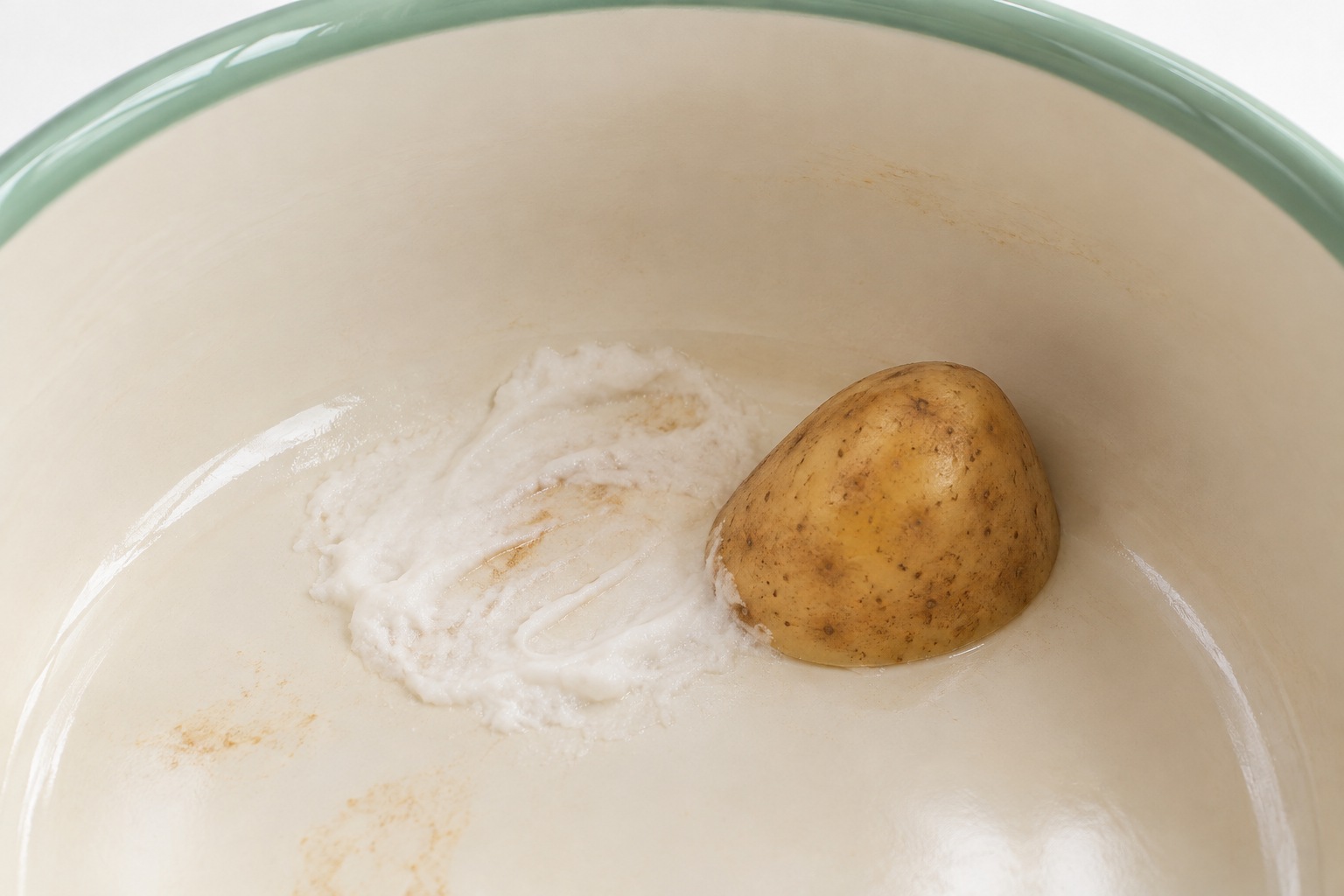
On thin edges the surface is too small for the enamel to adhere completely, and corrosion can form there, which is entirely harmless. Rub the spot with a paste of baking powder and a little water, using a raw potato or a clean wine cork.


Comments