


Pan-fried sardines with charred lemon
Serves 2 · 25 minutes · Classic frying pan
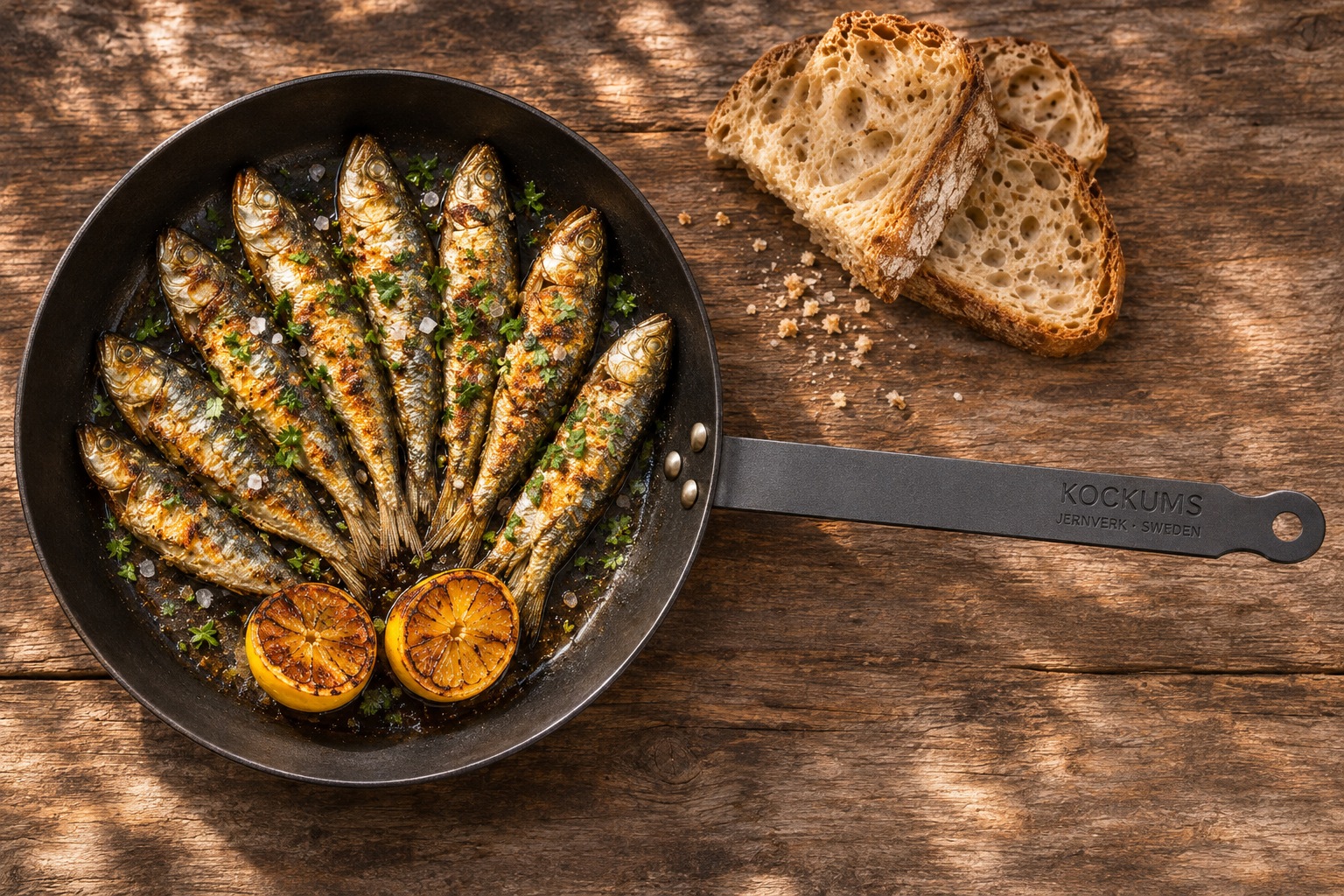
Small whole fish need a properly hot pan. In carbon steel the flour crisps up at once, and the lemon chars at the edges right beside the fish.
Pan-fried sardines are small whole fish dusted in seasoned flour and fried quickly in oil over high heat. They are best when the pan is hot enough for the oil to shimmer, the fish is left alone until it releases, and the lemon is seared cut-side down alongside.
Ingredients
Serves 2
- 500 g fresh sardines (12–16) or small herring
- 100 ml plain flour
- 1 tsp salt
- ½ tsp freshly ground black pepper
- about 100 ml rapeseed or olive oil
- 2 lemons
- 1 bunch flat-leaf parsley
- 1 small garlic clove
- Flaky sea salt
- Good bread, to serve
Method
- Clean the sardines if your fishmonger has not: scrape off the scales, slit open the belly and remove the guts. Rinse in cold water and pat the fish thoroughly dry with kitchen paper.
- Mix the flour, salt and pepper on a plate. Turn the fish in the flour and shake off the excess.
- Halve the lemons. Heat the pan with 2 tbsp oil over a high heat until the oil shimmers. Add the lemon halves cut-side down and leave them until deeply browned, 3–4 minutes. Lift them out.
- Fry the fish in batches so they are not crowded, 2–3 minutes per side. Do not move them until they release on their own. Add more oil between batches.
- Chop the parsley and mix with the finely grated garlic. Return all the fish and the lemons to the pan, scatter over the parsley and flaky salt and serve straight away with bread. Squeeze the lemon over at the table.
Why it works
Carbon steel can take serious heat, so the flour sets and crisps before the fish has time to dry out. The pan then goes straight to the table and keeps everything warm while you eat.
FAQ
Can I use herring instead of sardines?
Yes. Small herring or butterflied herring fillets are fried the same way but only need 1–2 minutes per side.
Can you eat sardine bones?
In small sardines the bones become soft enough to eat. With larger fish, lift the fillets off the backbone at the table.
Why does the fish stick to the pan?
Usually the pan is not hot enough or the fish is turned too early. Let the crust form and it will release on its own.


Comments