


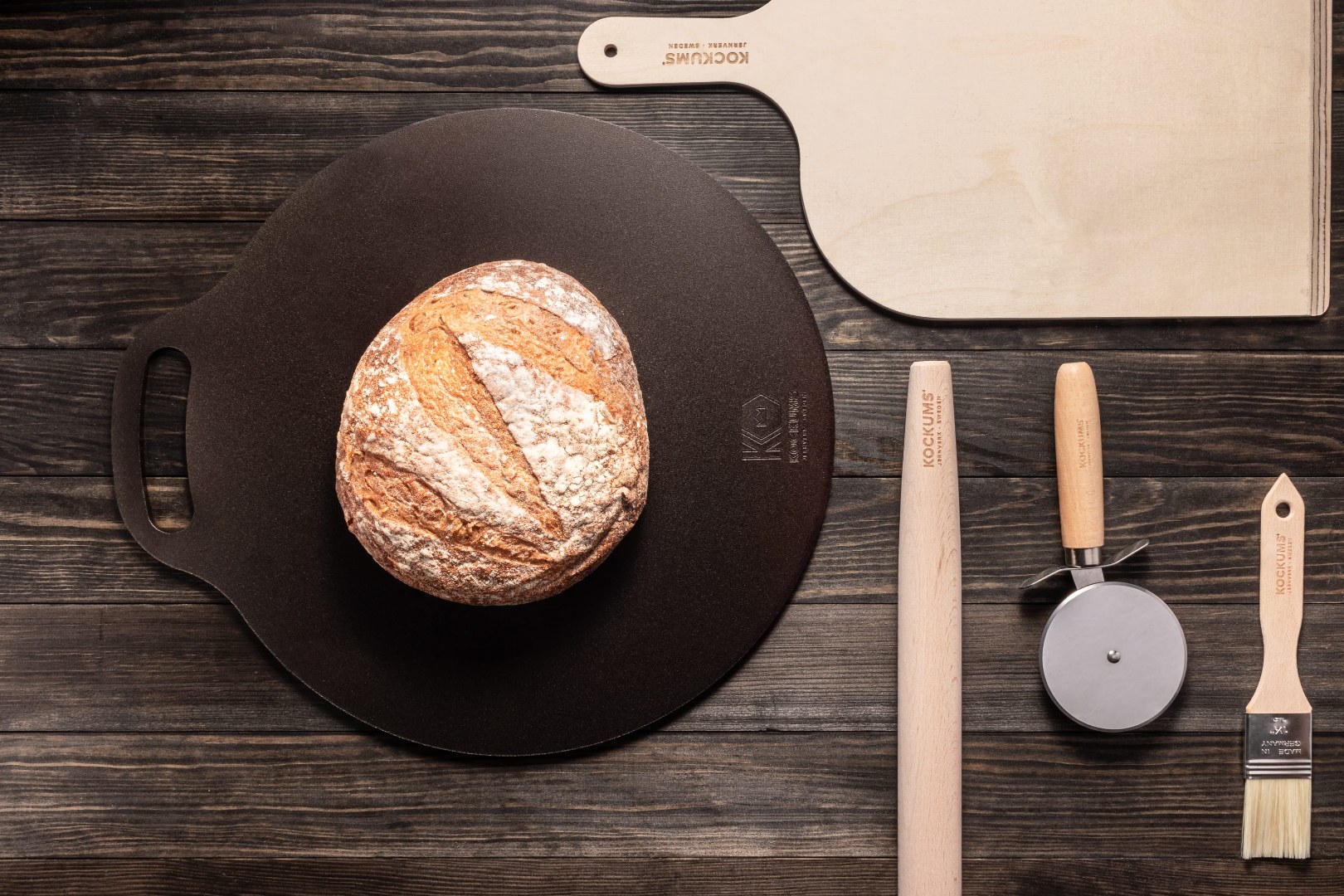
Sourdough loaf baked on a baking steel
Makes 1 loaf · 21 hours (14 in the fridge) · Baking steel
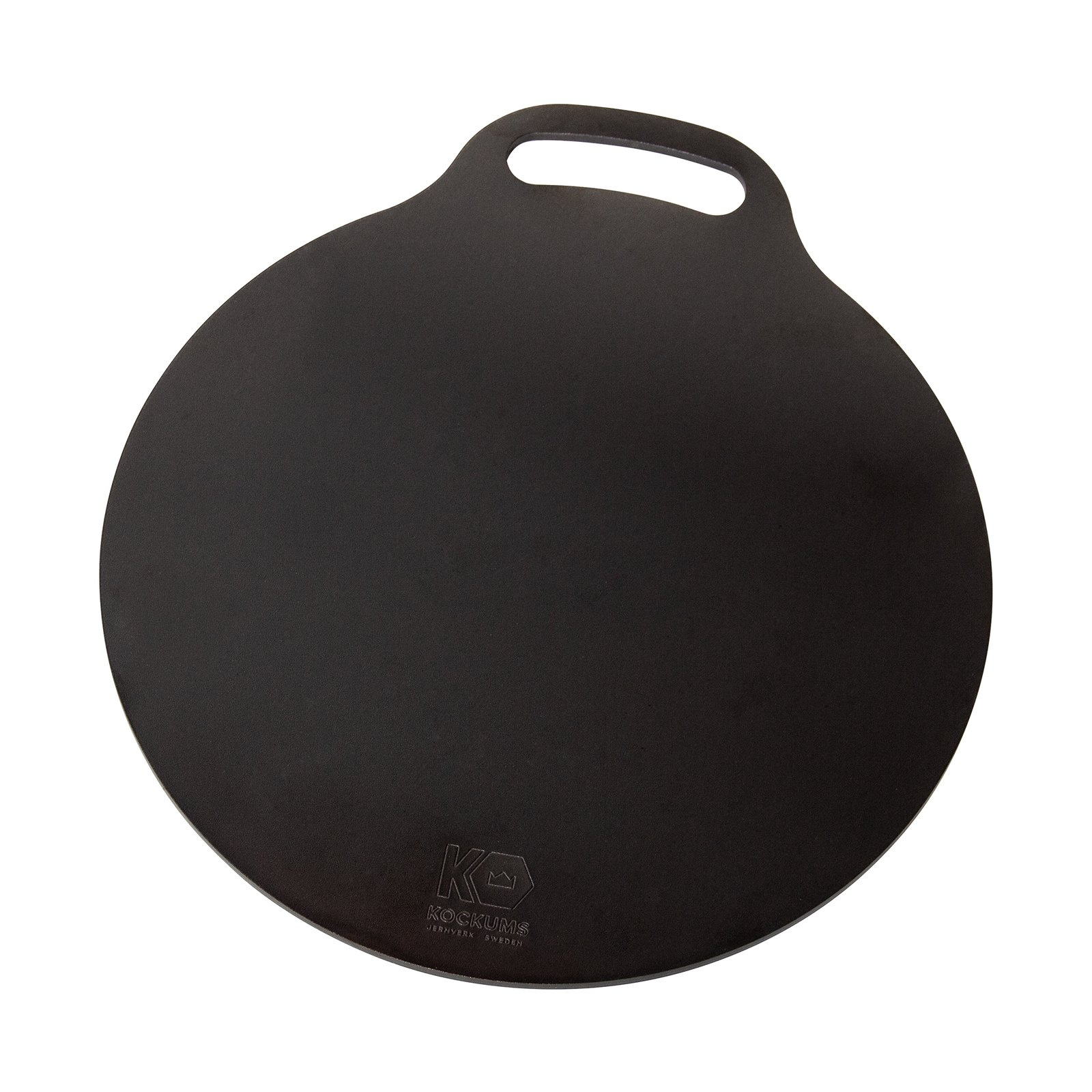
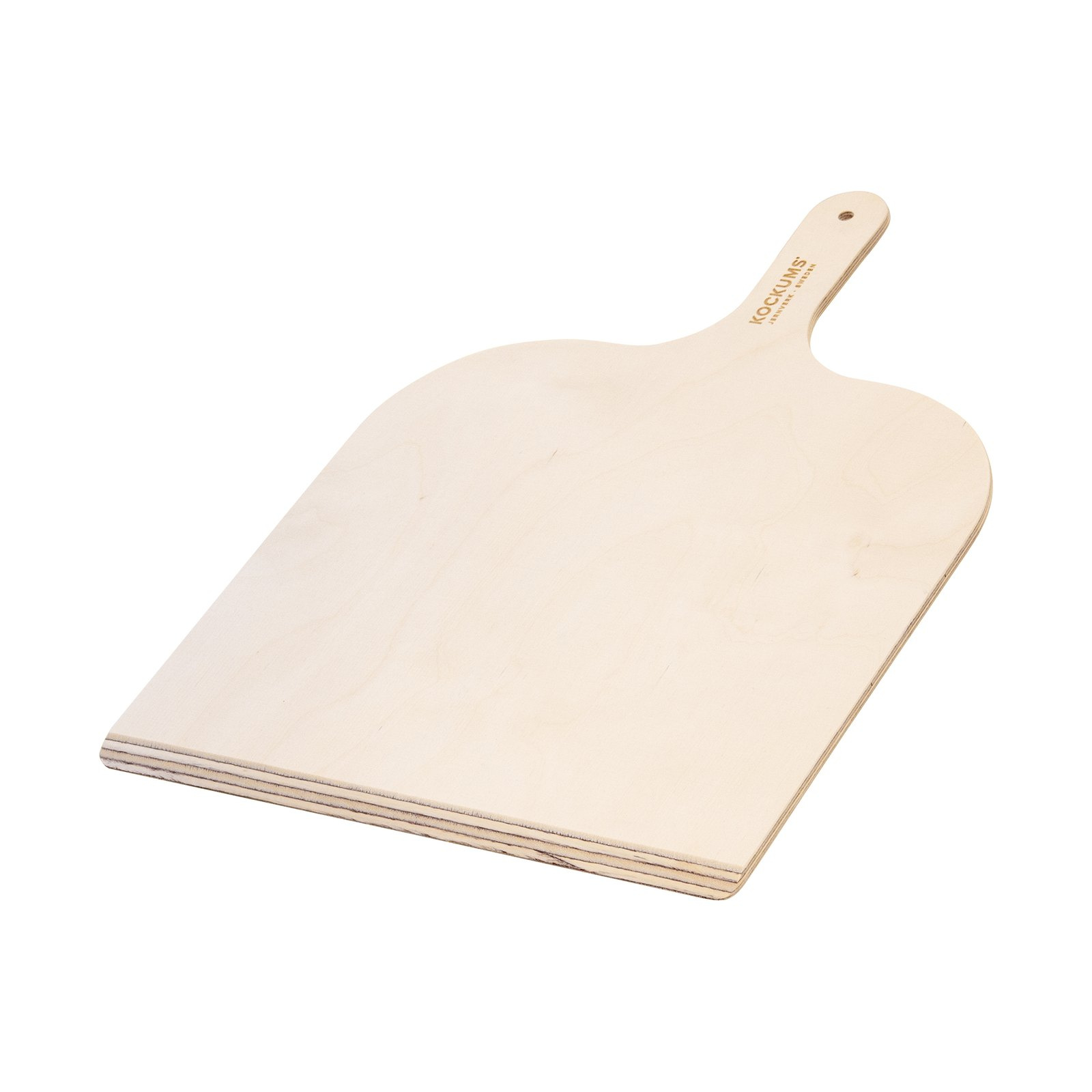
A round sourdough loaf needs strong bottom heat early on to rise and form an ear. A preheated carbon steel baking steel delivers that heat at once, and the wooden peel makes loading the dough easy.
A round sourdough loaf made from white flour with a little wholemeal gets its flavour from a long fermentation and its crust from high heat and steam. Here the dough proves overnight in the fridge and is baked on a preheated baking steel, first at 250 °C with steam, then at 220 °C until the crust is a deep dark brown.
Ingredients
Makes 1 loaf
- 100 g active wheat sourdough starter (fed 4–8 hours earlier)
- 350 g lukewarm water
- 450 g strong white bread flour
- 50 g wholemeal flour
- 10 g salt
- Rice flour or white flour for the banneton
- Baking paper
Method
- Mix 330 g of the water with the flours to a shaggy dough, cover and leave for 30 minutes. Add the starter, salt and remaining water and squeeze everything together with your hand until even.
- Leave the dough covered at room temperature, ideally around 24 °C, for about 4 hours. Stretch and fold it four times at 30-minute intervals during the first 2 hours, then leave it until it has grown by about half and shows bubbles on the surface.
- Turn the dough out, shape it loosely into a round and rest for 15 minutes. Then shape a tight loaf and place it seam side up in a floured banneton or a bowl lined with a floured tea towel. Cover and refrigerate for 12–16 hours.
- Put the baking steel on the lower middle shelf and a roasting tin on the oven floor. Preheat to 250 °C for 45–60 minutes and boil a kettle.
- Lay baking paper on the wooden peel and turn the cold dough out onto it. Make one confident cut about 1 cm deep at a shallow angle with a razor blade. Slide paper and loaf onto the steel, pour 200 ml boiling water into the roasting tin and close the door at once.
- Bake for 20 minutes. Carefully remove the tin, lower the oven to 220 °C and bake for another 20–25 minutes until the crust is deep dark brown and the loaf sounds hollow when tapped underneath, or reaches 96–98 °C in the centre.
- Cool on a rack for at least 1 hour before slicing, or the crumb will be gummy.
Why it works
Carbon steel conducts and stores heat quickly, so the cold dough gets strong heat from below the moment it lands. That gives a tall loaf with an open score, and the flat steel with the wooden peel means you never have to lower dough into a scorching pot.
FAQ
How do I know my sourdough starter is ready?
It should have at least doubled 4–8 hours after feeding, be full of bubbles and smell pleasantly sour. A teaspoonful dropped in water should float.
Why bake sourdough with steam?
Steam keeps the crust soft for the first minutes so the loaf can rise and the score can open. After that the crust bakes dry and dark without steam.
Does the dough have to prove in the fridge?
No, it can prove for 1–2 hours at room temperature until puffy. The cold prove gives a deeper flavour and a firmer dough that is easier to score.
Comments